Yes, a Swissy can learn apartment manners, but square footage is not the deciding skill. The harder questions are whether the dog can pass through shared spaces calmly, settle after activity, respond to hallway noise and follow a routine that provides outdoor movement and mental work.
A Greater Swiss Mountain Dog also occupies real physical space, so management must be practical for the building and the individual dog. In this guide, we follow an apartment day from the first hallway exit through evening rest.
We cover leash position, elevator pauses, quiet arrivals, alone-time foundations and indoor settling, with reward-based choices that respect both the dog and nearby neighbors. The clock format helps isolate one difficult transition instead of changing the entire routine at once.
Apartment Training Is More Than Floor Space
Apartment success depends on transitions. A dog who rests well indoors may still struggle when a door opens into a narrow hall or another dog steps from an elevator. Train those locations as separate skills rather than expecting general obedience to appear automatically in every shared area.
The breed's adaptable working background can support routine, but it does not erase individual needs. The breed club describes a versatile family or working canine. In an apartment, that versatility is best expressed through clear daily jobs, reliable movement through common areas and the ability to switch from activity to rest.
Map the Pressure Points
Walk the route without the dog and note blind corners, narrow landings, busy doors and places where retreat is possible. Decide where you can wait if someone approaches. Planning prevents a large dog from being placed in a tight greeting simply because the elevator opened before you were ready.
Inside, choose a mat position away from the entry path and food preparation area. Make sure the dog can lie comfortably without blocking a doorway. The mat becomes a rewarded home base, not a place where the Swissy is sent as punishment.
Morning Greater Swiss Mountain Dog Training Before the Hallway
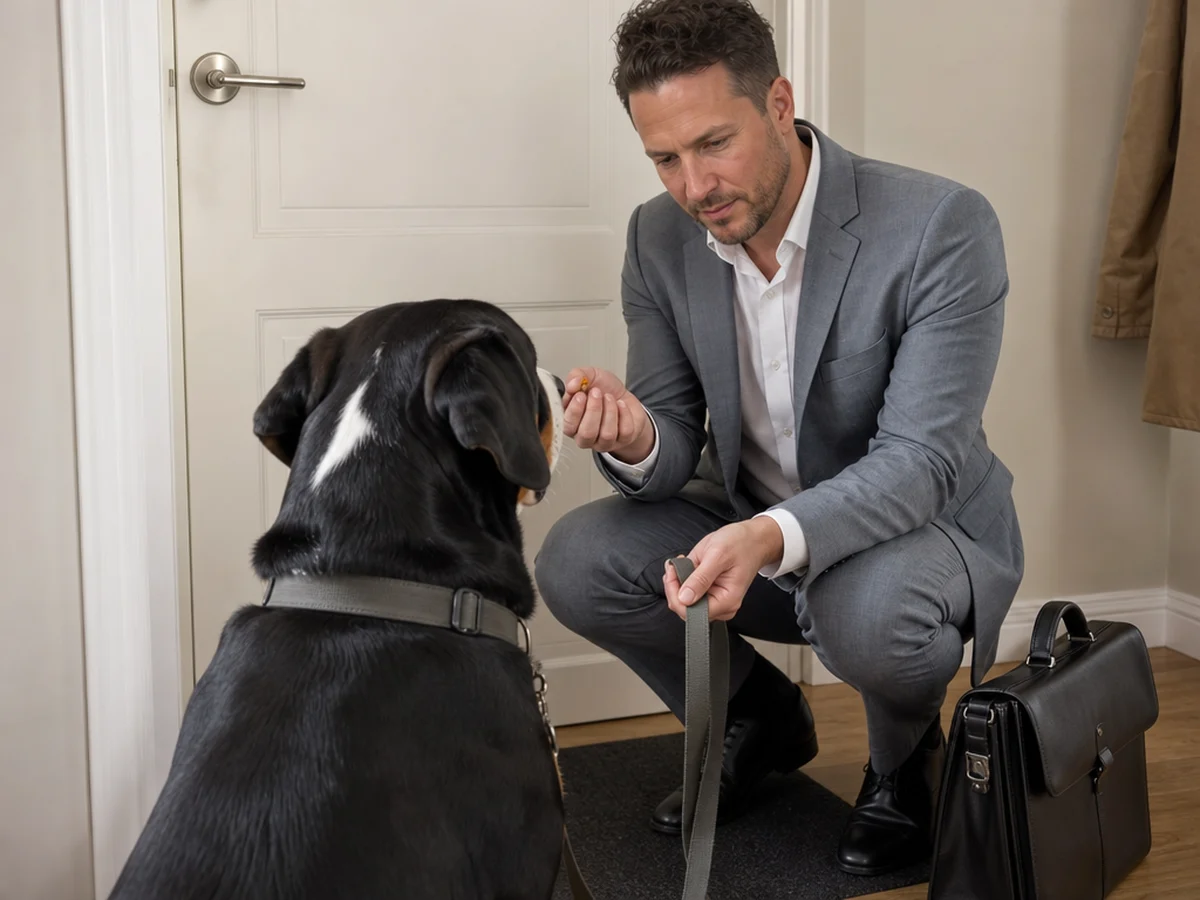
The first exit often carries urgency and excitement. Clip the leash while the dog is behind the closed apartment door, then reward a pause before touching the handle. If the Swissy surges as the door cracks open, close it gently, reset and pay the first moment of stillness.
Open the Door in Stages
Practice when there is no need to complete a walk. Touch the handle and reward. Open the door an inch and reward. Look into the hall, then close it and release the dog back inside. These small rehearsals separate doorway control from the pressure of always moving forward.
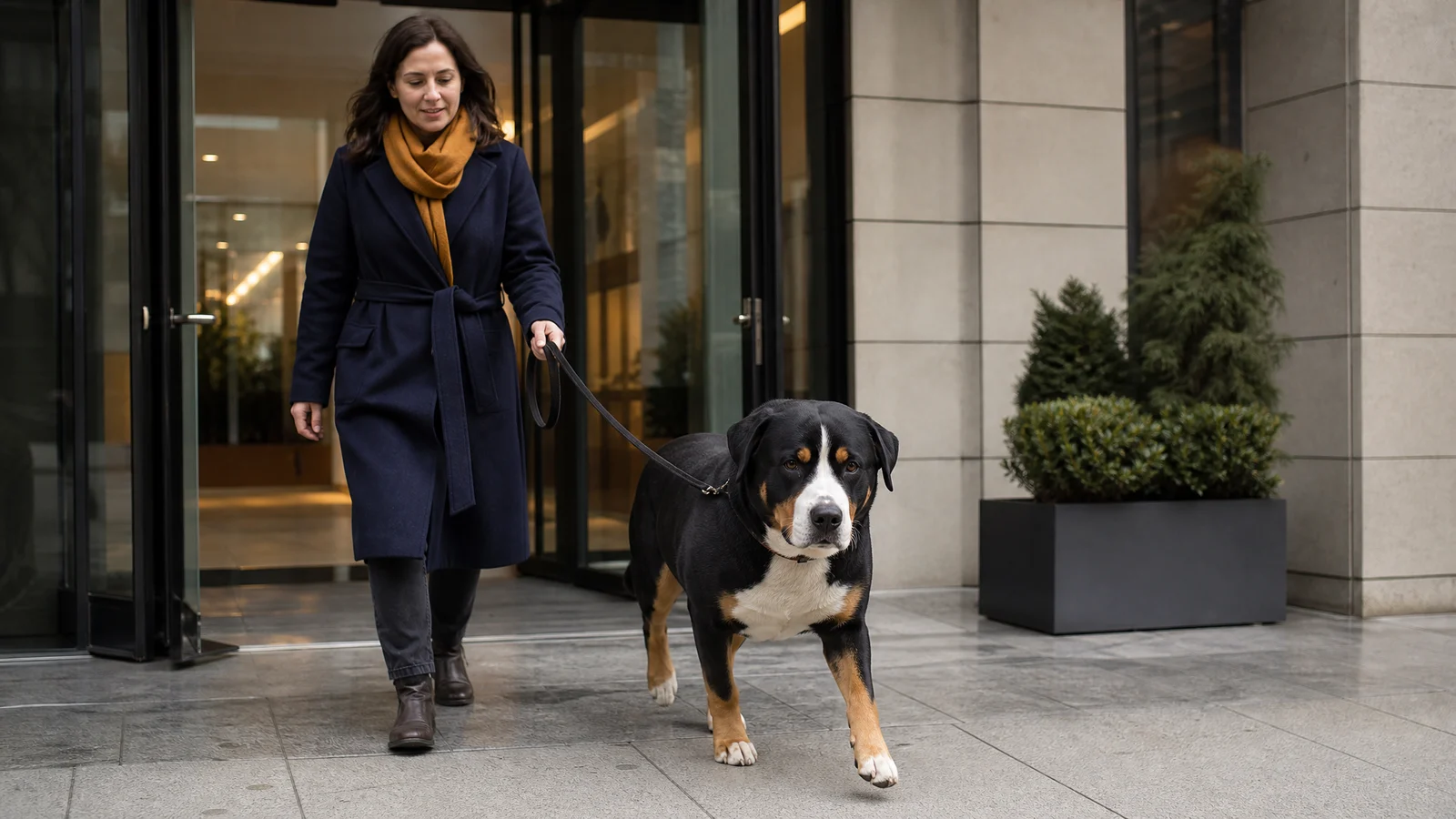
When the hall is clear, cue the dog through and turn to reward beside you. Avoid letting the leash stretch across the corridor. A compact start gives neighbors space and keeps the Swissy's body from becoming an accidental barrier.
Return Without a Rush
Practice coming home too. Pause outside, enter together and guide the dog toward the mat before removing equipment. Reward the transition to rest. A predictable return reduces racing through the apartment and makes the end of the walk as organized as the beginning.
Keep keys and rewards ready so you are not searching while holding a dog in the hallway. Good apartment handling often comes from removing small delays. The easier the routine is to repeat, the more clearly the dog can learn it.
Elevator and Stair Training for a Greater Swiss Mountain Dog
Shared vertical spaces require choice and room. If elevators are part of the route, teach waiting outside before riding. Stand far enough from the doors that people can exit first, reward the Swissy for staying with you and enter only when the car has suitable space.
An Elevator Is an Optional Setup
Let the dog observe doors opening and closing from a comfortable distance. Reward calm attention, then leave without riding. On a later repetition, step into an empty car, feed and step back out. Never pull a worried dog across the threshold or trap them in a crowded ride.
Inside, position the Swissy beside you and away from the opening edge. Reward stillness as the doors move. If another dog is waiting when the doors open, ask the other person for a moment, close the doors if possible or use your planned alternative. Avoid a face-to-face meeting in a confined space.
Stairs Need Deliberate Pace
On stairs, reward a steady position rather than allowing the dog to tow you. Keep turns broad where space permits and pause on a safe landing if someone needs to pass. Building rules and the dog's comfort determine whether stairs are a practical option.
Changes in willingness or movement deserve attention, especially with repeated stairs. Keep routine veterinary care current and ask for guidance when physical comfort is uncertain. Training can improve pacing, but it cannot make an unsuitable route appropriate for an individual dog.
Walk Training That Protects the Apartment Routine
Outdoor activity supports indoor settling, and the right time or distance varies among individual Swissies. Build a routine around the dog's age, health, conditioning and response. Combine suitable movement with sniffing and short training moments instead of treating faster or farther as automatically better.
Loose-leash walking matters in the building and on the sidewalk. PDSA guidance recommends stopping when the dog pulls and rewarding slack rather than pulling back. In a narrow corridor, practice the same rule with shorter, easier repetitions.
Spend Energy Without Creating More Arousal
Include time to sniff, a few rewarded check-ins and a calm pause before returning indoors. A walk that ends with frantic play at the building door can make settling harder. Slow the final part of the route and use the same home-entry sequence each time.
For a fuller foundation, see how to train this breed with food rewards. Apartment living does not reduce the need for appropriate outdoor activity. It makes the timing and transitions more important because the indoor environment is shared closely.
Midday Apartment Training and Alone Time
Teach alone time gradually rather than discovering the dog's limit during a long absence. Begin after needs are met and the dog can settle. Step behind an interior door briefly, return while the Swissy remains comfortable and reward ordinary calm instead of creating an excited reunion.
Departure Cues Become Boring
Pick up keys, put them down and continue your day. Put on shoes, sit on the couch and reward the dog for resting. These rehearsals separate common departure cues from a guaranteed long absence. Keep the actual first departures brief enough that calm is still possible.
Use a camera if available to observe behavior without making claims from silence at the door. Barking, pacing or inability to settle means the plan needs an easier step. After returning, begin the next practice at a duration where quiet settling is still possible and reward that useful alternative.
A midday plan may include a safe food puzzle, a sniffing search or a visit from an appropriate helper. Test enrichment while you are present before leaving it with the dog. The Greater Swiss Mountain Dog temperament guide explains how food motivation and steady routines affect training choices in close quarters.
Arrival Training for Noise at the Door
Hallway steps, doors and voices can trigger barking because the sound appears close but the source is hidden. Start by identifying which noises matter and how quickly the dog recovers. The ASPCA barking guide recommends finding the cause first and teaching impulse-control behaviors around exciting access.
Send the Swissy Away From the Door
Teach the mat cue when nothing is happening. Say the cue, reward on the mat and release. Then have a helper make a soft hallway sound. Cue the mat and pay several times there. The alternative behavior moves a large dog out of the entry path while giving them a clear answer.
Reduce sound intensity or increase distance if the dog cannot leave the door. Keep your voice quiet and create more space. A recording can help with controlled practice at low volume, but real building sounds should still be introduced gradually and paired with the same rewarded response.
Plan Guest Entry
Ask guests to text before arriving so the dog is on the mat or behind a suitable barrier before the knock. Bring the person inside, reward calm and decide whether a greeting is appropriate. The Swissy does not need to crowd the threshold to participate in every arrival.
Keep greetings short and protect the hallway from congestion. If the dog becomes too excited, return to the mat and give everyone more space. Management prevents rehearsal while training builds the future response.
Evening Apartment Training and Settling
Evening calm is a skill, not merely the absence of exercise. After the last outing, guide the dog to the mat with a quiet reward routine. Lower the activity level and provide an appropriate calm option. Avoid beginning a high-energy indoor game when neighbors and the dog are moving toward rest.
Reward the Swissy for choosing the mat without being asked. Space rewards farther apart as relaxation deepens. The dog can shift position, look around or leave for water. A settle should allow comfortable behavior inside clear household boundaries, not demand motionless endurance.
Useful evening checks are simple. Review them after the household has settled.
- The day's outdoor activity matched the dog's current needs and comfort.
- Hallway and doorway transitions happened without repeated pulling.
- Noise practice ended before barking or frustration escalated.
- The dog had one mental job and a clear opportunity to recover.
- The sleeping area and main walkways remain comfortable and unobstructed.
Review the Greater Swiss Mountain Dog Apartment Day
Review the day by transitions, not by whether the dog was silent every minute. Did the Swissy wait while a door opened, fit beside you in shared space, reconnect on the walk and return to the mat after activity? Those behaviors show that the routine is becoming understandable.
If one period keeps unraveling, change only that setup. Practice the morning door without taking a walk, observe the elevator from farther away or rehearse guest entry with a helper. Smaller repetitions reveal the missing skill without making the dog repeat an entire difficult day.
Apartment fit can also change with health, building conditions and the dog's stage of life. Bring in a reward-based trainer when easier practice does not improve fear, persistent distress or handling difficulty. Ask a veterinarian about sudden behavior or mobility changes rather than treating them as disobedience.
The day closes where it began, with a calm transition. Prepare the next morning's equipment, leave rewards near the door and give the Swissy room to rest. Apartment living works when the routine makes shared spaces predictable, outdoor needs remain fully supported and settling is rewarded as carefully as movement.
 Training basicsAre Greater Swiss Mountain Dogs Stubborn or Easy to Train?
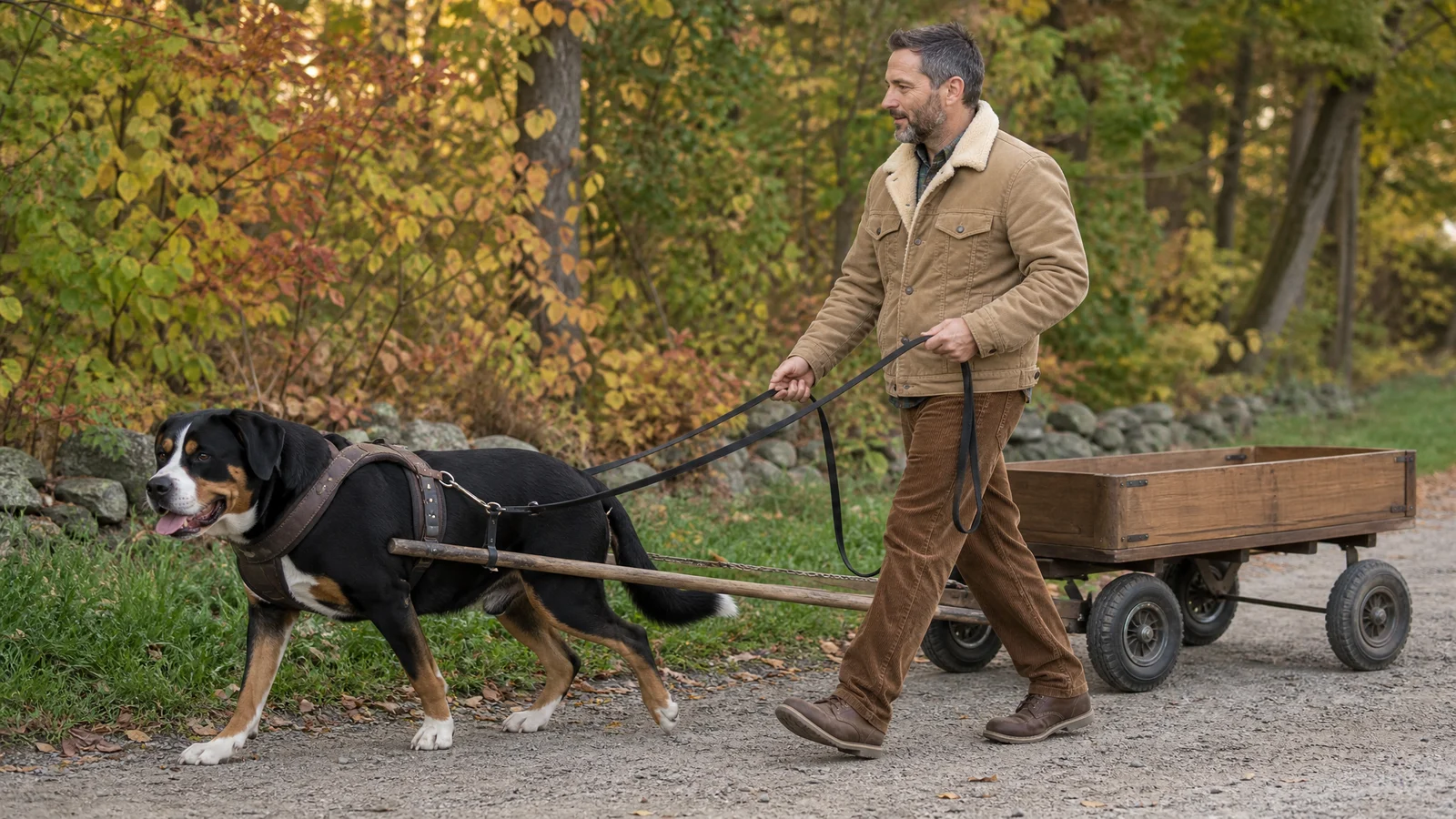 Exercise and jobsRecreational Cart Pulling With Your Swissy
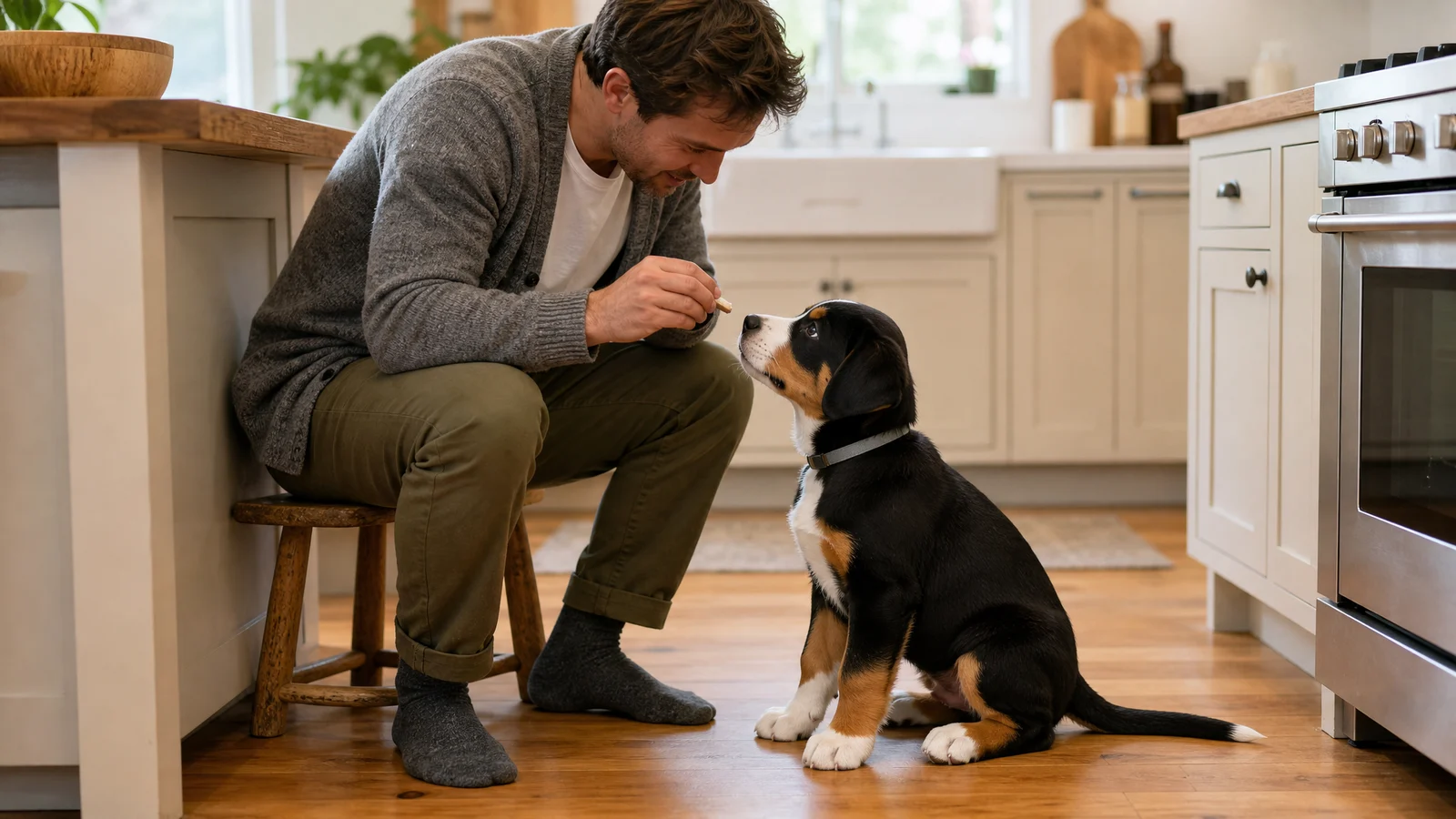 Puppy trainingGreater Swiss Mountain Dog Puppy Timeline: 8 Weeks to 2 Years