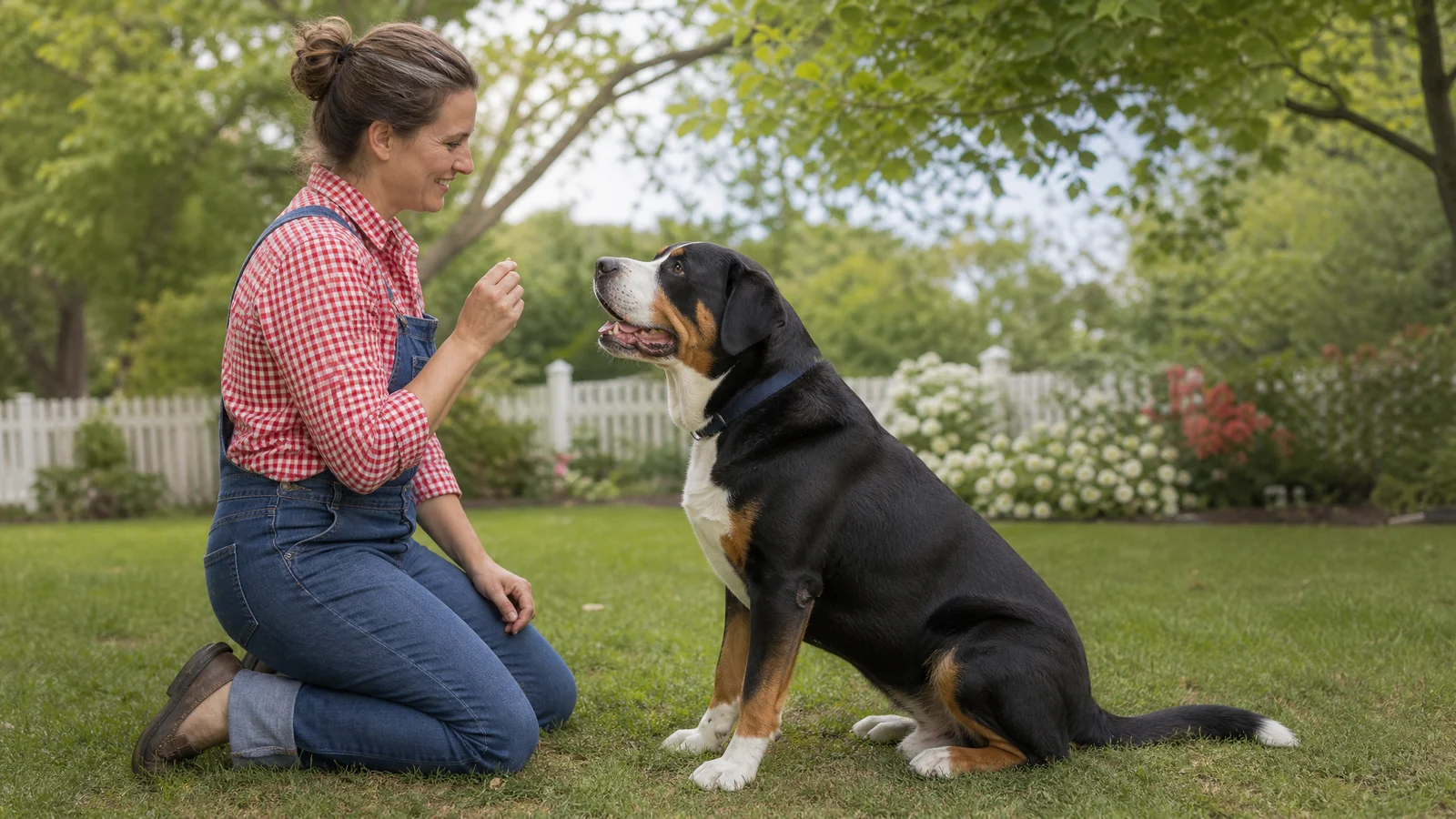
The treat bag crinkles and your Swissy trots over, tail swinging, eyes on your pocket. Ten minutes later, on a crowded sidewalk, you ask for a sit. They plant their feet, stare at you, and wait. Same dog, same cue, same treats.
Nothing is broken. A trainability rating of 4 of 5, a very food motivated nature and a noted stubborn streak all describe one animal: a willing worker who is friendly and faithful, and who still needs an owner more determined than they are.
This guide covers Greater Swiss Mountain Dog temperament, from the way a big, sociable draft dog reshapes your household to the single pause at a cue, and it ends with signs your training is on track and signs to call in a professional. Handled well, you get a steady partner. Handled badly, you get a big dog who learns that ignoring you pays.
Temperament in the Household
The breed was developed for drover and farm work in mountain country, and the standard describes a large, powerful, confident dog who stays agile enough for all-purpose duties despite their size and weight. Indoors, that history becomes a friendly, even-tempered dog who wants to be wherever the family is. Adaptability sits mid-scale at 3 of 5, so a Swissy will fit into your life, but expect your life to bend toward theirs as well.
Household Rhythm
Affection with family rates 5 of 5, while playfulness and energy both rate 4. The result is a dog who lounges through a quiet afternoon and joins in the second the house gets lively. Exercise needs are moderate, a walk around the block or a romp in the woods, but mental stimulation also rates 4 of 5. Boredom is a bigger risk than a shortage of mileage.
Noise and mess land in the middle. Barking, drooling and shedding all rate 3 of 5, meaning occasional barking, average drool and moderate hair. Even so, a large body with a carrying bark fills a small home fast, so judge your space honestly before you judge the dog.
Visitors
Openness to strangers rates a full 5 of 5, and the breed standard calls the dog self confident, watchful and fearless, yet good with strangers. So the assumption that big working dogs are wary of guests mostly fails here. The watchdog side is still real at 4 of 5, which means an alert bark at the door usually comes before the welcome.
Give arrivals a routine. Send your dog to a mat, pay them for staying on it, and let guests greet them only once they are calm. Start while the puppy is still small enough to handle easily. Shyness and aggressiveness are the temperament faults the standard penalizes severely, and happy early meetings are the best way to build the relaxed adult it describes.
Children
Good with young children rates 5 of 5, which fits the animated, gentle expression the standard calls for. A rating describes temperament, though, not body weight. A bouncy, powerful youngster can flatten a toddler with no ill intent. Supervise every greeting, reward paws that stay on the floor, and teach children to stand calmly and let the dog come to them.
Other dogs rate 3 of 5, which means with supervision. Do not assume a people-loving Swissy is a natural at the dog park. Our guide to socializing a Swissy with kids and dogs walks through the introductions.
Greater Swiss Mountain Dog Routines
Temperament shows up most in the small stretches of an ordinary day. A company-loving, willing dog will join any routine you build, which is a gift and a trap, because they also absorb the routines you build by accident. Morning walk, mealtimes and the evening settle can each double as a short lesson. In summer, move heavier activity to early or late in the day. The large size, black coloring and thick undercoat make heat hard on this breed.
Work-for-Food Moments
Food is this breed's currency, so spend it often and in small amounts. Have them sit while you fill the bowl, give a hand touch at doorways, and pause for eye contact before the leash clips on. These tiny jobs suit a dog who needs real mental work, and they build the habit of looking to you before deciding what to do next.
Pulling deserves a verdict. The popular fix is a harness, but for a draft breed that tends to backfire, because a harness invites them to lean in and pull harder. Instead, reward the spot beside your leg, stop when the leash tightens, and move on when it goes slack. The breed suits hiking far better than cycling or marathon running, and our notes on daily Swissy exercise needs help you plan a week.
Downtime
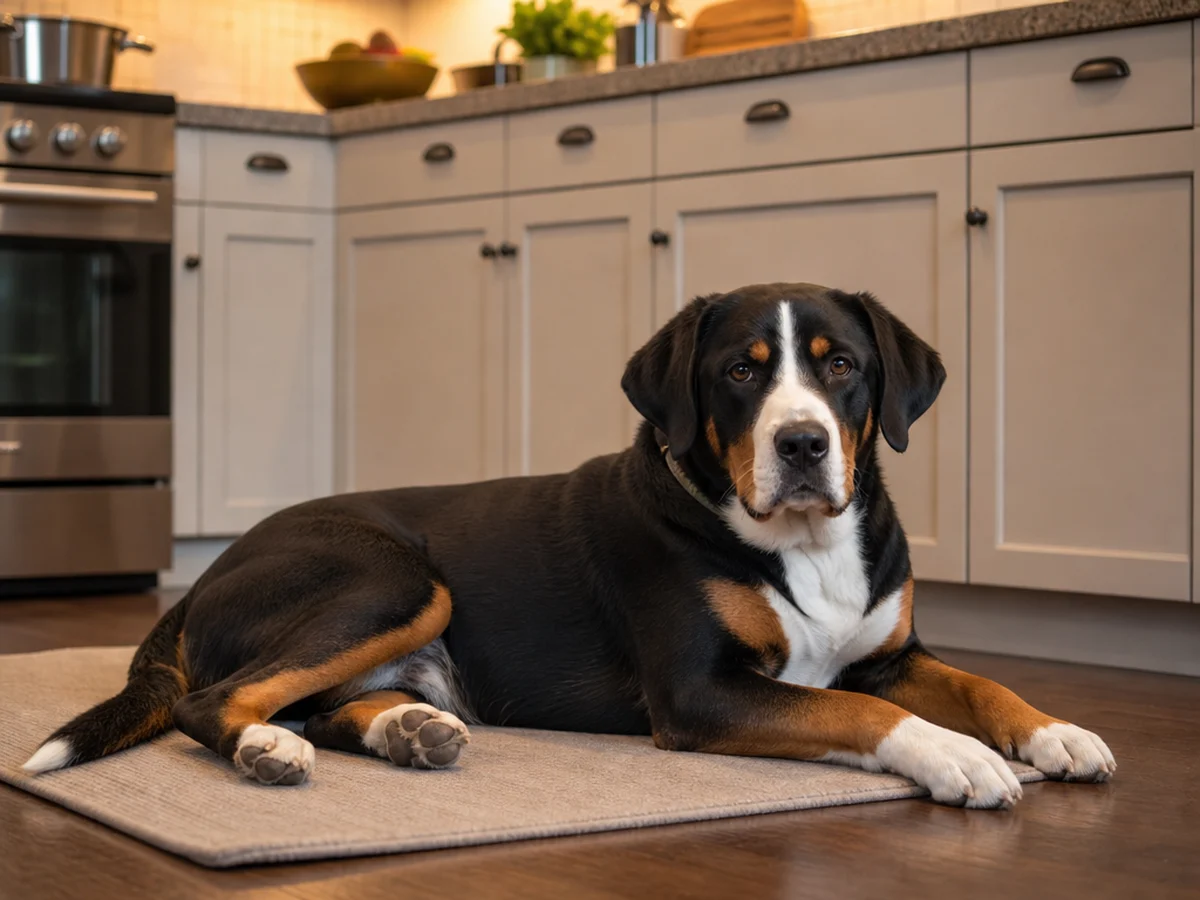
A dog who follows you everywhere has to learn the opposite skill, which is settling while you cook, work or watch television. Reward calm lying down on a mat by dropping a treat between the paws, then stretch the gap between rewards bit by bit. Finish the evening with a chew, and let the mat become the signal that the dog is off duty.
Do not treat the settle as a luxury. A faithful dog who never practices being near you without being engaged may learn to pester for attention, and a Swissy has the size to make that hard to ignore.
Personality Beneath the Size
Size gets the attention, but the personality is what you live with. The standard sums up temperament as bold, faithful, a willing worker, alert and vigilant. Those words describe a dog who is serious about the job and tender about the people. Pulling them apart shows where the stubborn reputation really comes from.
Friendliness
The breed pairs the confidence and robustness needed for drover work with a friendly, even-tempered personality, so the sturdy build carries a soft center. A dog this sociable is more likely to jump up and lean on people than to be suspicious of them, so expect manners work to focus on enthusiastic greetings. Reward sits for greetings, because a dog this sociable repeats whatever earns attention.
Loyalty
Faithful, family-oriented and dependable are the words that follow this breed everywhere. Loyalty works in your favor during training, since a dog who values your company is easier to motivate than an aloof one. It also means they track you closely. Pay every voluntary check-in on a walk, and that devotion hardens into a dependable habit of staying near you.
Independence
Here is the skeptic's reading of stubborn. The standard asks for a bold dog, confident enough to handle farm work on its own terms, and a draft breed learns to lean into a load without waiting for permission. Boldness and willingness live in the same dog. When a Swissy declines a cue, the better question is not who is winning but what they were weighing. Usually the answer is a distraction, the effort involved, or a better offer.
Greater Swiss Mountain Dog Trainability
So which is it, stubborn or easy? Both descriptions are honest. The trainability score of 4 of 5 sits on a scale where 3 is agreeable and 5 is eager to please, which puts the Swissy above merely agreeable but short of eager. Add a very food motivated dog with a stubborn streak, and the advice is blunt: owners must be more determined than the dog.
Determined is not the same as harsh. After many years of training this breed, we would define it as consistent: the same cue, the same rule and the same reward from every person in the house, every day. The popular advice to out-stubborn a stubborn dog gets this backwards. A food-driven, faithful dog hands you plenty of leverage without any confrontation.
Reward-based training suits the breed for a plain reason. When a treat, toy or bit of praise they love follows an action, that action becomes more likely to happen again. In practice, determined looks like this:
- Ask once in a calm voice, then wait. Repeating a cue teaches the dog that the first request is optional.
- Raise difficulty one step at a time, from kitchen to yard to quiet street to busy sidewalk, and pay well at each new level.
- Stop each session while the dog is still keen, so the next one starts with enthusiasm.
- Agree on cue words and house rules with everyone in the home, so the dog never has to guess which version applies today.
Pushback tends to grow along with a dog's confidence, so the earlier these habits are built, the less there is to undo. Our Swissy puppy training timeline shows what to teach and in what order.
Temperament in a Single Pause
Back to the sidewalk. The pause between cue and response is where temperament lives, and it is the smallest detail worth studying. The Swissy hears you, looks at you and thinks. That hesitation can mean there is too much going on, the cue is unclear, a better offer is nearby, or the reward does not seem worth the effort. Read the pause before you repeat yourself, because a louder cue rarely moves a bold dog faster.
Here is a calm way to resolve it with a marker word the dog already knows. If you have not built one yet, pair the marker with food in a quiet place first, delivering the treat within a few seconds each time.
- Stay quiet and count a few breaths instead of repeating the cue. Many hesitations resolve on their own.
- If nothing happens, make the task easier. Step away from the crowd or ask for a behavior the dog knows cold, and reward it.
- Mark the instant the dog complies and deliver the treat right away, so the link between action and reward stays clear.
- Return to the original spot, ask again calmly, and repeat a few times with small treats before adding distance or distraction.
The verdict: a pause is information, not insolence. Treat it as a question the dog is asking and answer it with a clearer picture of what pays. Two or three calm repeats at the right level do more than any amount of pressure.
Temperament Green Lights, Red Flags
The Greater Swiss Mountain Dog is a faithful, willing, food-motivated worker with a bold streak. The job is to be determined without being harsh, and to meet their need for company and mental work. Do that and the pauses shorten while the friendliness stays intact. Keep regular vet visits on the calendar too, because a sudden drop in willingness can have a physical cause that no training will fix.
- The pause between your cue and their response gets shorter over weeks, even in busier places.
- They recover quickly from a startle or an exciting moment and settle back near you or on their mat.
- On walks, they glance back at you on their own, especially near distractions.
- Greetings with visitors and children stay loose and friendly, with sits earning the attention.
- Known cues hold up when you swap some treats for praise and life rewards such as a sniff break or a game of tug.
- Growling, stiffening or snapping around food, toys or handling, which is a different problem from stubbornness.
- Fear that does not ease, such as hiding, trembling or refusing to approach people, since shyness is one of the temperament faults the standard names.
- Aggression that goes beyond excited, pushy greetings, whether toward people or other dogs.
- A sudden change in willingness, or reluctance to move, climb or lie down, which calls for your veterinarian first.
- No progress after weeks of consistent, rewarded practice at an easy level, in which case a qualified reward-based trainer or behaviorist can spot what you cannot.
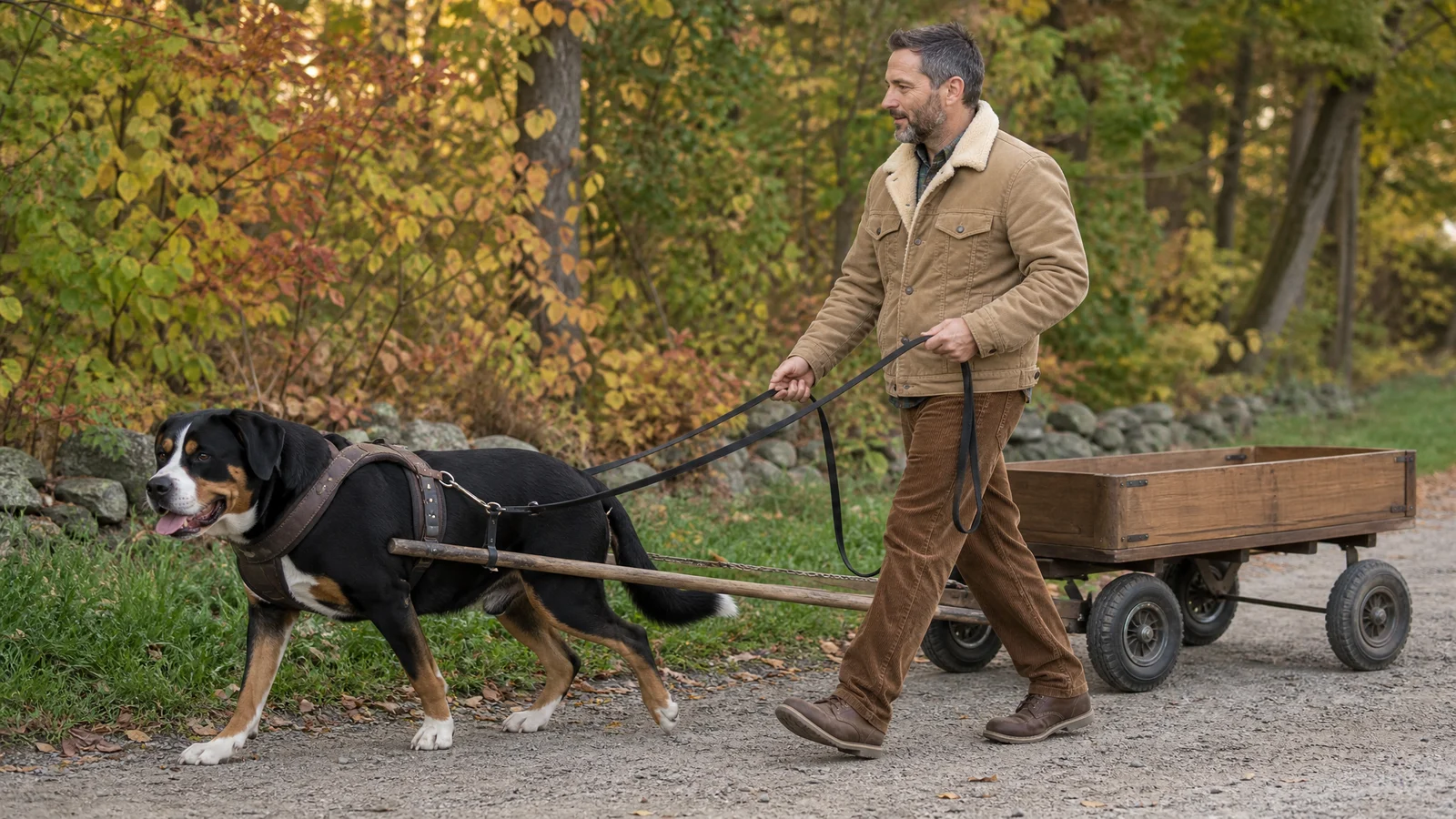 Exercise and jobsRecreational Cart Pulling With Your Swissy
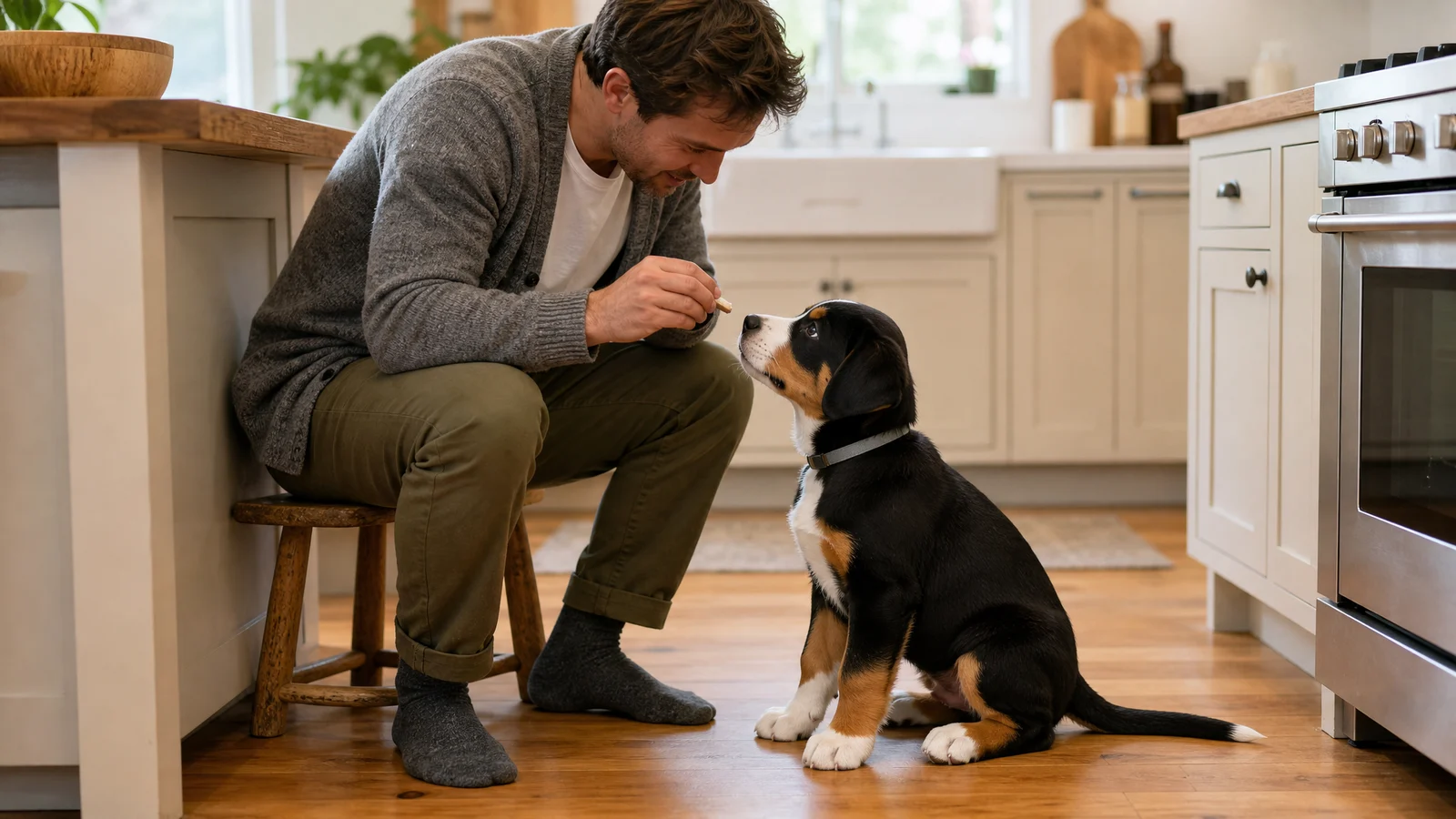 Puppy trainingGreater Swiss Mountain Dog Puppy Timeline: 8 Weeks to 2 Years
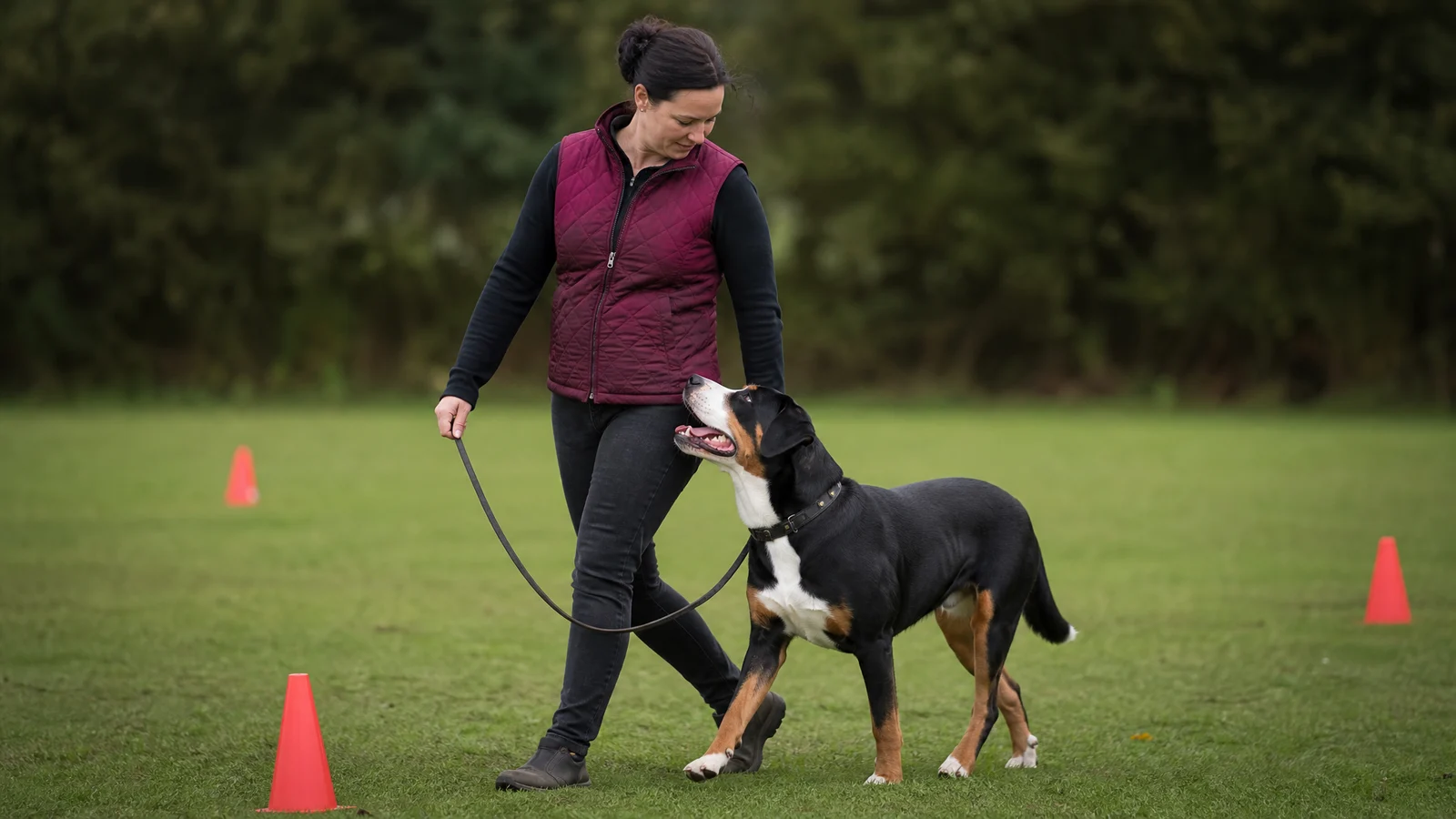 Exercise and jobsSports and Jobs for a Greater Swiss Mountain Dog