The easiest mistake is choosing the activity that looks most like a Swissy's working history, then assuming the dog will enjoy every part of it. A Greater Swiss Mountain Dog may be interested in equipment, happiest on a trail, absorbed by obedience puzzles or most comfortable with a quiet household job.
A better starting point is a low-pressure audition. This guide compares drafting, hiking, herding, agility and obedience as modern outlets, then shows how to test the underlying skills without claiming that one activity fits every Swissy. You will also build a small weekly portfolio, so physical movement, mental work and recovery stay in balance instead of competing for attention.
Choose Dog Sports by Fit, Not History Alone
The Swissy developed around draft and drover work, and that background explains why purposeful activity belongs in the conversation. It does not predict an individual dog's confidence around wheels, livestock, busy trial settings or novel surfaces. History supplies context. The dog in front of you supplies the decision.
The breed club maintains activity interests in drafting, herding, hiking, weight pulling, agility and obedience. That range is more useful than a single recommendation. It shows several ways to channel cooperation, movement and problem solving while leaving room for different preferences.
Define a Good Match
A good match has three parts. The dog willingly approaches the work, can learn its foundation without force and recovers comfortably afterward. Excitement alone is not enough. A dog who becomes frantic around equipment or cannot settle after class may need an easier version, a different environment or another activity.
Also consider what the household can practice consistently. An activity that requires specialized access may remain occasional, while obedience patterns, scent searches or station work fit ordinary days. We favor consistent small sessions over a complicated setup attempted rarely because the dog receives clearer practice.
Greater Swiss Mountain Dog Sport Auditions
An audition is not a miniature competition. It isolates one friendly foundation from an activity and observes the dog's response. Keep equipment disconnected, livestock behind appropriate professional controls and physical challenges low. Reward curiosity and allow the Swissy to leave before repeating.
| Activity Family | Foundation Audition | Useful Response |
|---|---|---|
| Drafting | Explore stationary equipment, then walk near quiet wheel sounds | Voluntary approaches and relaxed movement |
| Hiking | Follow cues across mild surface changes on leash | Comfortable footing and easy check-ins |
| Obedience | Link a target, position and release | Interest in precise rewarded choices |
| Agility | Step over a ground pole and around a marker | Confident, controlled movement |
| Herding | Observe only through a qualified introductory program | Responsiveness to the handler in that setting |
Do not score the dog against another Swissy. Note whether their body remains loose, whether familiar rewards still matter and whether attention returns after the novelty. One difficult moment does not rule out an activity, but repeated avoidance is information that should change the setup.
Write three observations after each audition: what the dog approached, what made attention harder and what recovery looked like. Use plain behavior rather than labels such as stubborn or gifted. The notes should help you make the next setup easier, not rank the dog against a sport ideal.
Repeat the Context, Not the Pressure
Repeat an easy audition on another day before deciding. Novelty can create either extra caution or extra excitement. A second quiet exposure shows whether the dog is becoming more comfortable. Increase only one feature, such as proximity or duration, while keeping the rest familiar.
If the dog declines, end with a known cue and a reward. Do not pull them toward equipment, scold distraction or keep presenting the same challenge. Reward-based structure asks for clear behavior, but it also adjusts the environment so the desired response is possible.
Foundation Jobs Before Formal Sports
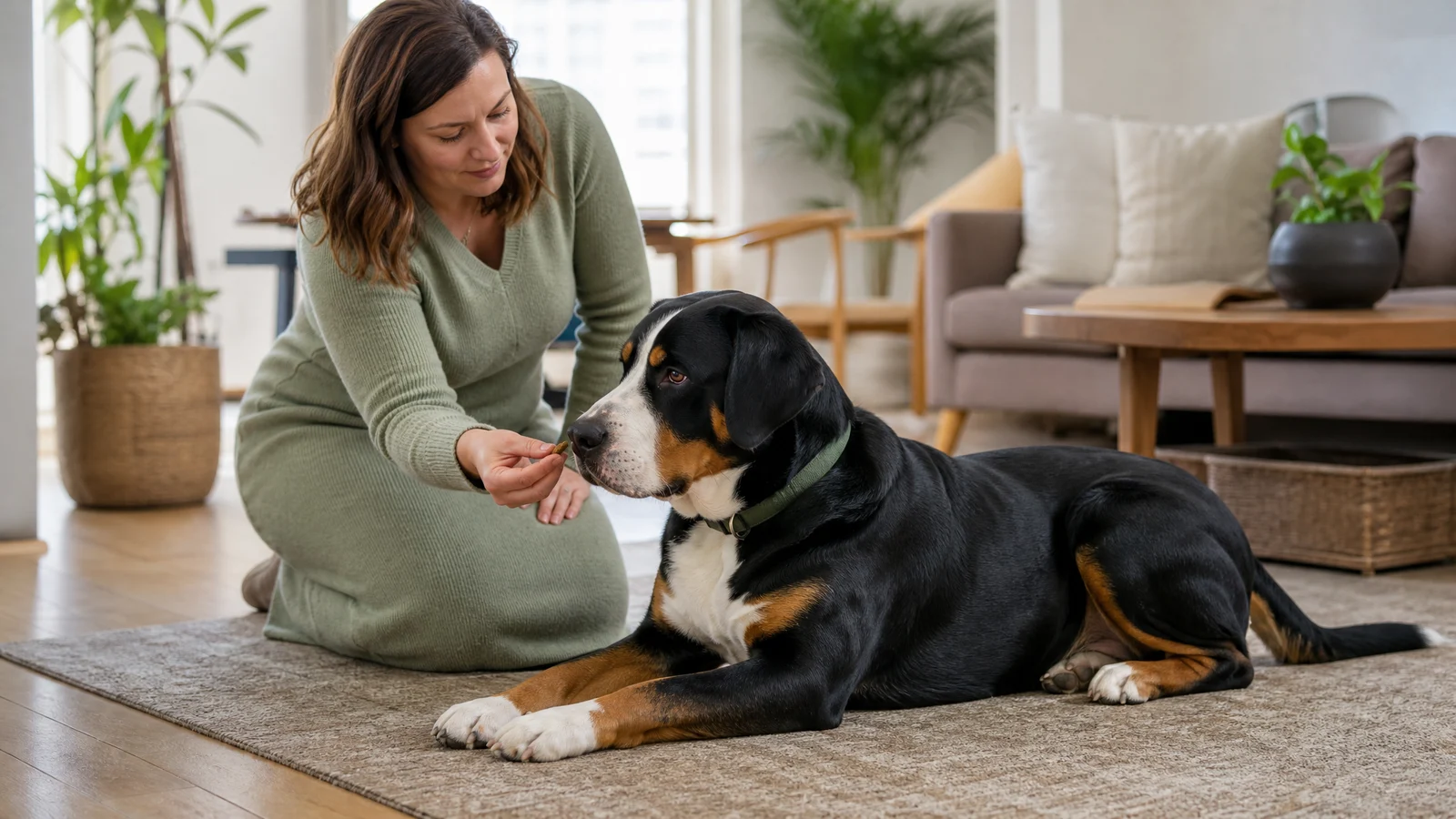
Several foundation jobs transfer across activities. A hand target helps with position, a mat supports waiting, a stand allows equipment checks and a release tells the dog when work is over. Train those pieces at home before asking the Swissy to perform them in an exciting class or outdoor setting.
Build a short chain only after each behavior works alone. Ask for a target, take two steps together, pause at a station and release to sniff. That chain contains attention, movement, stillness and recovery. It can later support trail passing, obedience patterns or the careful introduction of recreational equipment.
Change the order only after the Swissy recognizes every piece. A new sequence creates a fresh thinking problem without adding physical intensity. If accuracy disappears, separate the skills again and reward the first clear response before rebuilding the chain. This lets the dog solve a new arrangement while the behaviors themselves remain familiar, and it gives you a clear point at which to stop.
A practical foundation set supports several activities. Build these pieces before choosing a formal path.
- A voluntary hand target that can guide position without pushing the dog.
- A relaxed stand while a person briefly checks ordinary equipment.
- A mat or station behavior that remains comfortable around mild activity.
- A loose-leash start, stop and broad turn using reward-based handling.
- A release cue followed by sniffing, play or quiet rest.
The ASPCA enrichment guide shows how food delivery can engage a dog's mind instead of arriving only in a bowl. Use part of a meal to practice these small jobs when appropriate. The aim is not constant drilling. It is making a useful answer easy to reward.
Dog Sports That Use Movement and Direction
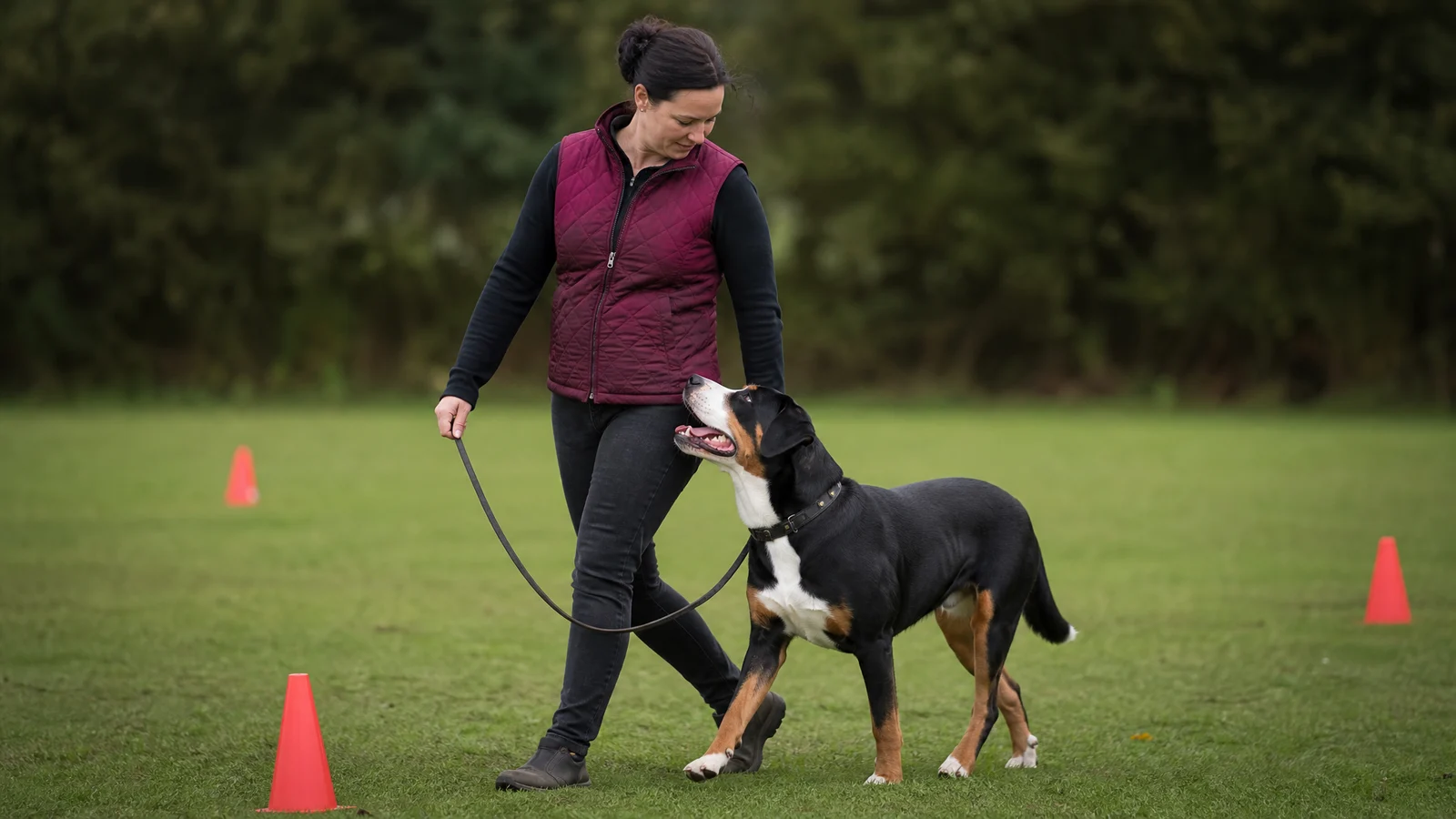
Hiking, beginner agility foundations and recreational drafting all involve movement, but the questions differ. Hiking asks the dog to travel through changing environments. Agility foundations ask for body awareness around controlled obstacles. Drafting foundations add equipment comfort and directional cues. None should begin as a test of speed, strength or endurance.
Hiking Tests Environmental Skills
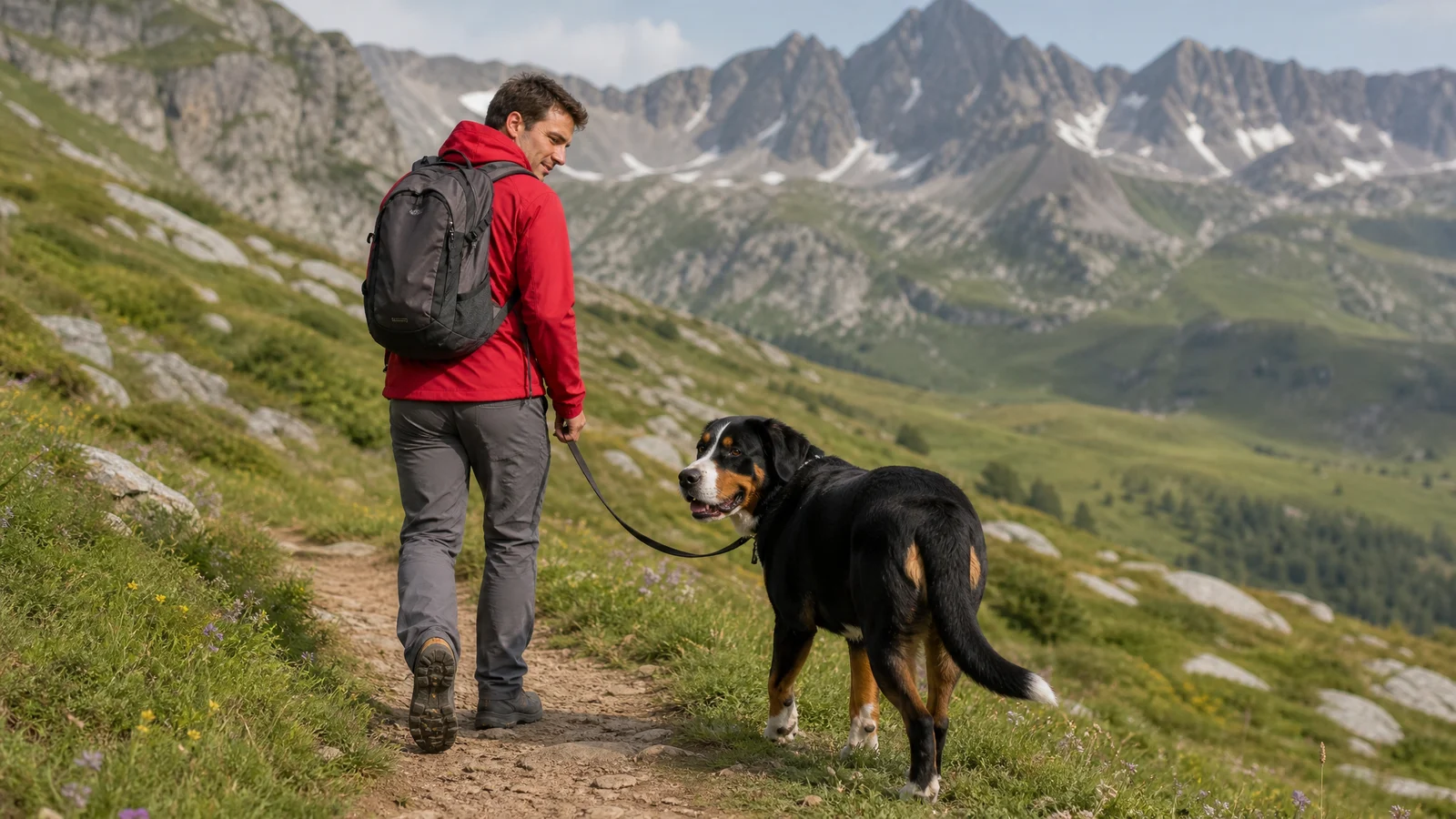
A Swissy who enjoys trails still needs a loose leash, a reliable turn and calm passing behavior. Start where footing is easy and exits are available. The dedicated Swissy training guide organizes those skills around trail checkpoints rather than distance.
Look for a dog who can investigate and reconnect. Constant forward pulling does not prove that hiking is a perfect fit. It may show that the environment is too difficult for current leash skills. Reward slack and attention, then preserve sniffing as part of the outing.
Drafting Starts With Equipment Comfort
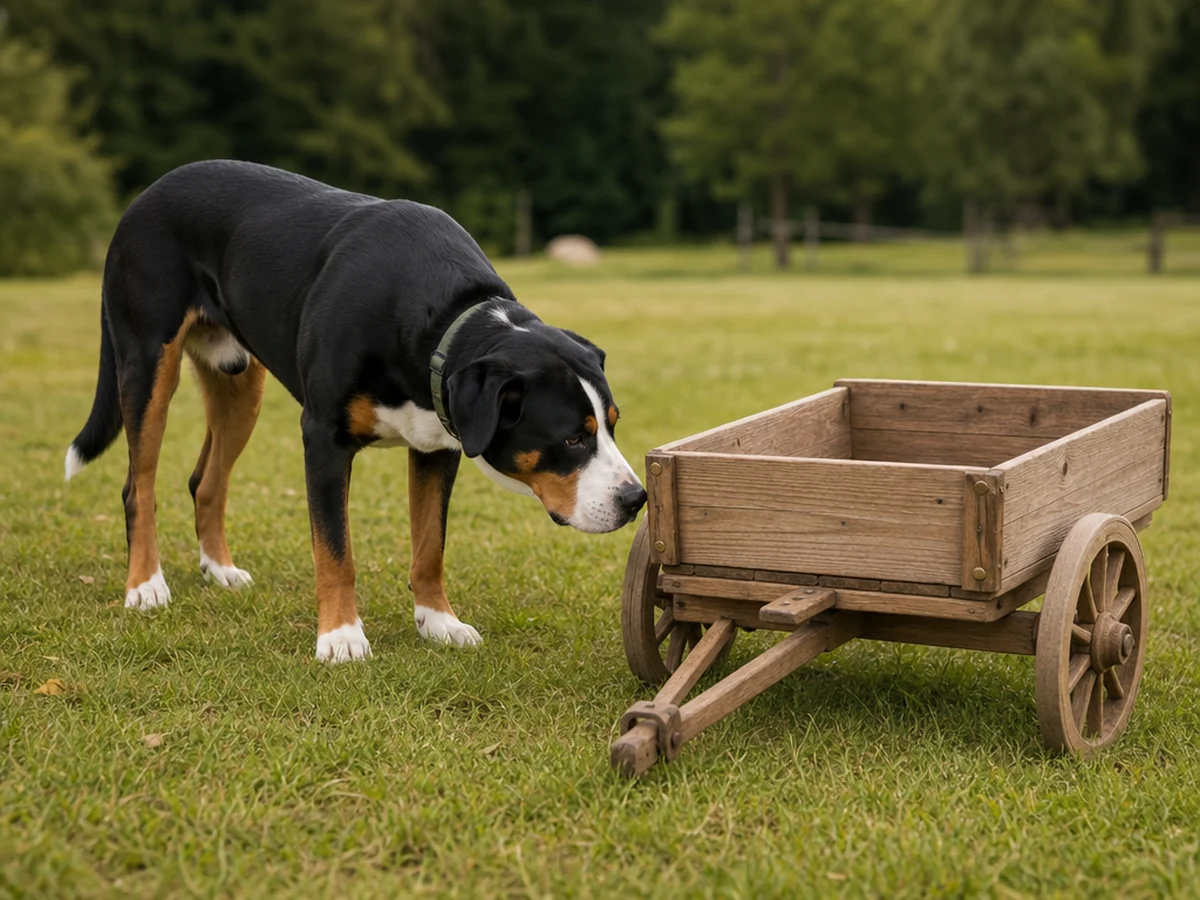
Carting can provide a breed-connected recreational outlet, but foundation work stays separate from load and distance. Begin with stationary gear, harness comfort and cart sounds while nothing is attached. The Swissy leash training plan explains this gradual approach and the role of qualified hands-on instruction.
A willing equipment approach and normal movement matter more than eagerness to pull forward. Do not improvise resistance or attach objects to see what the dog can move. Recreational drafting has specialized equipment and handling questions that deserve knowledgeable supervision.
Agility Begins on the Ground
Early agility-style work can stay with walking around cones, stepping over poles placed on the ground and targeting a low stable platform. Reward slow, deliberate movement. Skip height, speed and repeated impact, especially when the dog's age or physical readiness is uncertain.
A class should welcome gradual, reward-based participation and allow the instructor to adapt exercises. Keep regular veterinary care current and discuss concerns about movement or physical activity. A general guide cannot decide which obstacles are suitable for an individual dog.
Jobs That Build Focus and Cooperation
Obedience and home-based jobs suit days when formal sport access is limited. They ask the dog to notice cues, make a correct choice and remain connected through a short sequence. Precision can be rewarding when criteria are clear and the Swissy is paid often enough to understand what worked.
Start obedience patterns while standing still. The RSPCA leash guide begins loose-leash work from a stationary position, rewarding attention before movement. That principle transfers well. Establish orientation first, then add a step or change in direction.
Turn Daily Routines Into Jobs
Ask the Swissy to carry a safe soft item to a family member, find a named toy or wait on a mat while groceries enter. Teach every component separately and supervise the object work. The job is the sequence and cooperation, not the weight of what the dog carries.
Rotate jobs by mental demand. A scent search uses investigation, a position chain uses precision and a mat routine uses self-control. If the dog becomes noisy or frantic, shorten the chain and reward a familiar answer. More complexity is not automatically better enrichment.
A Greater Swiss Mountain Dog Activity Portfolio
A portfolio is a small collection of outlets rather than one identity. Choose one movement activity, one precision or search job and one recovery routine. That combination can change across the week. It gives the dog variety while making rest an intentional part of the plan.
- Select the audition in which the Swissy showed the easiest voluntary engagement.
- Practice two transferable foundation behaviors away from the formal setting.
- Keep a familiar home job available when travel or weather limits activity.
- Finish each session with a release and a calm recovery routine.
- Reassess fit when willingness, movement or recovery changes.
Do not measure the portfolio by titles, heavy work or constant novelty. Measure whether the dog understands the tasks, returns willingly and can settle afterward. PDSA guidance explains that pulling can grow from excitement or learned habit, so preserve calm leash foundations even when an activity channels forward movement elsewhere.
Working history makes jobs relevant, not mandatory. We use it to explain the menu of possibilities, then let voluntary engagement narrow that menu. A dog who thrives on trail cues and home searches has a valid working life even if formal drafting is not their preference. A dog who enjoys organized obedience does not need every historical role added to the calendar.
Before choosing the next audition, compare approach, focus and recovery across the activities already sampled. Select the clearest green light, keep the first version easy and stop while participation is still willing. A balanced choice may look less dramatic than a historic role, yet suit the individual dog and the family's routine more honestly.
That decision process turns sport selection into an ongoing conversation. It respects the breed's versatile background without letting history overrule the individual dog. Revisit the choice when training enthusiasm, movement or recovery changes.
 Training basicsHow to Train a Greater Swiss Mountain Dog With Food Rewards
 Exercise and jobsHiking With a Greater Swiss Mountain Dog
 Exercise and jobsHow Much Exercise Does a Greater Swiss Mountain Dog Need?