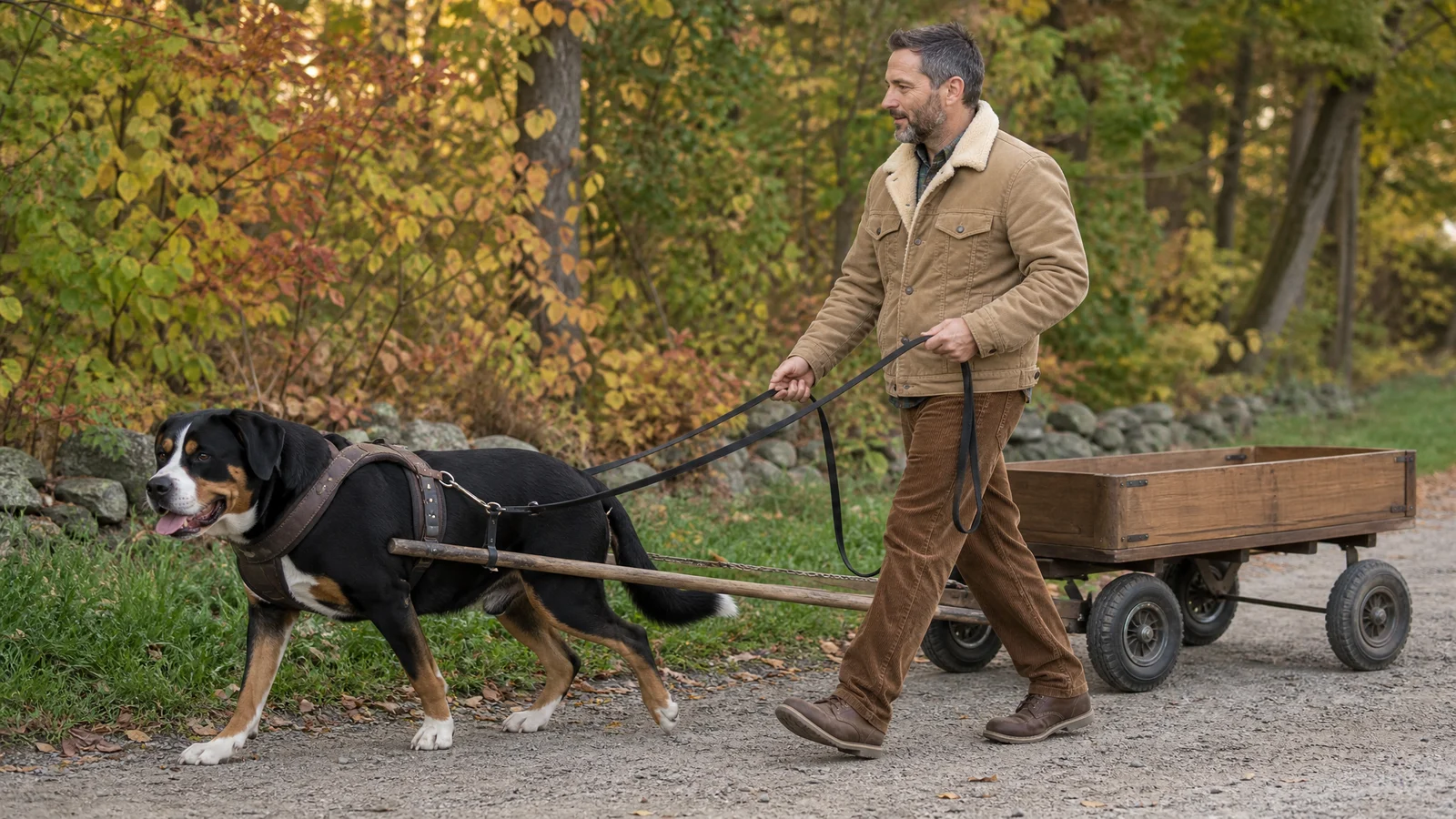
Recreational carting with a Swissy begins as a team problem, not a pulling problem. The dog needs to understand ordinary cues and remain comfortable around unfamiliar equipment. The handler needs to organize helpers, space, and stopping decisions. A qualified drafting instructor needs to assess the gear before any connection.
Greater Swiss Mountain Dogs have draft and drover history, and the breed club supports modern drafting activities. History does not make a cart familiar to an individual dog or set a safe load. This guide covers separate readiness tracks, stationary equipment visits, handler ground school, a supervised connection decision, and a factual session log. It does not set weight, distance, or deadlines.
Team Roles Before Greater Swiss Mountain Dog Leash Training
The handler rewards the dog, gives familiar cues, and watches movement. A helper controls the cart whenever it moves near the dog. An experienced recreational drafting instructor checks equipment choice, fit, handling, and the transition toward connection.
One person should not manage the dog, loose gear, and moving cart at the same time. Dividing roles prevents surprises. It also lets the dog move away while equipment remains controlled and quiet.
Choose an open, stable area with a clear retreat path. Keep people and other dogs out of the working lane. The first visits may contain no worn equipment and no cart movement at all.
Use a word that opens a brief equipment session and another that releases the Swissy to ordinary activity. Predictable boundaries help the dog understand why gear appeared. They also prevent practice from expanding until avoidance develops.
The breed club maintains activity involvement that includes drafting. That community can help families locate organized instruction. A general article cannot replace hands-on guidance about the equipment and the dog in front of the instructor.
Four Readiness Tracks for Cart Leash Training
Readiness is not a ladder where one completed task automatically unlocks the next. Track four questions independently. A Swissy may be comfortable wearing a harness while cart sounds remain difficult, or may know ground cues before equipment contact feels ordinary.
| Track | What Comfortable Looks Like | Reason to Pause |
|---|---|---|
| Choice | Approaches and leaves without rushing | Freezing, stretching, or avoiding return |
| Body | Normal stride and loose posture in gear | Short steps, scratching, or repeated looking back |
| Environment | Can observe quiet cart movement at distance | Startle without recovery or attempts to escape |
| Communication | Start, stop, stand, and broad turns stay available | Leash pressure replaces the learned cue |
Do not average the tracks into a score. One concern is enough to simplify or stop. Strength in another column cannot compensate for discomfort, poor fit, or a missing response.
Reward observable behavior rather than a label such as brave. Mark a soft glance, voluntary approach, comfortable stand, or easy turn. These descriptions make it possible to repeat the same setup and see whether the response changes.
We review the weakest track before planning another visit. If sound remains difficult, a comfortable harness does not move the session toward connection. The next useful choice is another sound setup at an easier distance.
The tracks can be practiced on different days. Separating them keeps a sound question from becoming a touch question at the same moment. It also prevents the dog’s acceptance of one feature from being treated as agreement to every later feature.
Stationary Equipment Visits in Swissy Leash Training
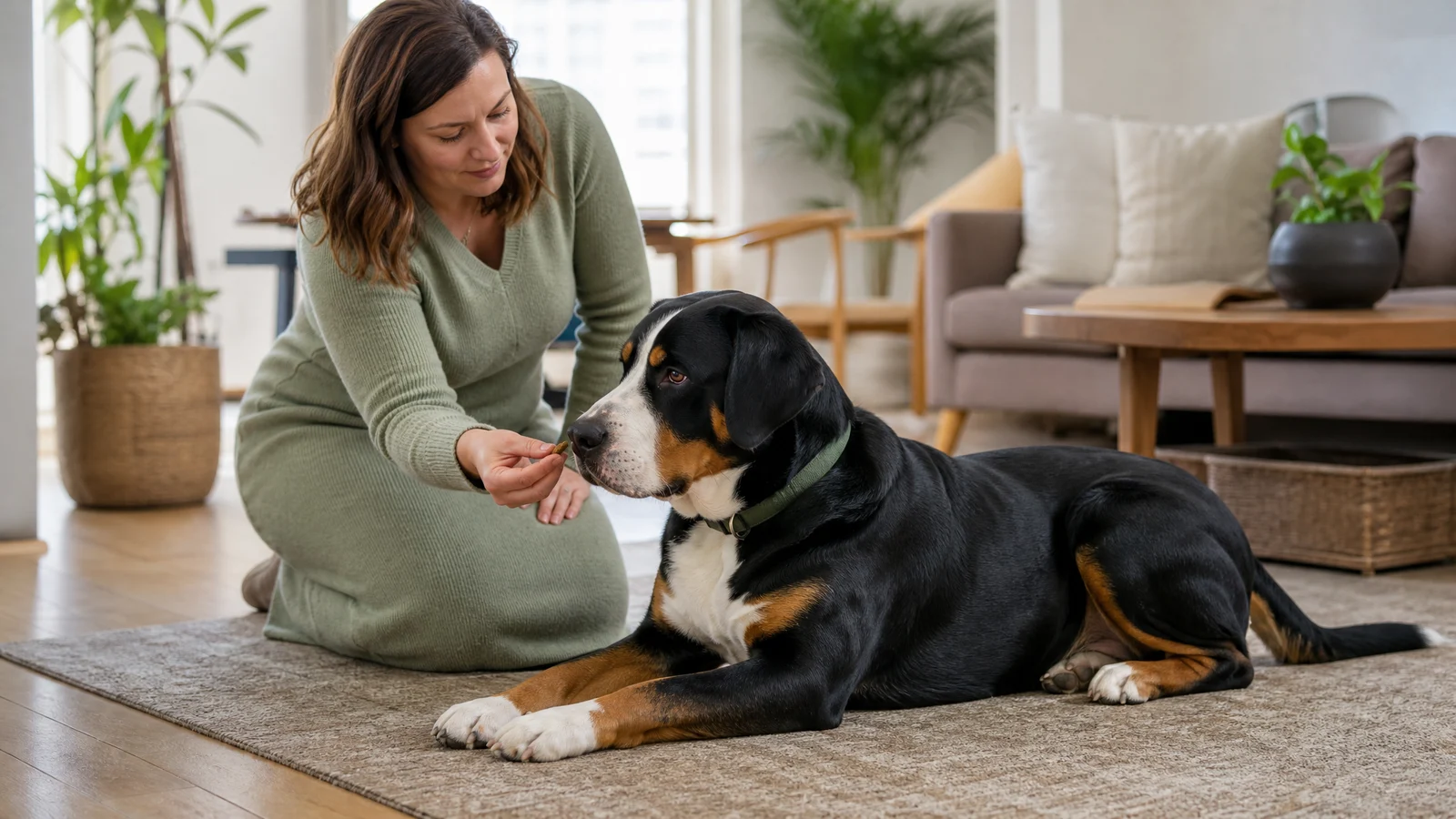
Place one harness piece or safe cart component on the ground several feet away. Let the Swissy investigate. Mark a glance or approach, then deliver the reward away from the object so the dog can reset and decide whether to return.
Approach Does Not Require Dressing
Do not lure the dog close while their feet remain planted. That posture may show conflict rather than comfort. Increase distance, reward relaxed observation, and let the Swissy close the gap voluntarily.
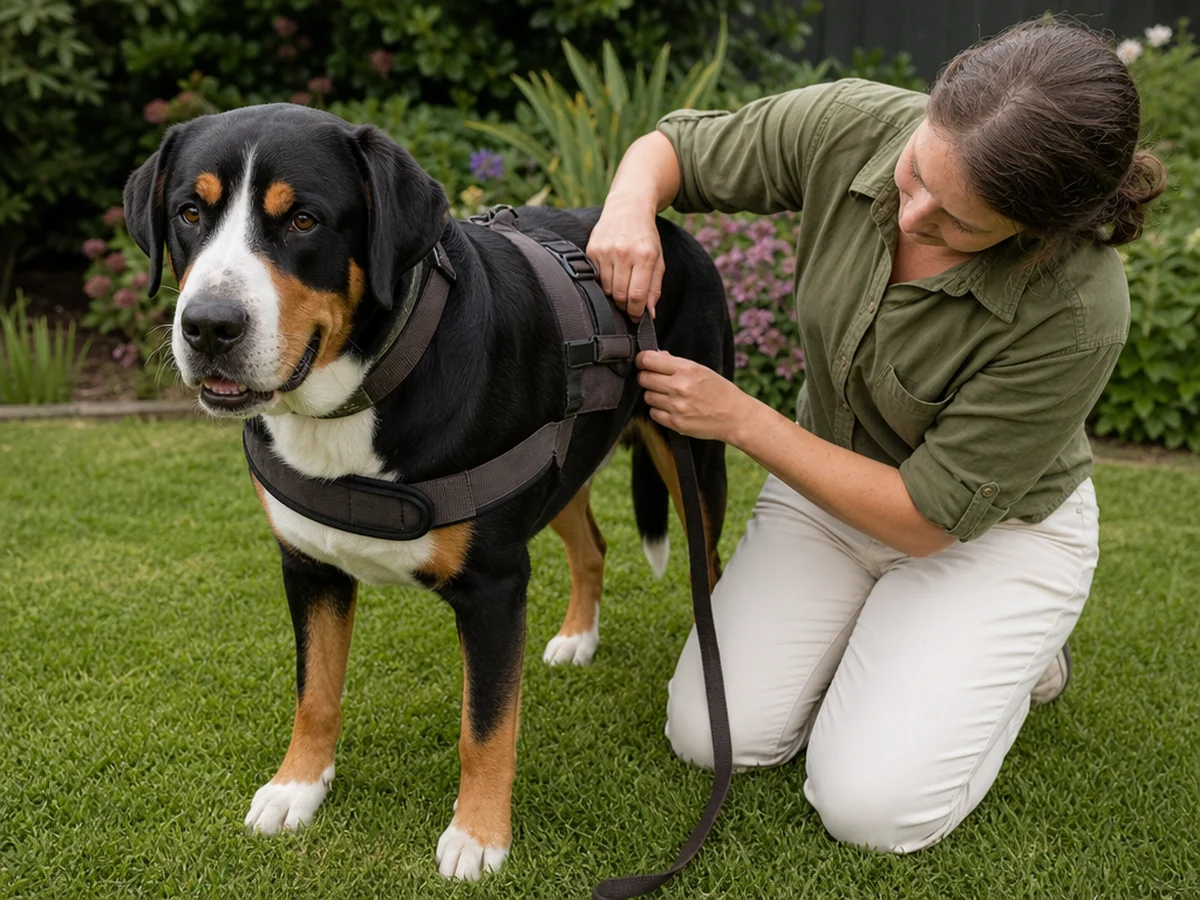
When approach is easy, hold the harness low and briefly touch a strap to the shoulder. Mark, remove it, and reward. Explore different contact points over separate visits. Never trap the head through an opening or fasten gear while the dog tries to leave.
Invite the nose through an opening toward an empty hand. Mark the offered motion, then reward from the other hand after the dog backs out. Food should not draw the dog farther into equipment than they chose to go.
Fasten one suitable piece only after loose contact is ordinary and an instructor has explained the setup. Keep the first fastening brief. Later, take a few unhurried steps with nothing attached and confirm that movement remains normal.
Cart Observation Does Not Require Proximity
Have a helper move an empty cart across open space while the dog stands with the handler at a generous distance. Mark a relaxed glance, reward, and walk away together. The helper stops before concern builds.
Parallel movement is easier to read than an approach from behind. On another visit, travel in the same direction with wide separation. Reward the Swissy for check-ins and ordinary gait, not for getting close quickly.
If a wheel bumps or hardware rattles, pause. Let the dog recover and choose whether to return. Do not repeat the sound to prove that it is harmless. An unexpected event changes the setup and may end that visit.
Greater Swiss Mountain Dog Leash Training Without a Cart
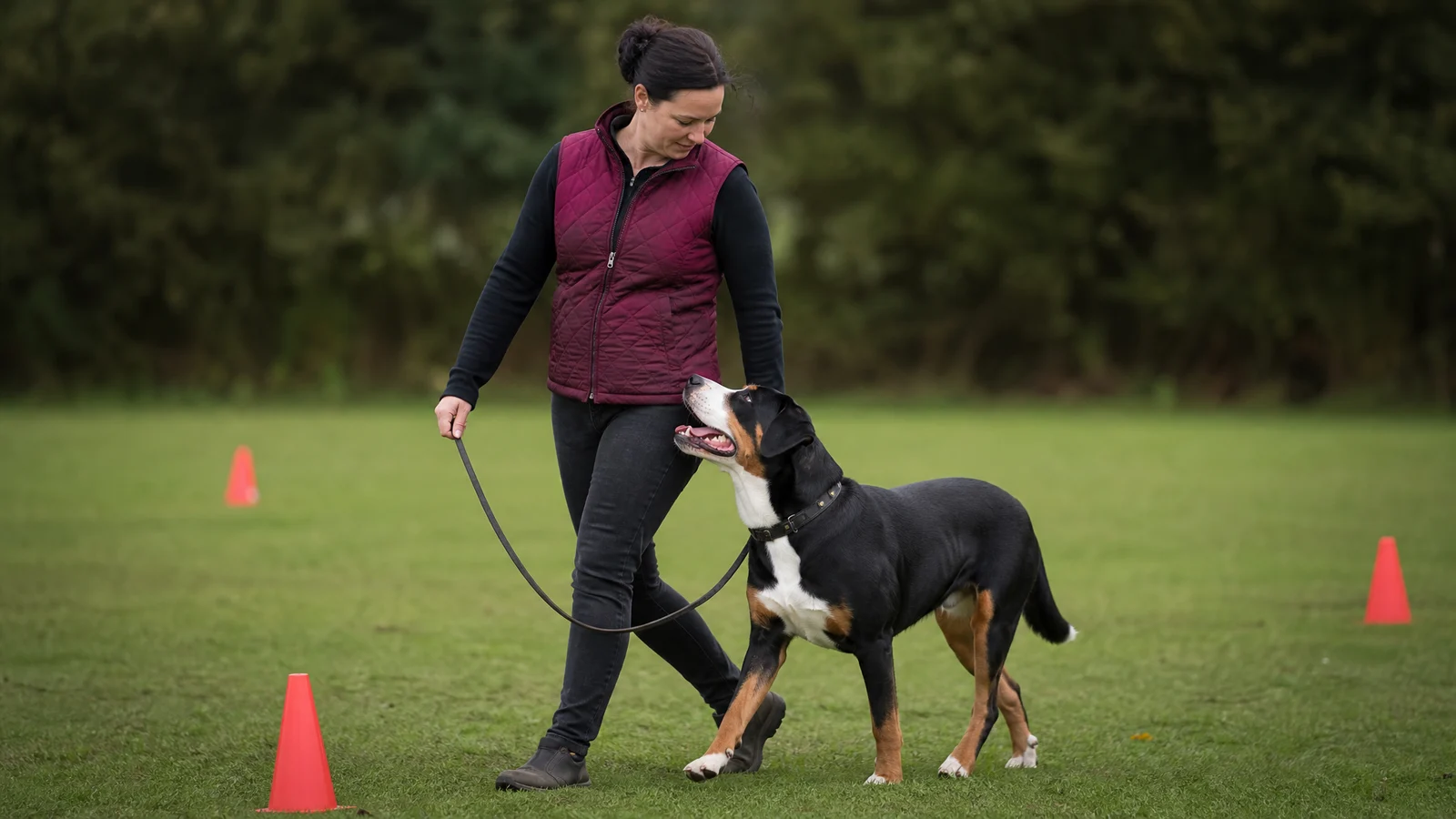
Start, stop, stand, and broad turns should work during ordinary side-by-side movement before a cart adds consequences. The dog responds to the cue and handler position. Leash pressure should not steer the body into place.
Take several steps and reward near your leg while the leash stays loose. If the Swissy surges, stop and wait for a turn or step that releases tension. Mark the slack, reward, and resume from an easier position.
The RSPCA training guide explains that dogs repeat actions followed by outcomes they value. Apply that principle to quiet ground work. Pay the start, stand, and turn you want instead of creating the response through force.
Set two wide landmarks and walk broad curves around them. Reward the dog for following your shoulder and maintaining a steady pace. Direction words can be added after the shapes are familiar. Narrow turns have no role in this foundation.
Place a stand cue between curves. Reward stillness, take a breath, and release forward. The pause gives the handler time to inspect surroundings and would later permit an instructor to check equipment before movement resumes.
This ground school is not draft work. It is a communication rehearsal with the dog free of cart hardware. The Swissy training games offer other ways to reward attention and sniffing during everyday movement.
A Coached Cart Connection Is a Leash Training Decision
Connection remains outside unsupervised practice. Before considering it, bring the four-track notes and the actual equipment to a qualified recreational drafting instructor. The instructor may decide to continue foundation work instead.
Fit and Handling Come Before Attachment
A draft-style setup has a purpose and must allow normal movement. This article cannot establish fit from a description. An instructor should inspect the selected equipment on the individual dog and explain how helpers control every loose component.
Never improvise with items that can catch, swing, or strike the dog. Do not tie objects to the harness to create a surprise sensation. Predictability matters more than finding a shortcut to resistance.
The First Connection Carries No Training Goal
The first supervised connection is about standing with correctly selected equipment. It is not a test of strength, distance, or hauling. Movement and added weight are later decisions that this foundation guide does not make.
An instructor may first use safe, lightweight training elements to introduce an object beside the body. The behavioral rule remains choice. Present at distance, reward investigation, and add brief contact only while movement and posture stay relaxed.
Connection should confirm familiar information rather than create several new sensations. The Swissy already knows the start and finish of a session, accepts the harness, observes cart movement, and responds to ground cues before equipment links those contexts.
Stop Signals Override the Plan
Disconnect for reluctance, altered stride, repeated looking back, scratching, inability to take a familiar reward, or attempts to escape. Do not use food to pull a worried dog forward. Quiet removal protects confidence and gives the team useful information.
Before any coached connection, the following observations should feel ordinary. Review every item with the instructor.
- The Swissy approaches and leaves equipment without rushing or freezing.
- Harness handling and removal leave the body loose.
- Empty-cart movement is comfortable at the instructor’s selected distance.
- Ground cues work on a loose leash with no cart present.
- A knowledgeable instructor has inspected the gear and planned the roles.
The list is not permission to connect. It organizes the conversation with the instructor. A dog can meet several items and still need more time because readiness is renewed on the day.
A Session Log Replaces the Leash Training Schedule
Calendar time does not create readiness. Two weeks of repeated concern are not more useful than one comfortable visit. Use the log to preserve setups that worked and to identify the exact feature that should remain easier.
Record the object, its position, who moved it, what the dog did, and how they responded after release. “Cart rolled parallel across the yard and the dog returned after a sniff” is useful. “Ready for carting” reaches beyond the observation.
Change one feature only after repeating a comfortable arrangement. Distance may decrease while sound and speed remain the same. Harness duration may grow while no cart appears. Independent tracks keep the source of any change visible.
AVSAB guidance supports teaching desired behavior through rewards. Around equipment, that means paying voluntary orientation, calm handling, familiar cues, and easy exits. Structure does not require fear or pain.
Maintain regular veterinary care and discuss a new physical activity before moving beyond comfort work. Health and body condition affect what an instructor may recommend. Breed history cannot settle that question for an individual Swissy.
For other structured outlets, compare Greater Swiss dog sports. Carting may remain a recreational interest built around careful equipment visits and ground cues, even if connection is delayed or never becomes suitable.
The foundation succeeds when each team member knows their role and the dog’s response stays ordinary. No load needs to move. A quiet decision to repeat, simplify, or stop is the central carting skill this guide can responsibly teach.
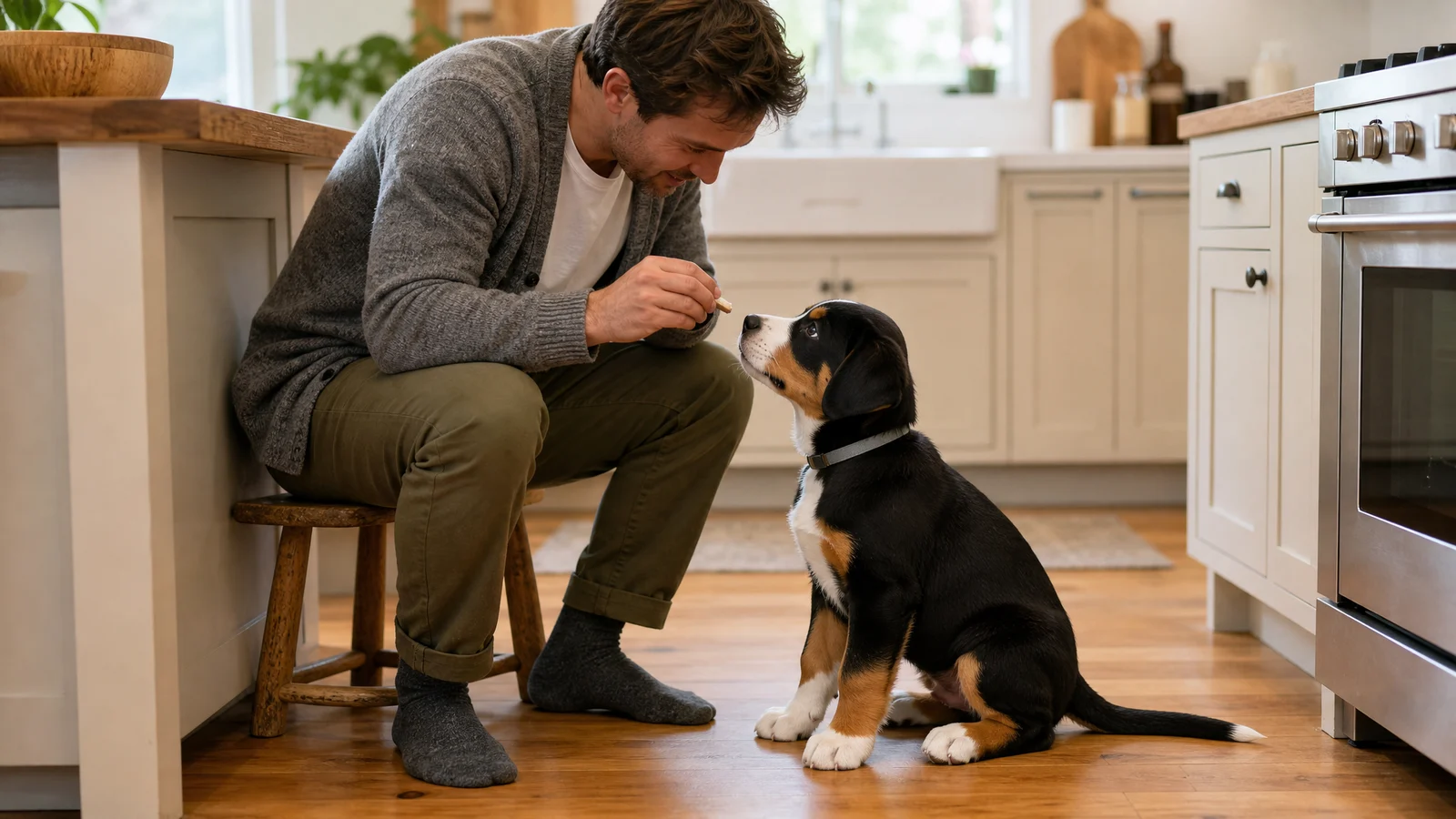 Puppy trainingGreater Swiss Mountain Dog Puppy Timeline: 8 Weeks to 2 Years
 Exercise and jobsSports and Jobs for a Greater Swiss Mountain Dog
 Training basicsHow to Train a Greater Swiss Mountain Dog With Food Rewards