
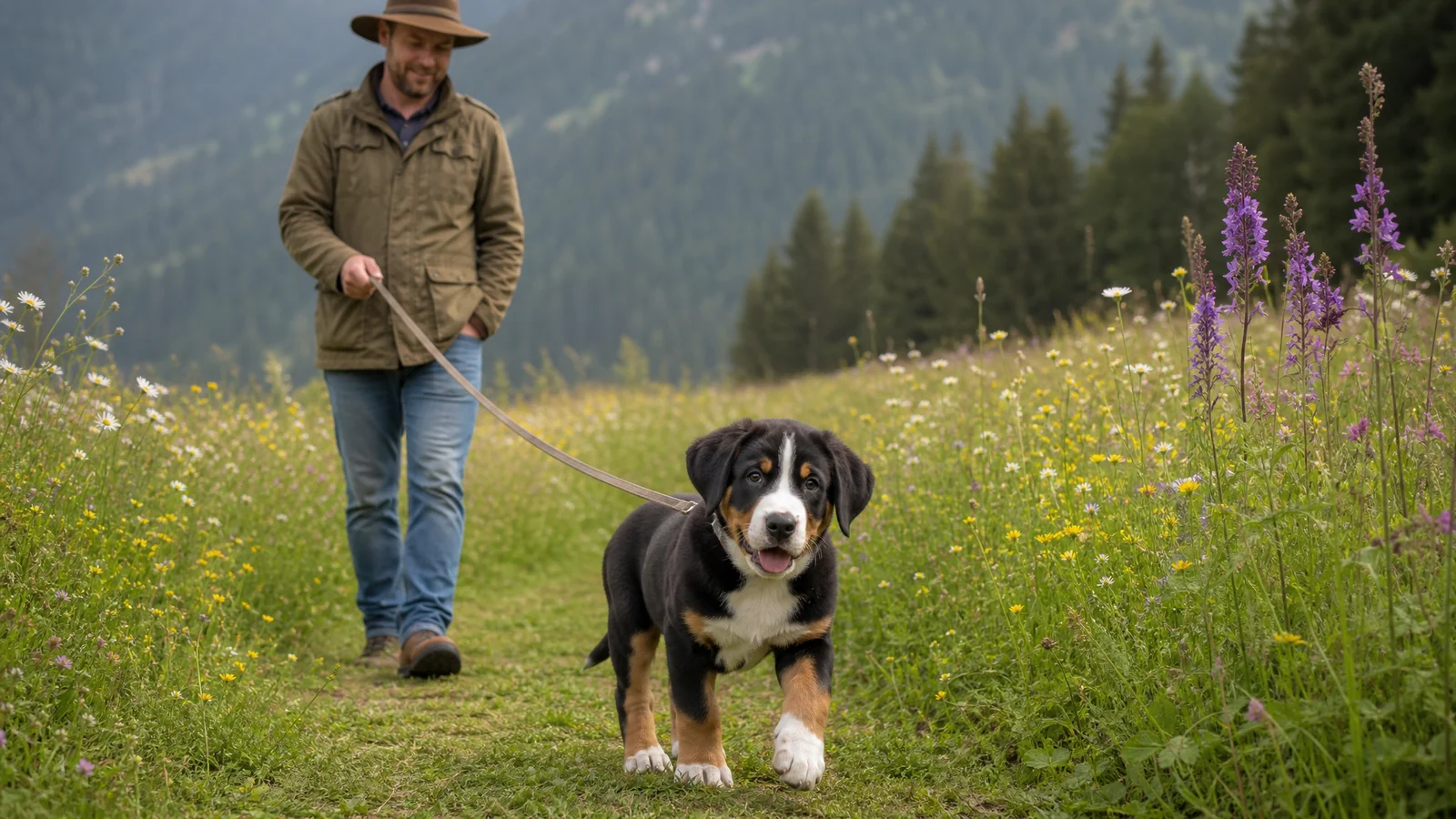
A puppy can have a short walk and still finish a physically demanding day. Stairs, repeated trips to the door, play on a slippery floor, visitors and several brief training sessions all add movement that a Greater Swiss Mountain Dog did not choose as one formal workout. The total load is easy to miss when each event looks small.
Below, we use four phases instead of a universal time formula. We build one whole-day ledger, choose among three repeatable activity cards, let unplanned load and staged recovery change tomorrow's card, and bring persistent movement changes to the veterinary team. The decision stays tied to this puppy's condition, footing, weather and recovery rather than an age-based mileage target.
Greater Swiss Mountain Dog Exercise While Growing Ledger
Start the ledger when the puppy wakes, not when the leash is clipped. Count ordinary movement through the home, necessary stairs, play with people or dogs, travel, training and any frantic moments. The goal is not to calculate a universal formula. It is to see what the formal activity joins.
A busy household morning can change the afternoon plan. If the puppy has already followed children between rooms, climbed necessary steps and greeted a visitor, a quiet sniff close to home may fit better than a new route. The ledger makes that change deliberate rather than disappointing.
Assign one person to total the day before a new card begins. Separate caregivers often remember only their own activity with the puppy. A shared note prevents several reasonable outings from becoming one unreasonable total.
Include rest quality beside movement. Interrupted naps, unusual household noise or repeated excitement can change how the puppy handles a familiar activity. Recovery begins with the condition brought into the card, not only what happens after it.
Keep regular veterinary visits current. Ask about growth, body condition, gait, known health concerns and which activities should wait. General breed guidance cannot decide whether a particular puppy should use stairs, play on uneven ground or begin a new movement skill.
The AKC's breed profile warns that the breed's size, dark coat and undercoat make hot conditions difficult. Heat belongs in the daily load even when distance stays short, so schedule cooler conditions and keep an easy route home.
Record Five Load Features
The ledger records features of movement rather than promising safe minutes. One activity may have low speed but high novelty. Another may happen on familiar ground but contain repeated stops and turns. Those differences help the household compare days without pretending they are identical.
| Load feature | What to record | Why it changes the next choice |
|---|---|---|
| Repetition | How often the same motion occurred | Small actions can accumulate across the day |
| Speed | Easy wandering, steady movement or bursts | Fast changes can be harder to organize |
| Footing | Secure, uneven, slick or hard | Surfaces change balance and confidence |
| Weather | Heat, sun, humidity or sudden change | Comfort may end before interest does |
| Novelty | New place, person, dog or equipment | Learning and arousal also affect recovery |
Use plain descriptions. “Several fast turns on damp grass” is more useful than “played a lot.” “Quiet sniffing on a familiar block” helps the next caregiver understand what the puppy actually did.
Write the puppy's movement before and after the event. Note willingness to start, coordination, response to a familiar cue and ability to settle later. A ledger is valuable because it holds observations that memory tends to smooth over.
Use a brief phrase for intensity and another for recovery. “Easy pace, ordinary rest” creates a baseline. “Fast bursts, restless evening” identifies a combination worth changing without claiming the activity caused a medical problem.
The breed club website describes the Greater Swiss Mountain Dog as a versatile family and working canine. Versatility is a future possibility, not a reason to sample demanding work early. Growing foundations can stay broad and gentle.
Activity Cards for Exercise While Growing
An activity card can be repeated under comparable conditions. Each card has an entry check, the movement itself, an exit condition and a recovery note. If the entry check fails, choose rest or an easier card instead of trying to make the planned activity happen.
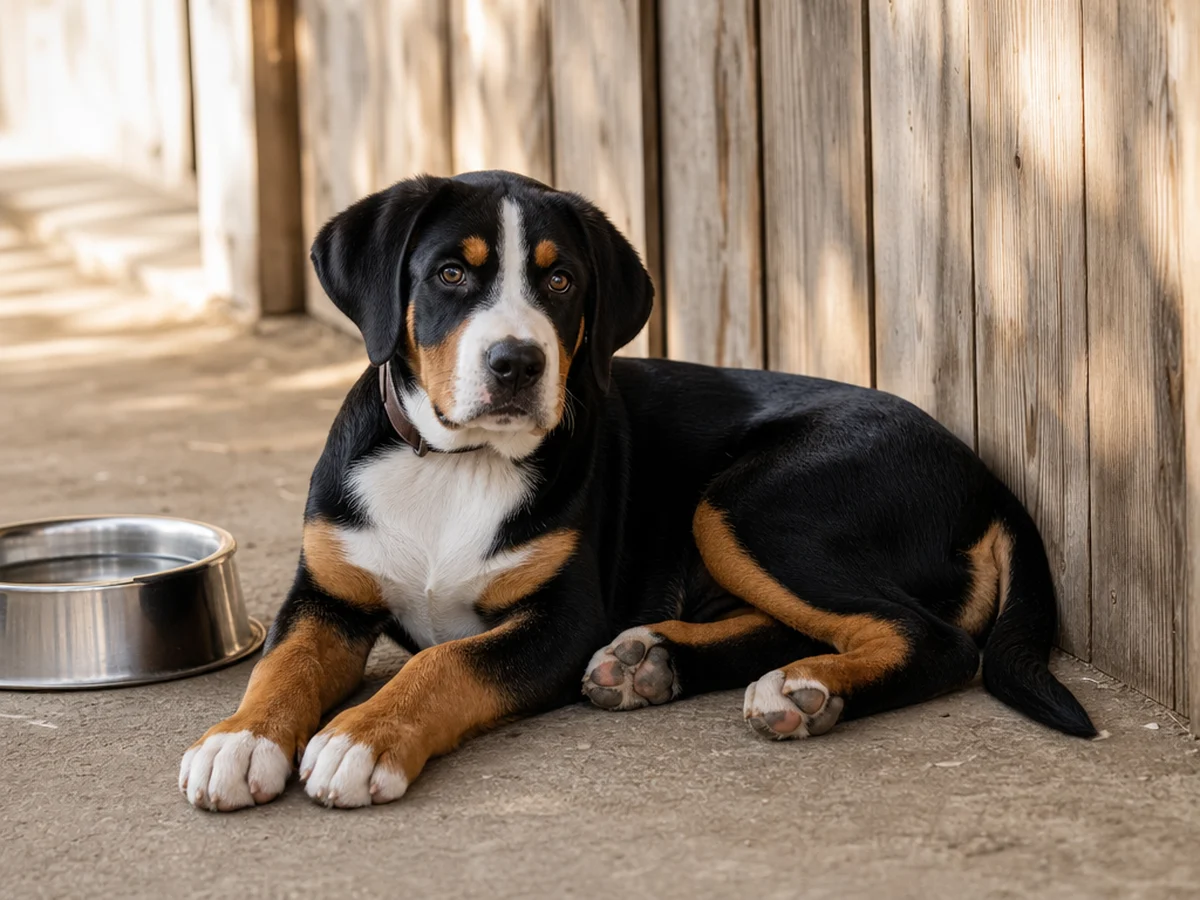
The Familiar Sniff Card
Use a known, secure route with room to turn home. The entry check is ordinary movement and comfortable weather. Let the puppy sniff and choose an easy pace rather than covering a target distance.
Exit when pace changes, the environment becomes crowded or the planned short route is complete. Record footing, weather and whether the puppy returned home with coordinated movement. A familiar route makes new recovery information easier to interpret.
The Free-Play Card
Choose secure footing and a compatible partner or toy. The entry check includes a puppy who can respond, move evenly and begin without frantic behavior. Keep the space open enough for natural curves and voluntary pauses.
Interrupt while both dogs can disengage. Best Friends' distance guidance uses observation before moving closer to another dog. Apply that principle by starting with space, watching both animals and ending before play becomes chaotic.
The Body-Skills Card
Use a nonslip area for a few broad turns, a calm step onto a low stable surface or movement around widely spaced objects. The entry check is relaxed attention and normal footing. This is coordination practice, not an obstacle course or endurance test.
Exit after several willing, balanced repetitions. Do not raise height, speed or repetition in the same session. Record which movement stayed easy and whether the puppy could leave the setup without racing back to it.
Unplanned Load During Exercise While Growing
Unplanned movement can outweigh the card. A puppy who slips during lively indoor play, makes repeated trips up necessary stairs or spends the morning following repair workers has already used physical and social energy. Add those events before choosing the next activity.
Visitors can create bursts of speed, jumping and sharp turns even when nobody intended exercise. Use barriers and floor-level rewards to keep greetings organized. Afterward, choose recovery rather than treating the scheduled card as an obligation.
Travel adds novelty and restricted positions. A veterinary appointment followed by a car ride may leave the puppy tired without a walk. The ledger should show that the day contained a significant event even when the step count would look low.
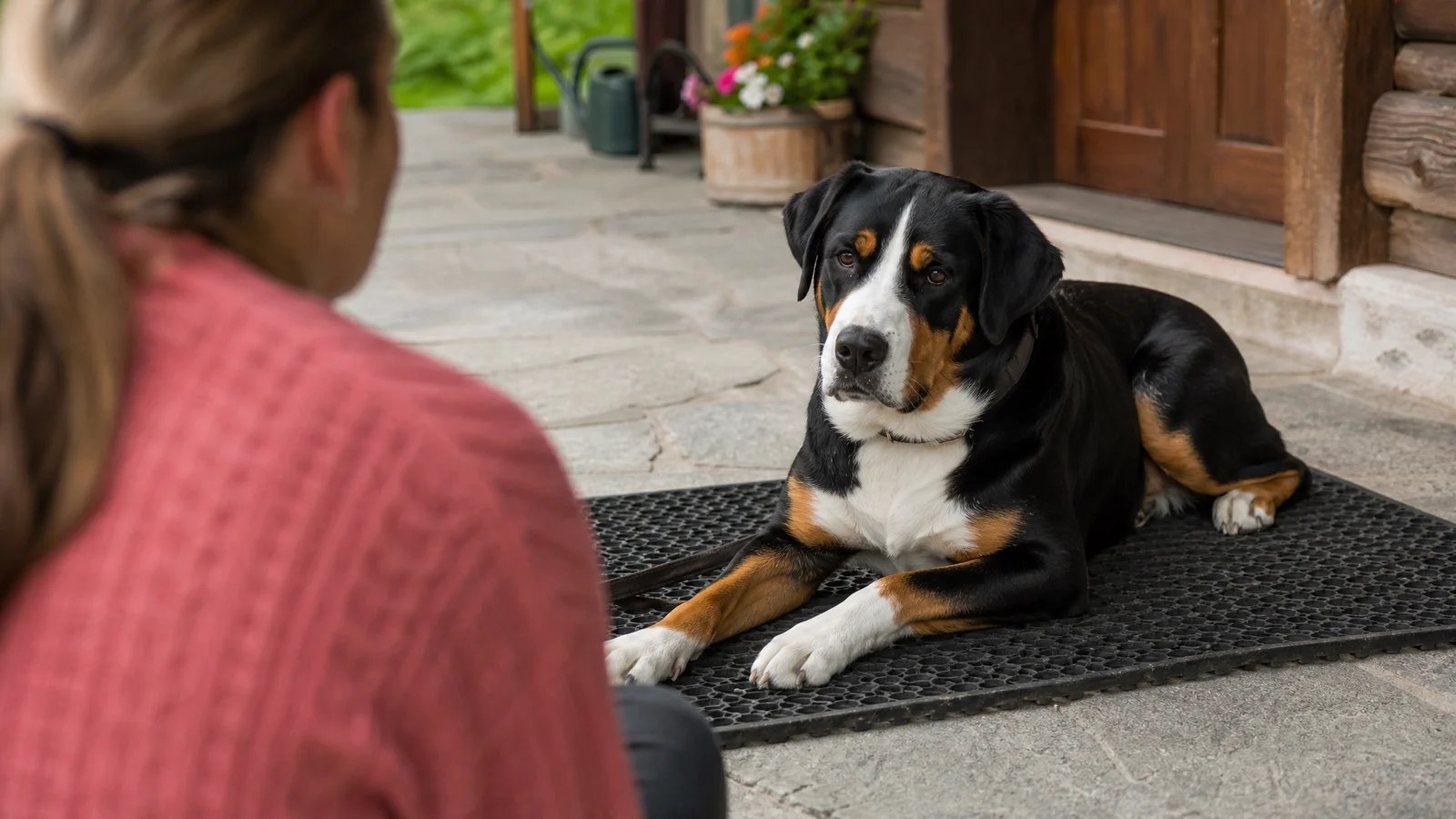
Indoor footing deserves its own note. Put runners where the puppy often turns, rises or approaches doors. When front feet leave carpet for tile, slow the transition and provide traction rather than encouraging a running start.
Necessary stairs can be grouped into planned trips. Prepare everything before taking the puppy outside so forgotten items do not create extra climbs. Follow the veterinarian's advice for the individual puppy and record any unavoidable repeated use.
Teach an exit cue for changing plans outdoors. Battersea's U-turn lesson pairs a cheerful cue with following the handler away. The cue can end a route when weather, traffic or an excited encounter adds more load than expected.
Recovery Checkpoints After Exercise While Growing
Recovery is reviewed at several points, not only when the puppy lies down. The first checkpoint happens on return. Watch the final approach home, drinking, ordinary movement through the entry and the puppy's ability to choose rest.
The evening checkpoint asks whether the day's total load changed familiar behavior. Notice rising, lying down, walking to water, settling around household activity and response to normal cues. Restlessness can matter alongside physical reluctance.
The next-morning checkpoint compares the puppy with the ordinary baseline. A puppy does not need dramatic soreness for the previous day to have been too difficult. Slower movement, hesitation, stiffness, reduced interest or a changed gait should stop planned progression.
Sleep position alone does not decide recovery. Watch how the puppy gets up, crosses secure ground and chooses ordinary activities. A single unusual posture may mean little, while a repeated movement change belongs in the veterinary record.
Use the checkpoints in the same order every time. A fixed review sequence keeps the household from skipping the later evidence after an easy return home:
- On return, record movement and the first rest period.
- Later that day, record ordinary transitions and settling.
- The next morning, compare rising and walking with baseline.
- Choose the next activity only after reviewing all three notes.
The site's broader Swissy exercise guide discusses age and adult activity. This ledger serves a different purpose by joining household load to staged recovery observations.
Revise Greater Swiss Mountain Dog Exercise While Growing
Revise the next card, not the entire puppy. If the familiar sniff card ended comfortably but free play produced a frantic evening, keep the sniffing conditions and simplify the next play arrangement. Evidence belongs to the activity and setup that produced it.
Change one load feature when possible. Choose more secure footing without adding novelty, or shorten repetition without choosing a busier place. Stable comparisons make the ledger useful, while several simultaneous changes hide the reason recovery improved.
Do not advance because a week passed. Growth, weather and household events do not follow a fixed training calendar. Repeat a comfortable card, replace it with rest or ask the veterinarian before adding challenge.
Coordinate activity with the site's Swissy food-reward training plan. Short learning sessions count in the ledger, and training food belongs in the puppy's ordinary diet according to veterinary guidance.
Leave the next card blank until the final checkpoint is read. That pause gives another caregiver a chance to add missing household movement. It also prevents tomorrow's plan from becoming a promise that recovery evidence cannot change.
Veterinary Decisions for Greater Swiss Mountain Dog Exercise
Stop planned activity and contact the veterinarian about limping, repeated stiffness, apparent pain, altered coordination, breathing difficulty, unusual fatigue or a sudden loss of willingness. Share the ledger because the sequence may help explain when the change first appeared.
Ask before returning to the activity that preceded the concern. A quiet day that makes the puppy look better does not prove the previous load is safe to repeat. Medical guidance should set the return plan.
The practical next step is one card chosen after the full ledger is read. Count what already happened, check the entry conditions and keep an easy exit available. A growing Swissy needs movement, but the best next movement is the one their whole day and recovery can support.
 BehaviorStrong Chews and Chew Rules for a Greater Swiss Mountain Dog Puppy
 Training basicsCrate Training a Greater Swiss Mountain Dog Without Anxiety
 CareNail Trims and Paw Checks for Greater Swiss Mountain Dogs