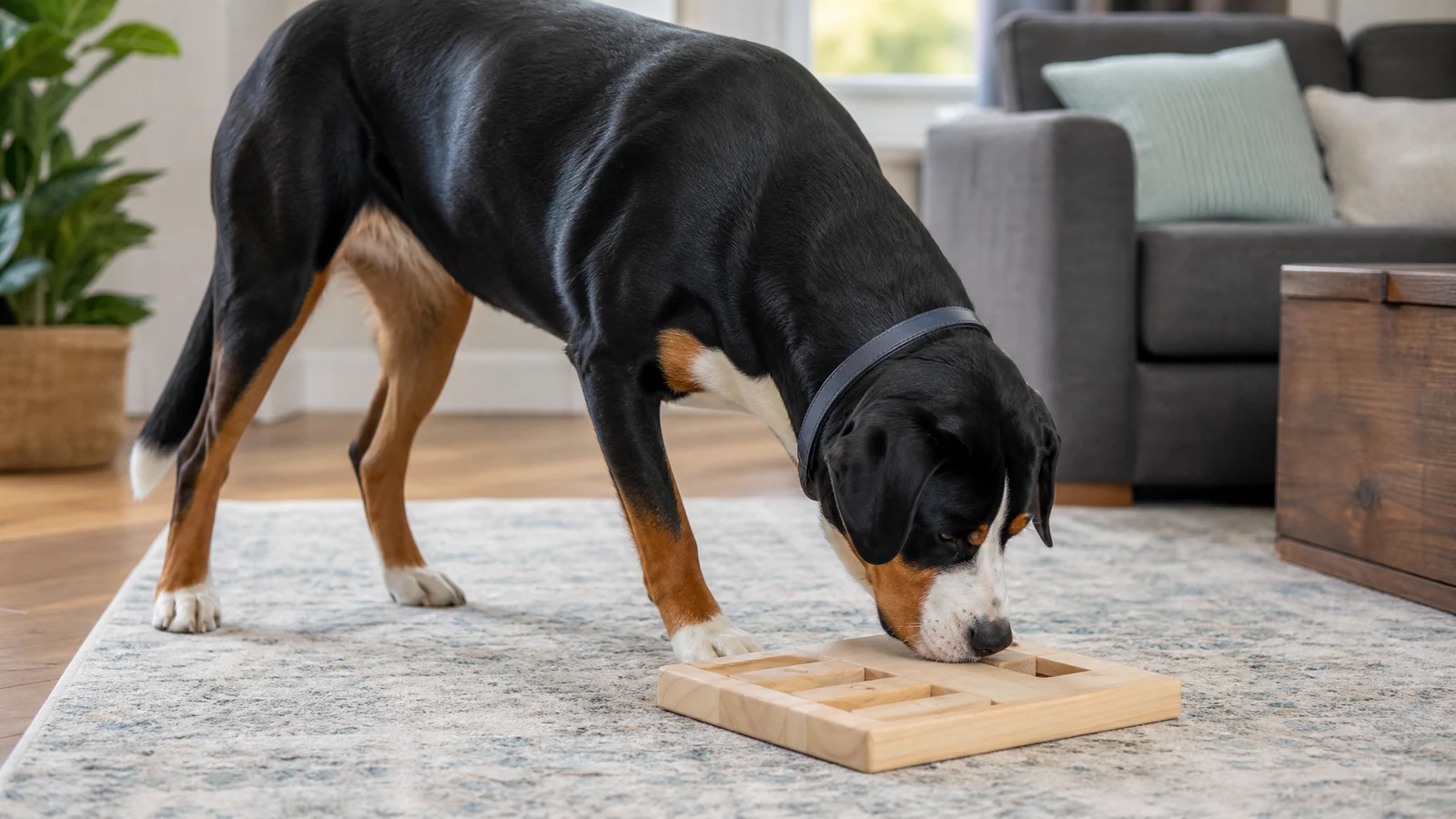
A Swissy can return from a walk with tired legs and a mind that is still looking for work. Another dog may take a shorter outing, solve a food puzzle, find a hidden toy and settle contentedly. The difference is not simply more activity. It is having a problem with a clear, rewarding answer.
Greater Swiss Mountain Dogs have a versatile working background, so mental stimulation can feel purposeful rather than decorative. This guide builds a menu from food games, scent searches, household jobs, leash exercises and calm recovery. You can choose one station at a time, watch how your dog responds and create variety without turning every day into a bigger physical workout.
Greater Swiss Mountain Dog Leash Training for the Mind
A walk gives your Swissy movement, outdoor information and time with you, but it does not have to carry the entire enrichment plan. PDSA guidance treats training as part of a daily routine because it keeps a dog's mind active, reinforces cues and helps prevent boredom.
That makes the first menu question simple. Does the dog need to search, make a choice, practice control or learn how to come down from excitement? Pick a game for the need you see. Repeating a favorite is useful, but rotating the kind of thinking prevents the menu from becoming one predictable trick.
Read the Starting State
A dog who is already racing around may benefit from a slow sniffing search before a fast training game. A dog who is relaxed and attentive may be ready to learn a new object name or movement. Begin where the dog can succeed, since frustration is not evidence that a puzzle is mentally valuable.
Use a familiar marker and rewards your Swissy wants in that moment. Food is convenient, but praise, access to sniffing and a favorite toy can also confirm a correct choice. Reward-based teaching makes the answer clear and leaves the dog willing to try again.
Choose the Kind of Work
We separate games by the decision they ask the dog to make. A scent search asks where, a target asks which place, and a station asks when to wait. This distinction avoids presenting several versions of the same task while calling the routine varied.
Alternate a new answer with a familiar one. The Swissy can learn one object name, then finish with a search they already understand. That order protects confidence and distinguishes productive concentration from a challenge that needs to be simplified.
Food Games Before Greater Swiss Mountain Dog Leash Training
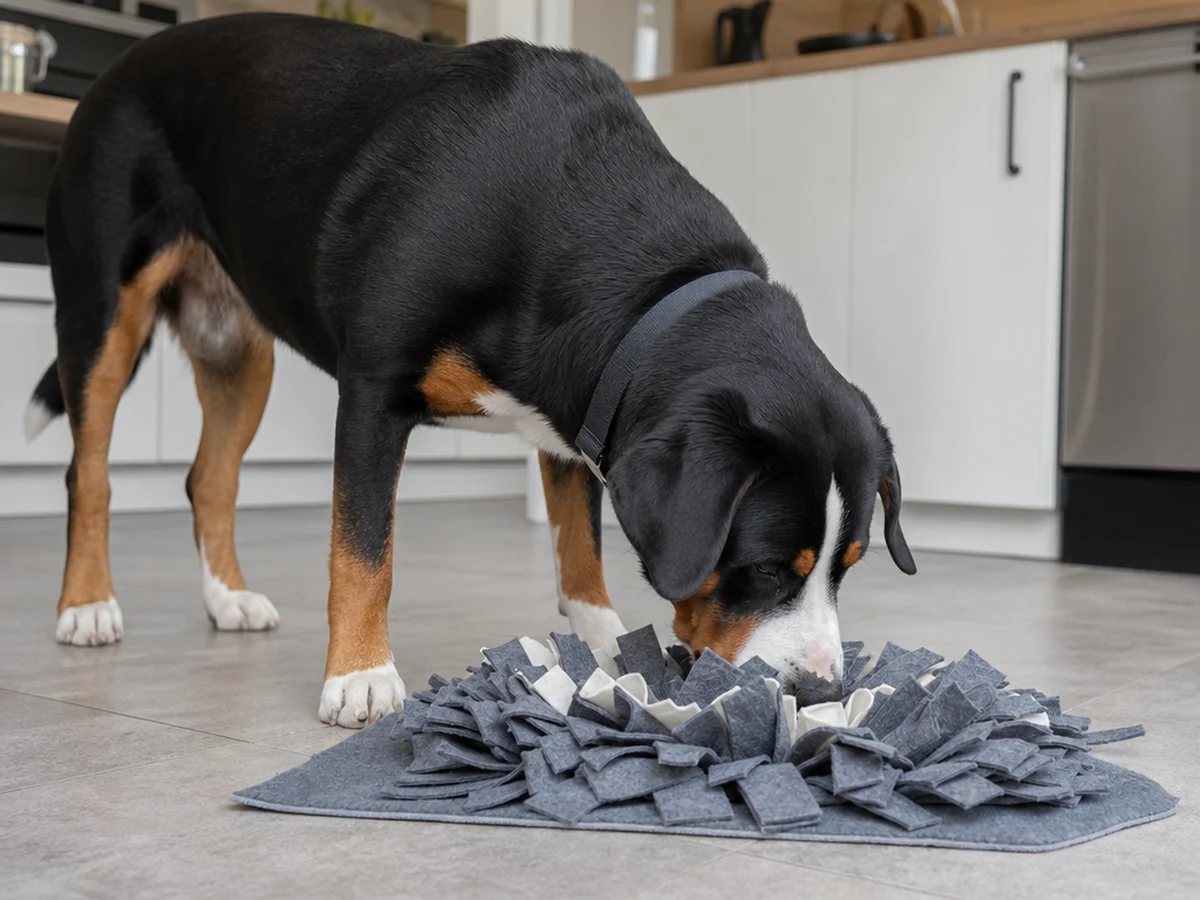
Meals are an easy place to create mental work without adding food beyond the daily plan. The ASPCA enrichment guide explains how a meal can become an engaging puzzle while the eating pace slows. Start with a puzzle your dog can solve, then make only one feature harder at a time.
A Search With an Obvious Answer
Place a few pieces of the meal in open containers around one room while the dog watches. Release them to search and quietly mark each find. On later rounds, move containers behind a chair leg or beside a doorway, but keep the food accessible. The game should reward searching, not force the dog to tear through packaging.
Cardboard can be useful only under supervision and only for a dog who does not swallow it. A washable food toy is the simpler option for many households. Whatever you choose, remove damaged pieces and make sure the setup stays calm around other animals.
Choices Instead of Guessing
Offer two upside-down cups, with food beneath one. Let the Swissy investigate, then lift the chosen cup and reward a correct find. If the dog paws hard or grabs a cup, simplify by holding both steady and rewarding a nose touch. Precision grows from many easy choices, not from withholding help.
Change the game before changing the difficulty. A scatter in a folded towel, food delivered for touching a target and a simple puzzle feeder ask for different actions. This keeps the meal interesting while letting you return to an easy version whenever concentration fades.
Scent Games for Greater Swiss Mountain Dog Leash Training
Sniffing can turn an ordinary route into a deliberate search. Choose a safe patch away from traffic, cue the search and toss several pieces of food into short grass where you can see them. Let the dog work at their own pace. The goal is careful investigation, not a race to cover ground.
A predictable start and finish keep the game from becoming constant ground scavenging. Use one cue before the search, then a different cue to resume walking. Reward the transition back to you. That distinction gives the Swissy permission to investigate without making every sidewalk object part of the activity.
Landmarks Become Search Stations
Use a bench, tree or quiet corner as a recurring station. At one stop, hide food near a visible root. At another, ask the dog to find a familiar toy placed in plain view. Familiar locations reduce uncertainty, while small changes in where the reward appears preserve the puzzle.
Keep outdoor food searches away from unknown plants, litter and places treated with chemicals. If the setting is not suitable, search for a person instead. One family member can step a short distance away, call once and reward the dog for finding them while the leash stays secure.
Household Jobs for a Greater Swiss Mountain Dog
The breed club presents the Swissy as a versatile family or working dog. A household job can honor that working spirit without pretending the home is a farm. The best jobs have a defined beginning, an action the dog understands and a clear release when the task is finished.
None of these jobs needs speed or force. They build communication through small choices.
- Carry a soft, safe item from one person to another, then trade it for a reward.
- Touch a cabinet target with the nose, then return to a mat for payment.
- Find a named toy among two familiar objects and bring it to your hand.
- Follow you from room to room while stopping at marked stations.
- Wait on a mat as groceries enter, then search for a treat after release.
Teach each component separately before calling it a job. A retrieve begins with taking and releasing one object. A station route begins with one target. Combining unfinished skills creates confusion, while joining familiar pieces gives the dog a solvable sequence.
Keep Strength Out of the Lesson
A strong dog can move objects accidentally, so choose light props and reward controlled contact. Do not ask the Swissy to drag furniture, carry awkward items or push against resistance. Mental stimulation comes from understanding the assignment, not from how much force the dog applies.
End the job while the dog is still accurate. Put the prop away, give a release cue and offer a calm activity. A consistent finish helps the dog distinguish invited work from taking household objects whenever they want entertainment.
Leash Training as a Brain Game
Leash work becomes mentally rich when the dog learns that attention and slack open access to the environment. In a quiet area, mark one step beside you, reward and release the Swissy to sniff. The sniff is not a distraction from training. It is part of the reward structure.
If the leash tightens, stop without jerking it. Wait for the dog to turn back or take a step that creates slack, then mark and continue. Best Friends guidance recommends changing direction and rewarding the dog for turning with you. We keep the lesson focused on the response that earns progress.
Patterns With Different Answers
Make three landmarks mean three different things. At the first, ask for eye contact. At the second, reward a hand target. At the third, release the dog to sniff. The Swissy must listen for the answer instead of repeating one automatic behavior through the entire walk.
Keep the pattern easy enough that the leash remains loose. When a busy sidewalk makes thinking difficult, add distance or return to a quieter route. The game is successful when the dog can notice the environment, reconnect and move with you without tension.
Calm Recovery After Leash Training
Enrichment is incomplete if every game leaves the dog asking for another round. Teach recovery as its own station. After a search or training sequence, guide the Swissy to a mat, deliver a few rewards low between their paws and let the pace slow. Release them before restlessness turns into wandering.
Gradually place more time between rewards while the body remains loose. The dog may shift position, look around or rest their head. Calm does not require a rigid stay. It means the Swissy can finish work, remain comfortable and stop driving the next interaction.
Change the Menu When Arousal Rises
Watch for frantic grabbing, repeated barking, hard pawing at equipment or an inability to take an easy cue. Those signs say the current version is too difficult or too exciting. Reduce movement, return to a known answer and finish with a simple search or mat routine.
Do not respond by making the dog work longer to tire them out. More repetitions can rehearse the frantic pattern. A shorter game with a clean finish builds better habits and leaves room for Swissy exercise to meet the separate need for physical activity.
Choose This Week's Swissy Leash Training Games
Build the week by selecting one item from each of three columns in your mind: a search, a cooperative skill and a recovery routine. The exact combination can change with the weather, the dog's energy and the time available. Keep the answer familiar on a busy day, then introduce one new challenge when attention is steady.
- Choose one meal to deliver through an easy food search or puzzle.
- Add a useful home job built from skills the dog already knows.
- Turn one walk stop into a rewarded attention or scent station.
- Finish every active game with the same calm mat routine.
- Note which activity produced focus and which one produced frustration.
If your Swissy enjoys structured work, explore dog sports or the recreational foundations in leash training. Useful progress appears when the dog can search, make a choice, work with you and return to rest after the answer, without needing every puzzle to become harder.
Keep routine veterinary visits on the calendar as the menu changes. A sudden loss of interest, unusual restlessness or difficulty with a familiar activity can deserve a health check. On ordinary days, let variety come from the kind of thinking rather than from unsupported tests of endurance.
 BehaviorTeaching a Greater Swiss Mountain Dog to Be Good With Kids
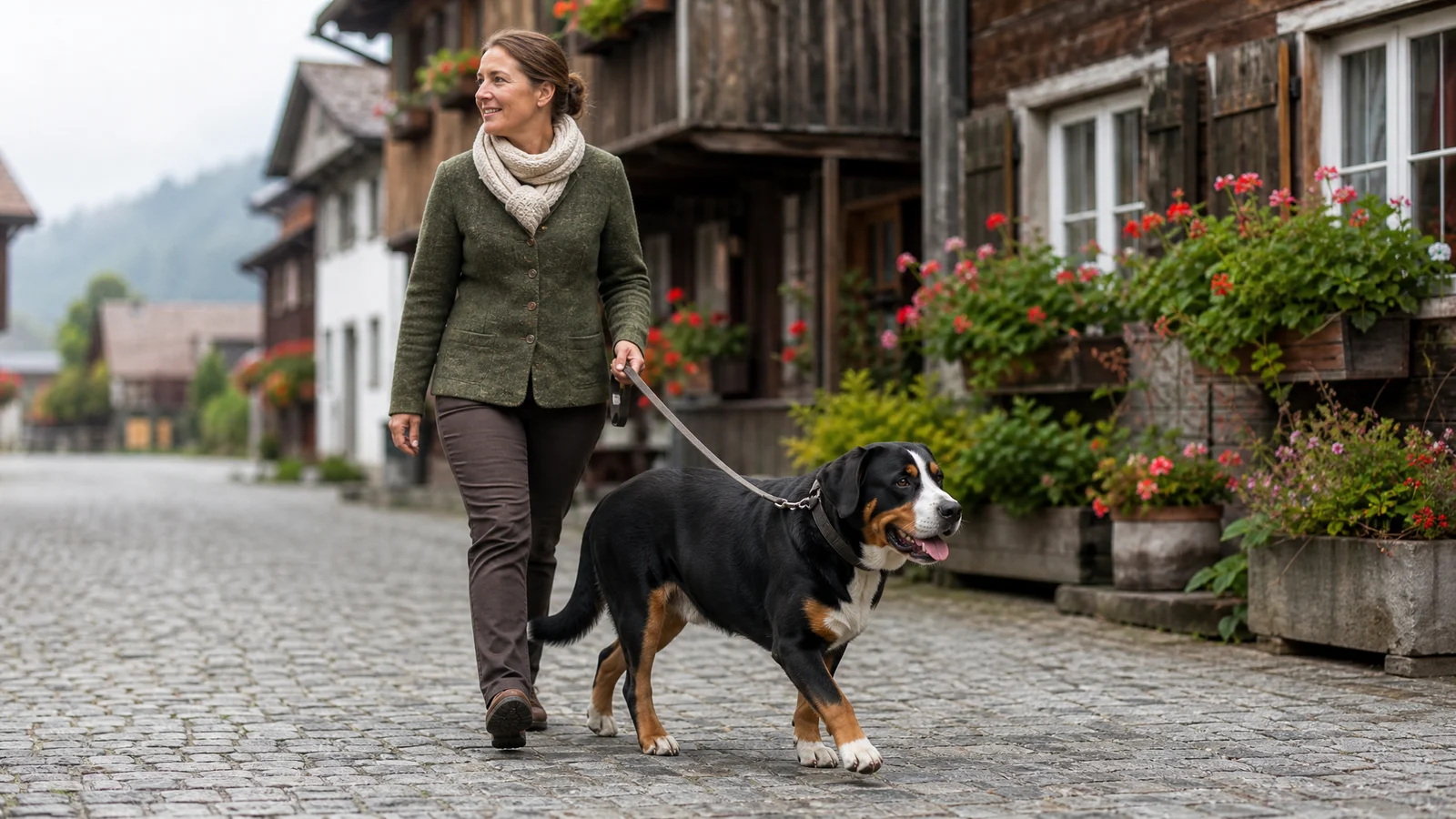 Training basicsDoes Your Greater Swiss Mountain Dog Drag You Down the Street?
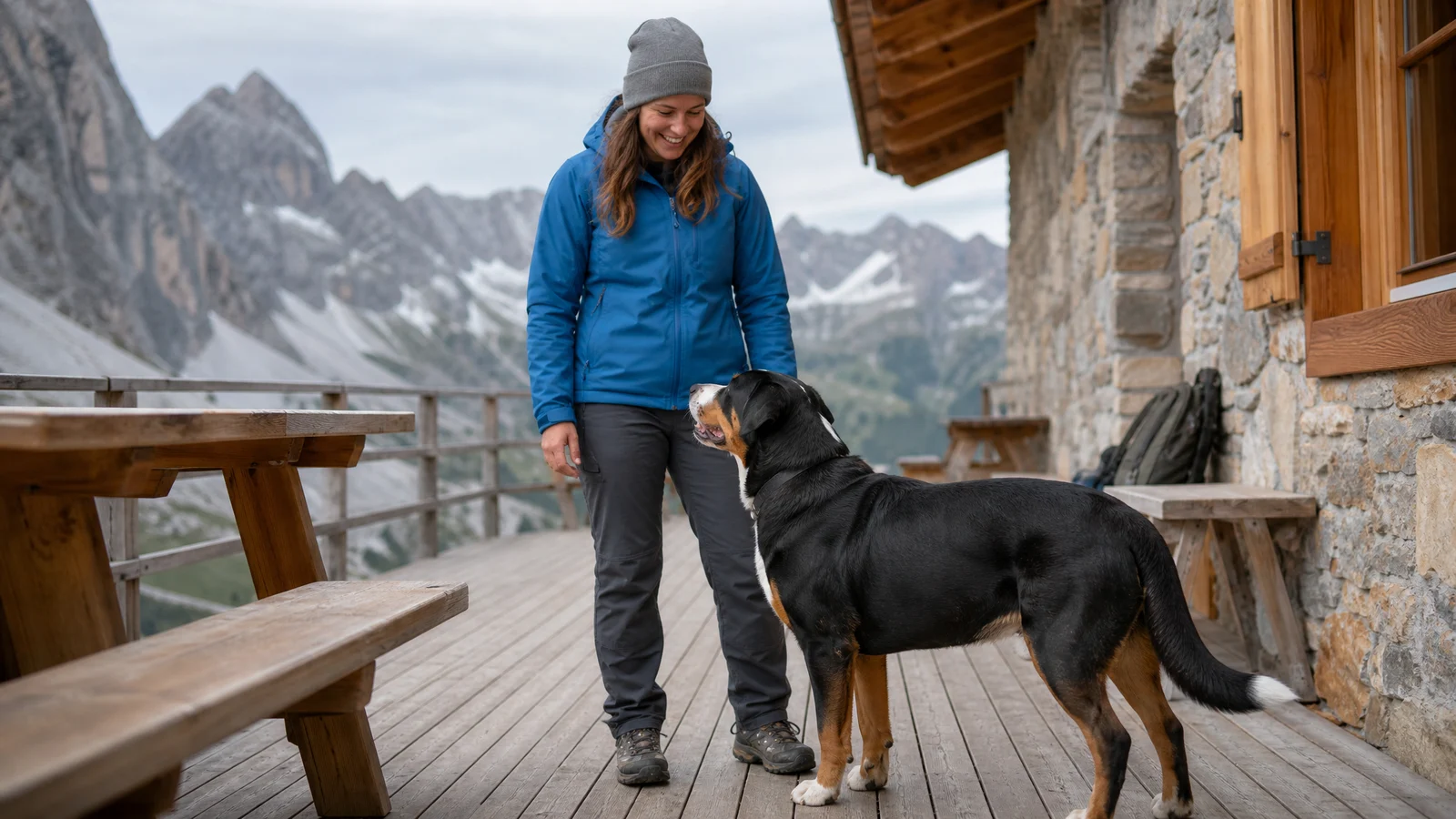 BehaviorGreater Swiss Mountain Dog Jumping on Guests: Rewarding Calm Hellos