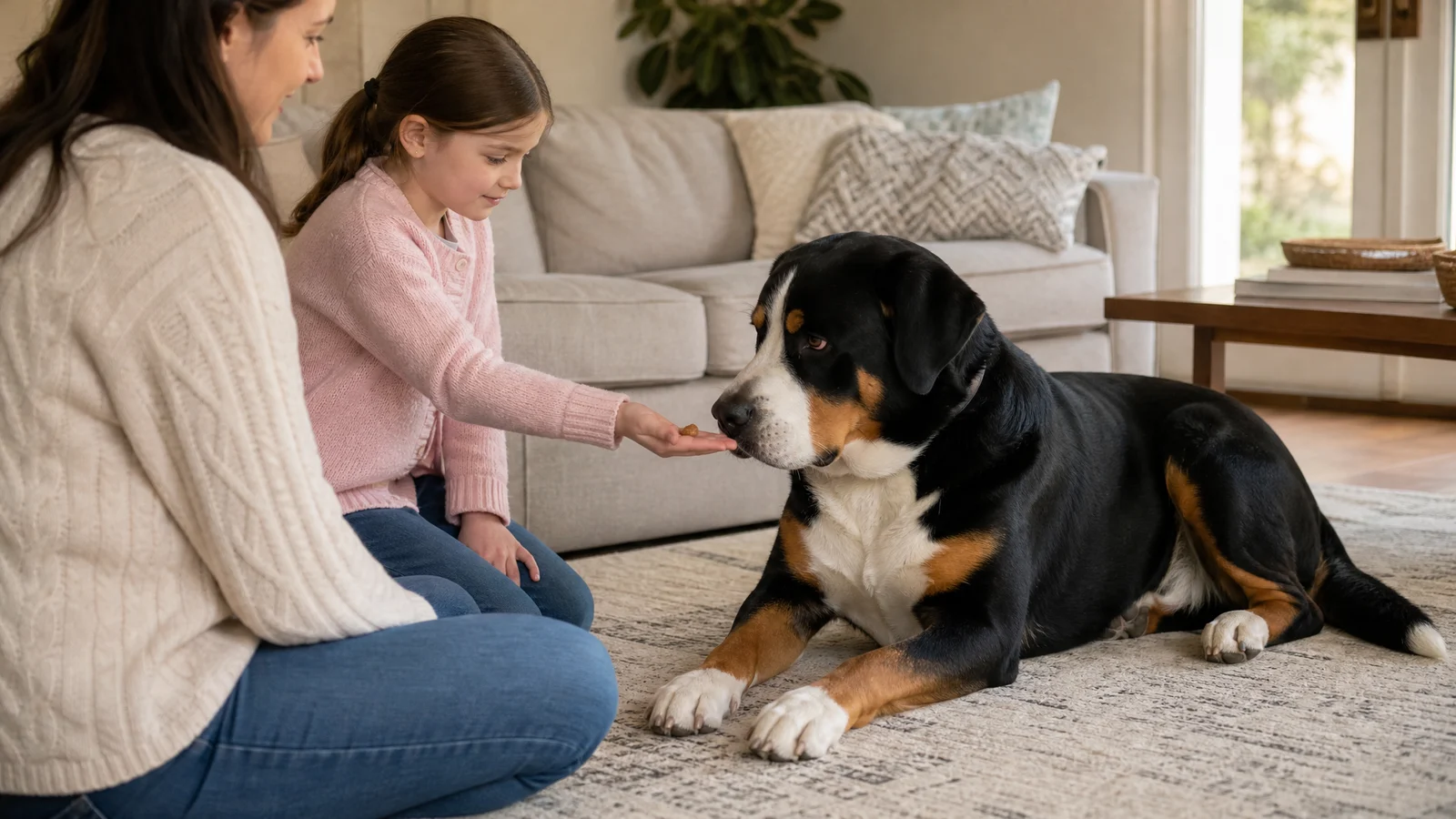
Some Greater Swiss Mountain Dogs melt around children. They lean a warm, solid shoulder against a small knee, settle on the rug beside the building blocks, and sigh. Others have the same big heart but bowl a toddler over in a wriggling hello, or bark the walls down when the doorbell rings.
The breed is rated 5 of 5 for being good with young children, but that number describes potential, not a finished dog. A male can reach 115 to 140 pounds, so an excited greeting is a physical event.
This article looks at socializing a Swissy by what you see and hear, so you can recognize the symptom, trace it to its cause, and apply a reward-based fix. We have trained this breed for many years, and the pattern holds: start early, while the dog is still a manageable size.
Greater Swiss Mountain Dog Leaning and Knocking Children Over
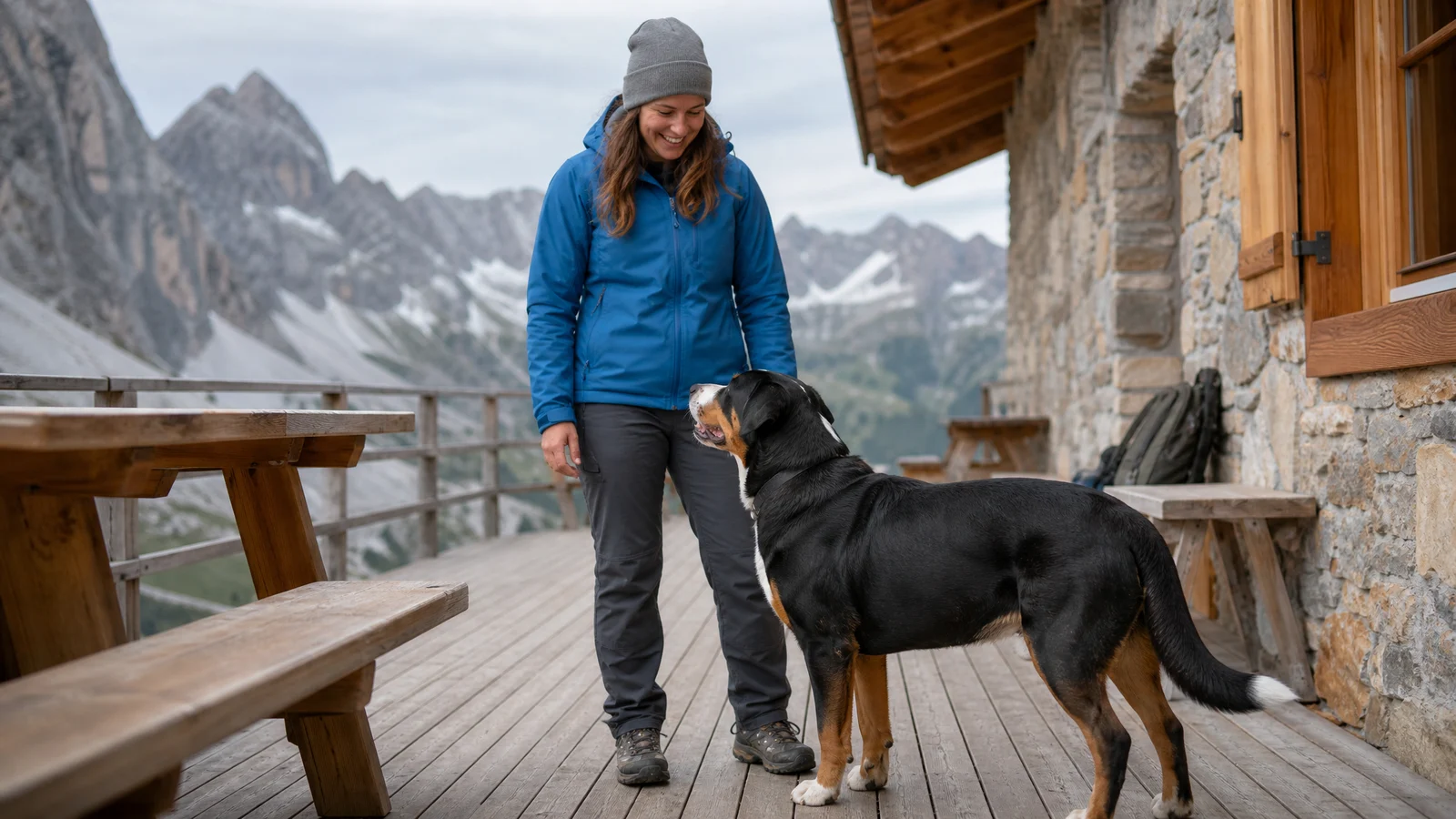
The symptom is full-body affection. Your dog leans their whole weight into a child, paws at shoulders, or swings a hip that sends a small person sideways. Nothing about it is mean, which is exactly why it gets missed until someone lands on the floor.
The causes are simple. The breed is rated 5 of 5 for affection with family and 4 of 5 for playfulness, and that warmth lives in a heavy-boned, well-muscled frame. Add a stubborn streak, and a dog who has been rewarded for jumping as a puppy will keep trying it at full size.
The fix starts with sit-to-greet. Hold a treat low and pay as soon as your dog's paws land on the floor, then reward again while the greeting continues. Ask children to stand still and let the dog come to them, since running toward a dog invites a leap.
Add space rules. Use a baby gate or a leash when the kids burst through the door after school, and give the dog a mat that is theirs alone. Food motivates this breed strongly, so tiny, frequent treats work better than rare big ones.
A Greater Swiss Mountain Dog Who Barks at Visitors
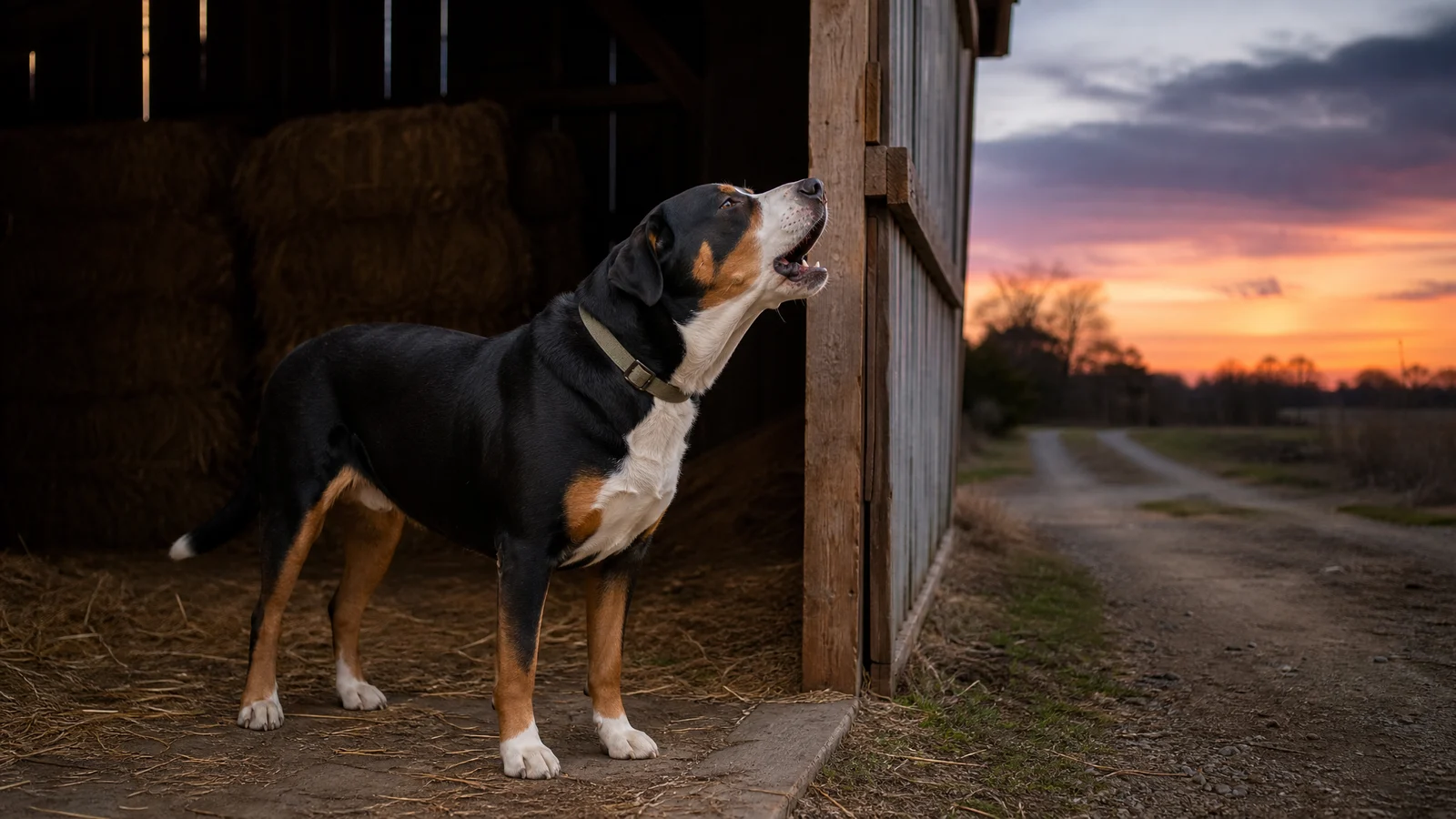
You expect a friendly dog, because the breed is rated 5 of 5 for openness to strangers. Instead the doorbell triggers a thundering announcement. The description of the breed as self confident, watchful and fearless, yet good with strangers, explains the apparent contradiction.
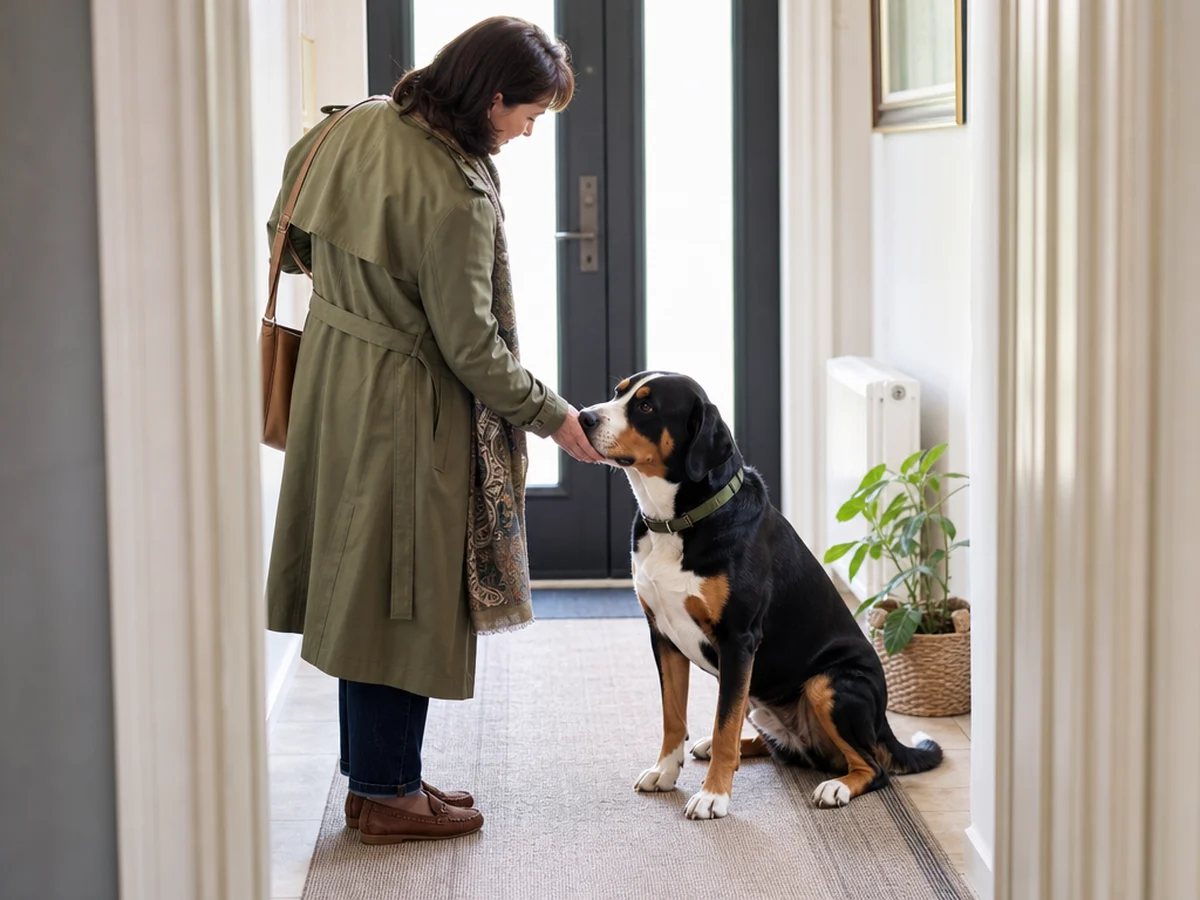
Watchdog nature rates 4 of 5, and barking rates 3 of 5. The bark is usually an announcement, not hostility, and it is fueled by excitement. A big voice in a big chest sounds alarming, especially to a child standing behind you.
Common advice says to ignore the barking until it stops. With a dog who is already worked up, that mostly rehearses the noise. Give the dog a job instead: teach a run-to-the-mat cue away from the door, and pay for quiet there.
Practice with a helper who rings the bell or knocks. Reward the instant the barking pauses, then ask for the mat. Guests should ignore the dog until they are calm, then greet them. The alert is already built in, so your goal is a short announcement followed by a relaxed dog.
Socializing Past Mouthing and Chasing
The symptom shows up when children run. Your dog trails along, mouths sleeves or hands, bumps legs, or herds the pack of kids across the yard. Squeals make it worse.
This breed is described as confident and robust enough for drover work, and it was an all-purpose farm dog. Moving things along may come naturally to some dogs, and a playful, mouthy puppy turns running children into a game. Mouthing is rarely malice. It is play with a very big mouth.
The fix is a calm stop. If teeth touch skin, freeze, say a marker word, and give the dog a brief time-out behind a gate. Then offer a tug toy and reward your dog for taking it. Teach children to freeze like a tree rather than shriek and flee.
Supervision rules keep this safe:
- An adult stays within arm's reach whenever a child and the dog share space, no matter how gentle the dog has been.
- Running games happen with a toy as the target, never with a child as the target.
- Food, chews and favorite toys are handled only by adults, away from the kids.
- Rest breaks are scheduled before the dog gets wound up, not after.
For the instinct behind this kind of behavior, see our guide to common Swissy behavior problems.
Greater Swiss Mountain Dog Stiffness With Other Dogs
Here you might see a frozen body, a hard stare, a high stiff tail, or a dog who suddenly stands tall over a smaller visitor. Be honest with yourself about this symptom, because the same dog may be gentle with every child in the house.
This breed scores 3 of 5 with other dogs, a rating that calls for supervision. The breed standard severely penalizes shyness or aggressiveness, so a tense, wary dog is not what the breed is meant to be. A likely cause is too little careful exposure while young, and a dog this size can make any tension look worse than it is.
Controlled introductions fix most of it. Choose a calm, friendly adult dog and meet on neutral ground. Walk side by side at a comfortable distance and narrow the gap slowly over several walks, rewarding loose, wiggly bodies. Permit a brief sniff, then call your dog away and pay.
Skip crowded dog parks, where the mix of dogs is not under your control. Stay close when dogs meet, and separate them calmly if the stare or the stiffness returns.
Socializing a Dog Who Walks Away From Noisy Play
Some dogs do the opposite of bowling kids over. A dog may leave the room when play gets loud, hide behind the couch, turn their head away, lick their lips or yawn. These are common stress signals, and they are information you should read as such.
Loud, chaotic play can overwhelm a dog, and a dog with nowhere to go may feel trapped. Sudden withdrawal can also mean discomfort, so mention it at your regular vet visit and rule out pain before blaming temperament.
The gentle fix is to honor the retreat. The ASPCA recommends teaching a reward-based go away cue so the dog learns they can walk away instead of feeling trapped and growling or snapping. Give a quiet bed or a gated corner that children never enter.
Then set simple rules for kids: don't follow the dog, don't corner them, don't hug, climb on or grab. Reward the dog for tolerating background noise from a distance, and bring the noise closer slowly.
Socializing Steps That Fix Most Symptoms
Different symptoms, same toolkit. These steps cover most of what you have read above, and they rely on only reward-based methods, which veterinary behaviorists recommend for all dog training.
- Pay for four paws on the floor in every greeting, with every person.
- Teach a mat and a go-away cue, so the dog always has a calm place to be.
- Pair new sights, sounds and people with tiny treats, and keep each exposure short.
- Keep an adult within reach of the dog whenever a child is nearby.
- Introduce other dogs slowly, one calm adult at a time.
- Stop each session while the dog is still doing well.
A tired dog learns better, so meet the breed's moderate exercise needs. A walk around the block or a romp in the woods covers most days, and our guide to Swissy exercise needs has the details. Mental work counts too, since this breed rates 4 of 5 for needing it.
One Greater Swiss Mountain Dog Socializing Step Today
You do not need a perfect plan to begin. A Swissy who learns gentle manners while still a manageable size becomes the dog who leans softly on a child instead of flattening the child.
So do this today: set up a short, supervised greeting. Keep the dog on a leash or behind a gate, with a calm adult or child standing still. Once the paws are down, reward with a tiny treat. If the dog jumps, the person turns away and tries again. End while it is still easy and pay once more.
Repeat tomorrow with a different person. Small, rewarded greetings, built up daily, are what turn a big heart into good manners.
 Training basicsDoes Your Greater Swiss Mountain Dog Drag You Down the Street?
 BehaviorGreater Swiss Mountain Dog Jumping on Guests: Rewarding Calm Hellos
 BehaviorWhy Does My Swissy Bark and How Do I Teach Quiet?