
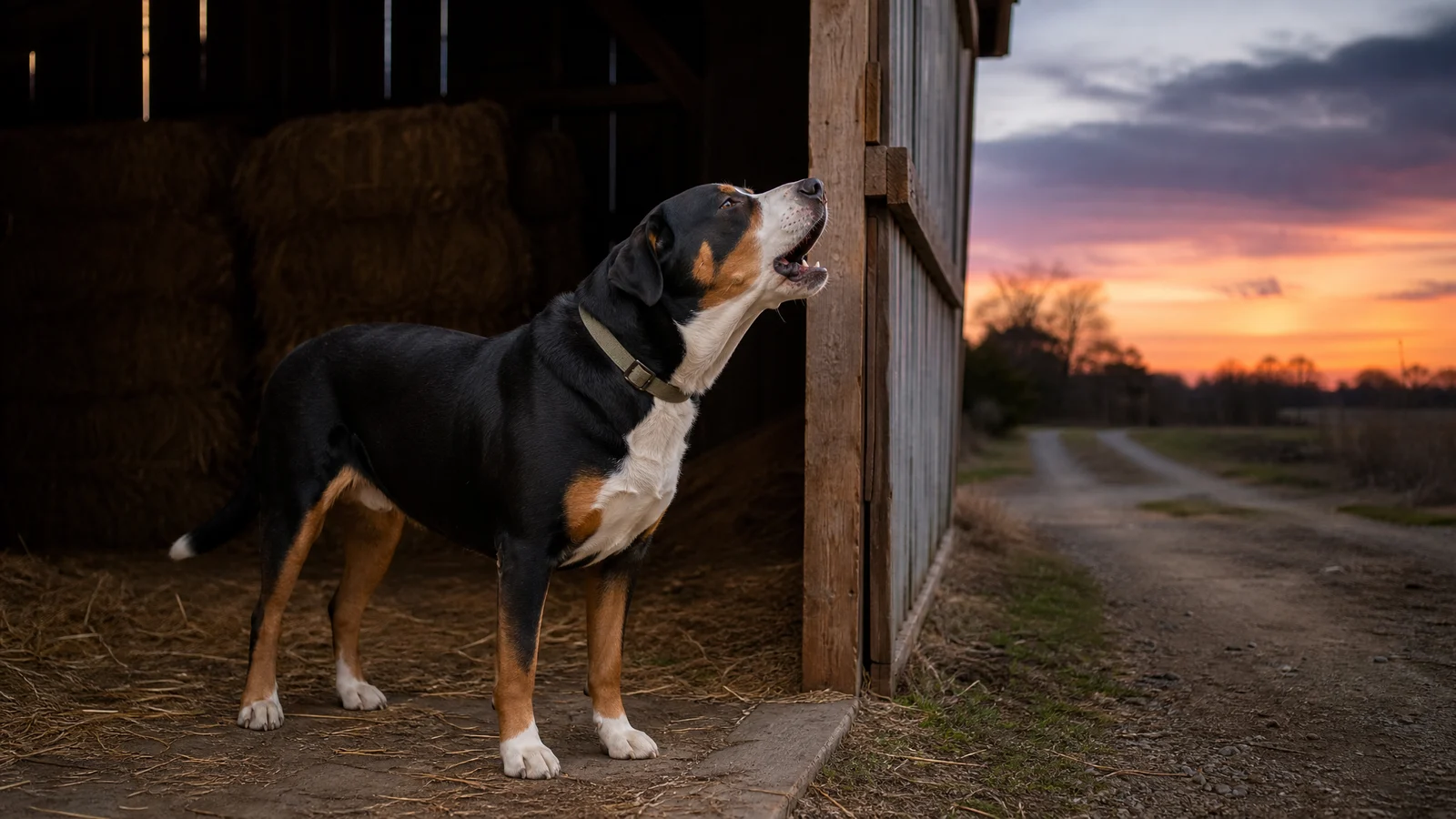
A deep bark at the window may be useful information before it becomes a household problem. A Greater Swiss Mountain Dog can notice movement, announce it and then either recover or continue scanning for the next reason to sound the alarm. The important training question is what happens between the first bark and the fifth.
We will treat barking as a message with a source, a handoff and an ending. This guide sorts common alert patterns, builds a place where the Swissy can observe without controlling the doorway, teaches quiet after notice and uses a short log to reveal when the environment needs to change. It also separates ordinary alerts from changes that deserve professional help.
Why Greater Swiss Mountain Dog Barking Needs a Message Log
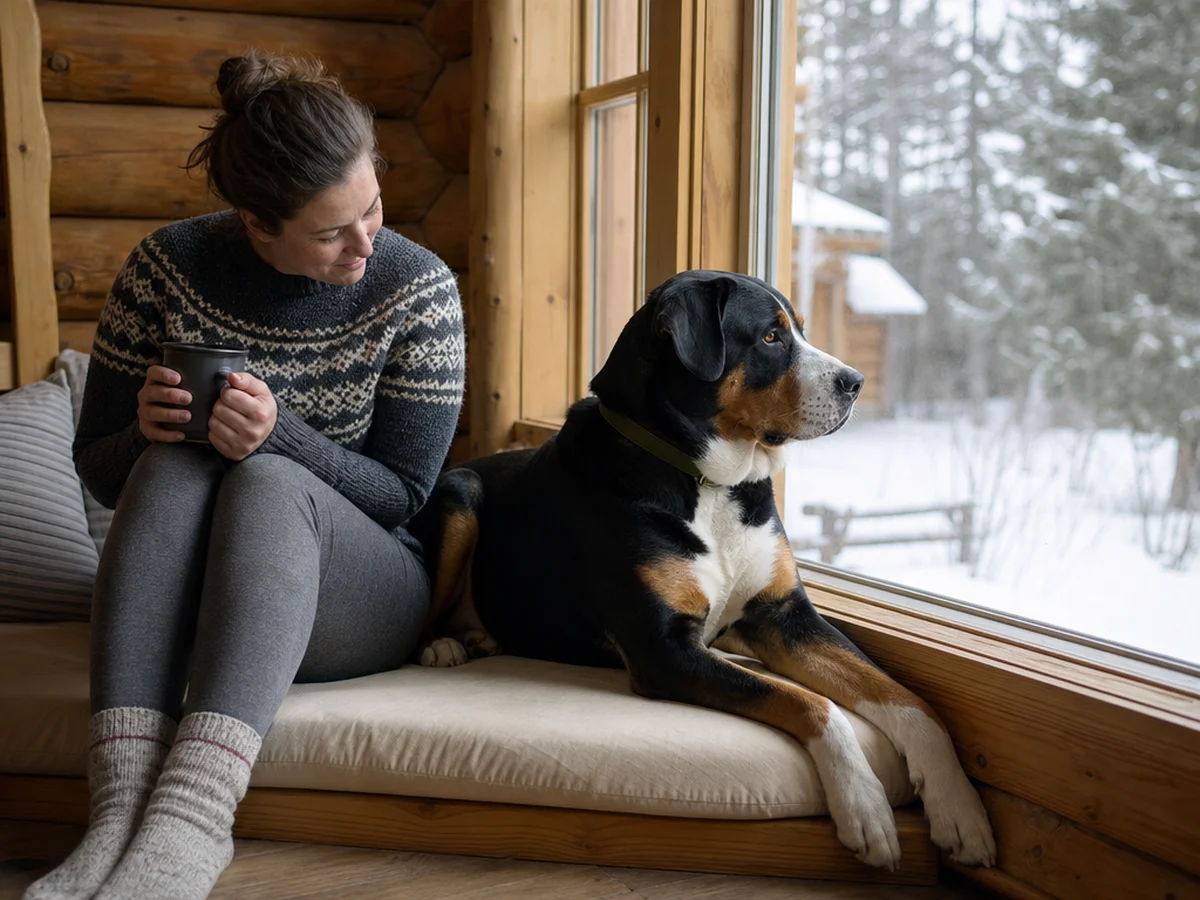
The breed standard describes the Greater Swiss Mountain Dog as alert and vigilant. That does not mean every sound should produce a long response, and it does not make barking a character flaw. It means noticing the environment can be part of the dog's normal behavior.
A useful record starts before the noise. Write what moved, sounded or changed, where the dog was and what the body did first. A head turn toward the window, a rush to the door or a stare into the yard can identify the active context more clearly than the bark alone.
Then note the ending. Did the dog turn back after one alert, keep patrolling after the person passed or demand interaction from the household? Recovery tells us whether the behavior was a brief notice, a rehearsed routine or a sign that the dog could not settle.
The site's Swissy socializing guide helps separate safe observation from forced contact. A dog can notice a visitor and remain behind a barrier without being required to greet or keep watch over the room.
Sort Barking by What Happens Next
Do not choose a quiet exercise until the context is clear. The ASPCA's barking guidance begins by identifying the cause because territorial alerts, attention seeking, frustration and distress do not need the same response.
| Message pattern | What follows | First change |
|---|---|---|
| Door alert | Dog stays near the entry | Move the observation point away from door traffic |
| Window alert | Dog scans after movement passes | Reduce the view and reward returning to the room |
| Yard alert | Dog patrols a fence line | Supervise outside time and shorten the patrol route |
| Attention bark | Dog turns immediately toward a person | Reward a quieter request before interaction begins |
The matrix is a starting idea, not a final explanation. The same dog may bark at a delivery because the sound is startling, then bark at a person because attention has worked before. Record each sequence separately instead of applying one label to the whole day.
Boredom and unmet needs can raise the background level of barking. Suitable movement, sniffing, rest and social time belong in the plan, but exhausting the dog is not a quiet cue. The household still needs to teach what should happen after an alert.
A Greater Swiss Mountain Dog Barking Station
Choose a resting place that is within the household but outside the direct line between window, door and visitor. The Swissy should be able to turn away from the alert and lie down without being crowded by people entering the room.
Teach the place when nothing is happening. Wait for the dog to approach, mark the first paw on the surface and deliver food near the resting area. Release while the dog is still comfortable, then repeat until returning there is an easy choice.
Change the environment as well. Close the view during predictable foot traffic, use background sound if hallway noise is the problem and move furniture that has become a watch platform. Management reduces practice while the new response is still fragile.
Keep the station voluntary. It is not a place to send the dog for having noticed something. The job is to provide a clear handoff from alerting to rejoining the household, with enough distance for the body to settle.
Observe how the dog uses the station outside training. Choosing it for ordinary rest shows the location itself is workable. Avoid placing toys, visitors or household traffic there when those additions make leaving the alert harder.
Give the dog a route to the station that does not pass directly beside the trigger. A curved path around furniture can be easier than turning in a tight doorway. Rehearse that path from several points in the room.
Quiet Follows Alert Barking Through a Handoff
Begin with a mild, predictable sound and the dog near the station. When the Swissy notices, wait for a natural pause, mark it and deliver several small rewards at the station. The pause comes before the cue because the word needs an action to describe.
After several successful repetitions, say the quiet cue as the pause begins. The same source's quiet lesson uses food during silence so the dog learns that stopping the bark, not continuing it, opens the reward.
Use a simple handoff sequence that every adult can perform in the same order. The steps keep attention on the dog's recovery instead of the volume of the alert:
- Acknowledge the alert in a calm voice.
- Give the station cue once and move away from the trigger.
- Mark the first pause and deliver food at the resting place.
- Release after the dog can look away and use the room normally.
A marker must already predict food. Battersea's clicker lesson builds that association in a quiet place before using the sound to mark behavior. A short spoken marker works when the household uses it consistently.
Do not shout the quiet cue over barking. The louder voice adds more sound and can make the household seem to join the alert. If the dog cannot pause, increase distance, block the view or end the setup and try a milder version later.
Fade the food stream only after the handoff is dependable. Continue to mark the first quiet response, then vary how many calm seconds lead to the reward. Keep the station release clear so quiet does not become an indefinite stay.
Practice with recorded or staged sounds only at a level that leaves the dog able to respond. The goal is not to provoke full barking for rehearsal. It is to give the dog enough information to notice and complete the handoff.
Troubleshoot Barking in Four Contexts
The handoff stays the same, but each context needs a different environmental change. Practice one context at a time so the dog can recognize the route from notice to station. A clear context also makes the household response easier to repeat.
Door Barking
Move the Swissy away before opening the door. A barrier and a second adult can protect the entry path while the dog uses the station. The visitor should enter without calling or reaching toward the dog.
Practice with ordinary door movements when no one is arriving. Touch the handle, return to the station and reward. Later, open the door briefly, close it and reward the dog for remaining out of the traffic line.
Window Barking
Reduce the view during busy periods instead of waiting for repeated alerts. When a single passerby appears at a workable distance, mark the dog's choice to turn back into the room and deliver food away from the glass.
If scanning continues after the movement is gone, guide the dog to another activity. A food search or familiar rest routine can close the event. Repeatedly returning to the window means the visual setup is still too difficult.
Yard Barking
Supervise outside time while the pattern changes. Call the dog away before running the fence line begins, reward near the house and bring them inside if the environment stays busy. Unsupervised rehearsal can strengthen the patrol.
Give the yard other jobs, such as a short scent search or calm time beside the handler. The goal is not to occupy every second. It is to prevent fence watching from becoming the only available activity.
Attention Barking
Identify what the dog usually receives after barking. Conversation, food, door access or play can all maintain the request. Arrange an easier quiet signal, such as standing on a mat or bringing a toy, and reward it before the bark starts.
Reward quiet periods during ordinary life. AVSAB's humane training statement supports teaching the wanted behavior with rewards. The dog needs a clear replacement, not only the loss of attention.
A Seven-Day Barking Log Reveals the Pattern
A short log should be easy enough to keep. Record the first alert in each meaningful episode rather than counting every sound. The purpose is to find patterns that change the plan. A precise note is more useful than a daily total without context.
- Note the time, location and trigger.
- Record the earliest body change before the bark.
- Write whether the station cue was usable.
- Estimate how easily the dog returned to ordinary activity.
- Mark any change in exercise, rest, visitors or health that day.
Review the entries after several days. Door alerts may cluster around deliveries, yard barking may follow a neighbor's routine and attention barking may appear when household activity stops. Change the highest-value setup first instead of drilling the quiet cue everywhere.
Compare recovery as well as frequency. The number of alerts may stay similar while the dog returns to rest faster and needs less help. That is useful progress even before a busy environment produces fewer notices.
Share the active plan with everyone in the home. One person should not invite window watching while another repeatedly calls the dog away. Agree on the station cue, the release and which environmental changes stay in place.
The site's guide to common Swissy behavior problems can help place barking beside other household patterns. Keep one primary training question at a time so the log remains interpretable.
When Greater Swiss Mountain Dog Barking Needs Help
Keep regular veterinary visits current and ask promptly about a sudden increase in barking, sleep disruption, apparent pain, sensory changes or a new inability to settle. Training evidence is useful to the veterinarian because it shows when the change began and what else changed with it.
Seek qualified behavior help when barking is paired with fear, attempts to reach a person or dog, distress during absences or risk to the household. Share the log and videos that respect other people's privacy. A professional can observe the sequence and design a safer setup.
Tomorrow, choose one alert context and record its beginning and ending before changing anything. That single message will tell you more than a day spent repeating quiet after the Swissy is already committed to the alarm.
 Puppy trainingPacing Exercise for Greater Swiss Mountain Dog Puppies Who Grow Fast
 BehaviorStrong Chews and Chew Rules for a Greater Swiss Mountain Dog Puppy
 Training basicsCrate Training a Greater Swiss Mountain Dog Without Anxiety