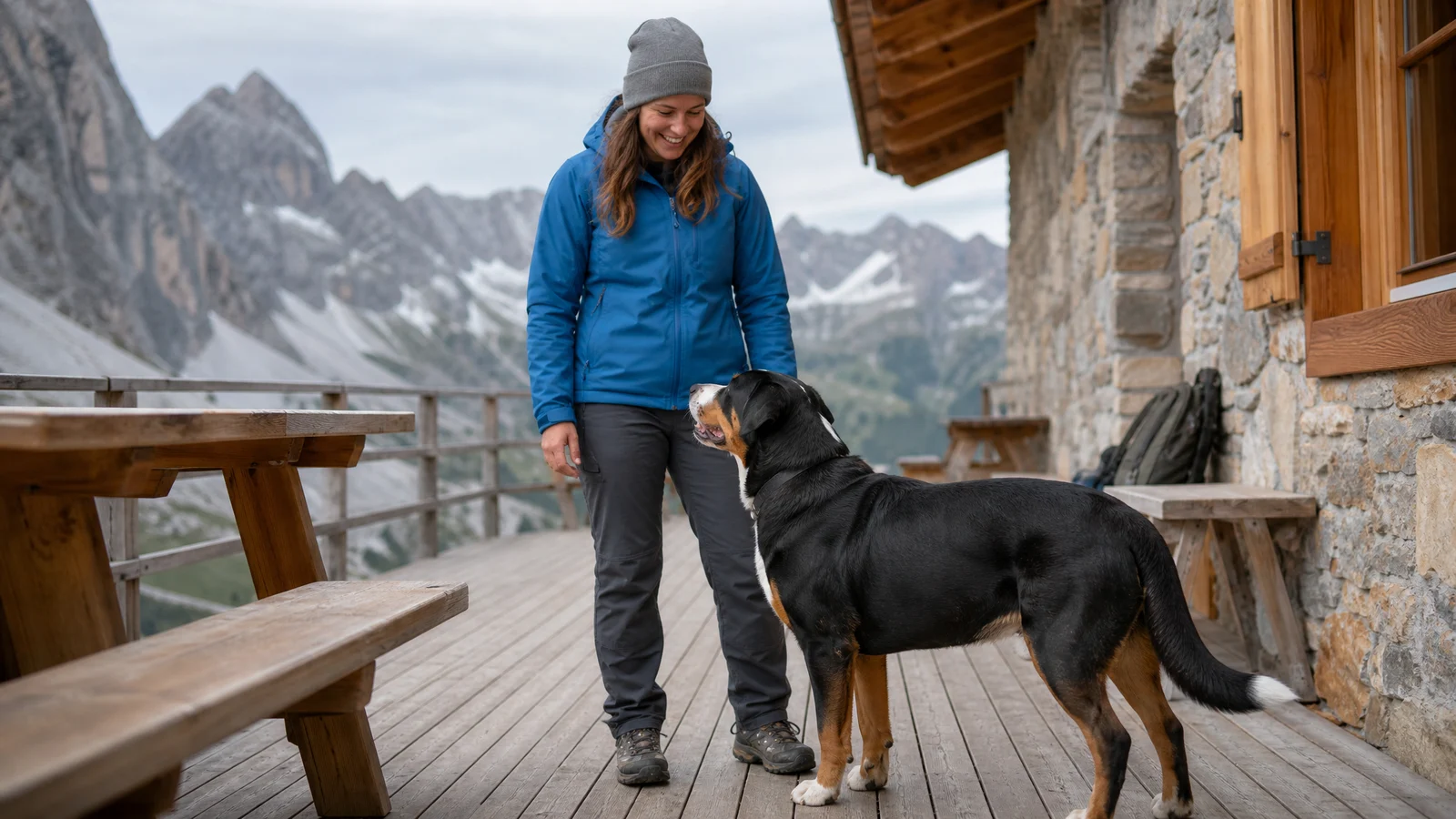
A polite hello is not something a Greater Swiss Mountain Dog performs alone. The host controls access, the guest decides whether contact is welcome and the dog chooses whether to approach without jumping. If any part is missing, a sit at the door can collapse as soon as hands and voices move closer.
This guide builds a guest-access contract instead of forcing every arrival into the same routine. The room will protect people before training begins, food and attention will arrive at floor level, and the host will practice clear signals that open or close the chance to greet.
The result is not a dog who must meet everyone. A Swissy can stay on the floor, leave the interaction and try again later, while every visitor keeps the right to say no. We treat that freedom as part of the trained greeting, not a failure to socialize.
A Greater Swiss Mountain Dog Contract Prevents Jumping on People
Jumping often earns exactly what the dog wanted. A person looks down, speaks, touches the chest or pushes paws away. Even annoyed attention can keep the greeting active, especially when the next visitor responds differently.
The Greater Swiss Mountain Dog is described as faithful, family-oriented and dependable in the AKC breed profile. Those qualities do not guarantee careful greetings. A friendly large dog still needs an arrangement that keeps body weight away from an unprepared person.
Before practice, write down three promises and make sure every adult understands them. The list keeps the greeting predictable when a real arrival makes conversation and movement harder to coordinate:
- The host prevents rushing and pays for four paws on the floor.
- The guest waits for an invitation and can decline contact without explanation.
- The dog can move away, pause behind a barrier or return when the body is ready.
This contract removes the struggle over a perfect sit. Sitting can be useful, but standing calmly or choosing a nearby mat can also earn access. The essential behavior is staying grounded while social contact begins and ends.
Household members should rehearse the same response to jumping. One person laughing and holding the dog's paws can outweigh several careful visitor sessions. Four paws down must be the easiest route to attention on ordinary days as well as special occasions.
Decide what closes the greeting before it opens. Faster movement, repeated paw lifts, hard staring or an inability to follow the host can all end access. A preplanned stopping point prevents the host from waiting for a full jump to make a decision.
Arrange the Room Before Greater Swiss Mountain Dog Jumping Starts
Management should work before the bell rings. Put food where the host can reach it, clear the dog's path away from the entry and choose a barrier or leash position that does not trap the guest against the door.
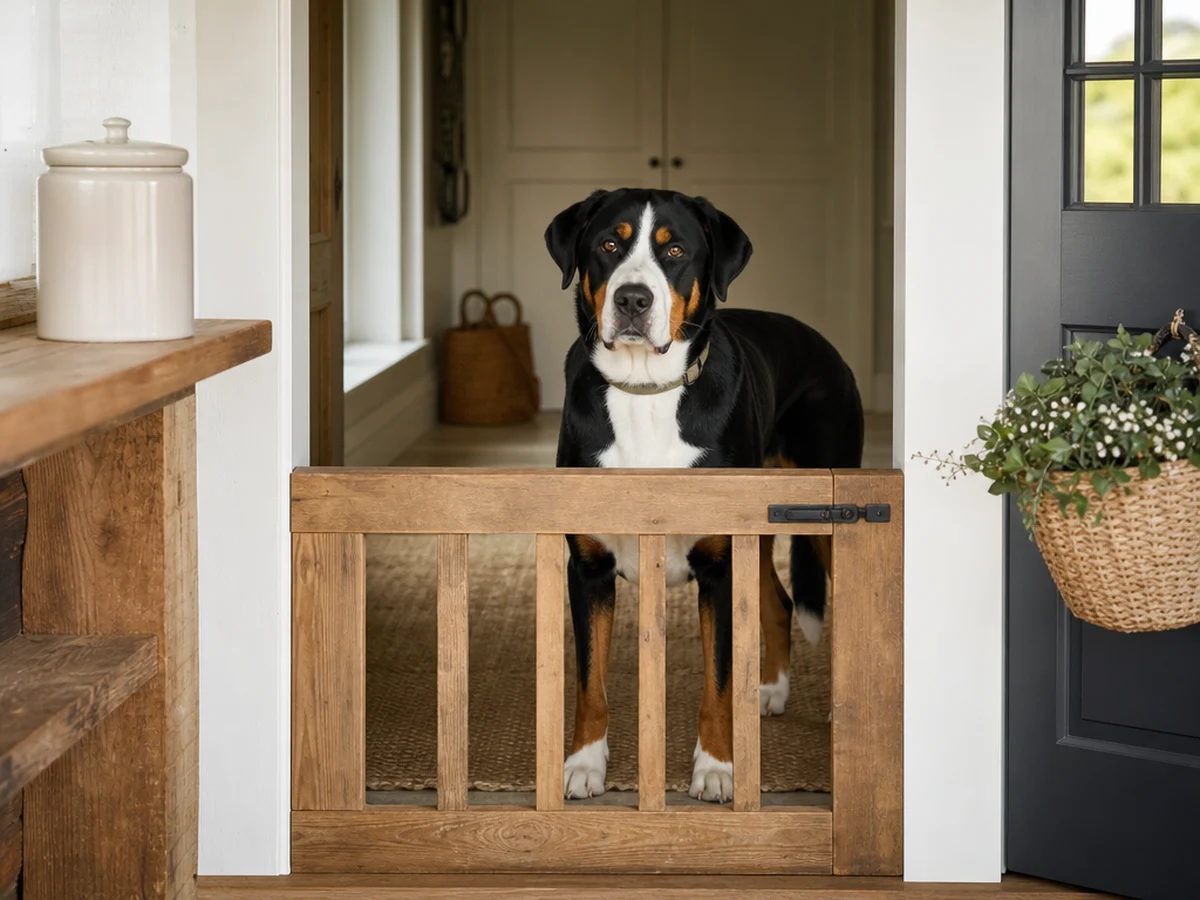
AVSAB's management guidance explains that management protects training, while management without teaching leaves the underlying response unchanged. For jumping, the barrier prevents a dangerous rehearsal while the dog learns what does create access.
Ask the guest to enter without bending over, calling the dog or extending hands. Best Friends' greeting guidance recommends calm arrivals and having visitors ignore an excited dog at first. That neutral entry gives the host time to read the Swissy's body.
Choose a waiting place that is off the traffic line. It might be a mat beside the living room or a generous space behind a gate. The dog should be able to observe without being pressed into contact or crowded by coats, bags and moving feet.
Practice the room without a guest. Walk to the door, touch the handle, return to the waiting place and deliver food low. The arrangement should be familiar before excitement is added.
Rehearse Human Movement First
Then rehearse with an adult already inside the home. The helper stands, sits, carries a bag and walks through the entry path while the host rewards grounded behavior. This separates movement practice from the noise and surprise of an actual arrival.
Check the barrier from both sides. It should provide space without letting a large dog push it into the guest or trap paws beneath it. If the arrangement shifts under ordinary pressure, choose a different room or a secure closed door for the first part of the visit.
Reward Four Paws Down During Jumping Practice
Food placement changes posture. Deliver a treat beside the dog's front feet or slightly behind them, rather than holding it high enough to encourage stretching toward a hand. When the head lowers, the body is less prepared to spring upward.
Mark four paws down before the guest approaches. At first, that may mean the dog stands behind a barrier while the host feeds several calm choices. Social access comes later, after the floor behavior has become easy in the room.
Let Floor Behavior Open Social Access
Attention can be a second reward. The guest takes one step closer only while paws remain down. Humane World's jumping guidance recommends that a helper turn and walk away when the dog rises during greeting practice.
The retreat is information, not punishment. The guest creates space, the host helps the dog reset and another approach begins only when the body is workable. Keep hands and bodies neutral because physical conflict can add excitement or worry.
Notice recovery after the helper leaves. A dog who can eat, look away and return to the waiting place may be ready for another approach. A dog who keeps scanning the doorway needs a longer pause or a simpler session.
Vary the reward after the floor behavior is reliable. Food may begin the lesson, while a brief chest touch or permission to sniff the guest's shoes can later reinforce calm contact. The dog should not have to jump to make social attention happen.
Use the same floor-level delivery during ordinary family reunions. If jumping still produces a lively response from household members, visitor practice will have to compete with a much stronger daily habit.
Use Invitation and Cancellation During Jumping Practice
The host needs a signal that means the guest has agreed and the dog's body is ready. Use a brief word, then let the dog move forward on a loose leash or from an open barrier. Do not lure the dog into the person's space with food.
The invitation lasts for a short greeting, not for the entire visit. The guest can touch the chest or side if the dog remains comfortable, then stop and let the dog decide whether to remain. Hands over the head and prolonged hugging are unnecessary tests.
Closing Access Is a Separate Skill
A cancellation signal ends access before jumping begins. Say it, turn toward the waiting area and reward the dog for following. Practice this movement with no guest present, then with a familiar helper standing still.
If paws leave the floor, cancel calmly and create distance. Do not repeat cues while the dog is airborne. Once the body is grounded and attention returns, the host can decide whether another invitation is sensible or whether observation is enough for that visit.
Coach the helper before bringing the dog into the room. The helper should know the invitation word, the cancellation movement and the planned contact length. Clear human timing keeps the dog from receiving access at the exact moment the host is trying to close it.
Practice cancellation after a successful greeting too. Ending only after a mistake can make the signal feel like conflict. A brief hello followed by an easy return to the mat teaches that leaving contact is normal and can earn another opportunity later.
The site's guide to Swissy socializing can help the household separate exposure from forced interaction. Seeing a visitor and remaining comfortable is a successful social experience even when no greeting occurs.
Change the Jumping on People Plan for Each Guest
A contract only works if it changes with the people involved. The dog's skill may be the same, but the safe distance, length of contact and need for a barrier depend on the guest's balance, interest and ability to follow the plan.
A Familiar Adult Who Wants to Greet
Use a familiar helper to practice approaches and cancellations. The helper can stop immediately when paws rise and resume only after the host signals. Keep repetitions short enough that success remains ordinary rather than increasingly frantic.
Let the dog leave after a brief touch. Calling the dog back repeatedly can turn voluntary contact into social pressure. The helper should remain calm if the Swissy chooses the mat instead.
An Uncertain or Unfamiliar Visitor
Observation is the default. Keep the barrier in place, give the visitor a clear route through the room and provide the dog with a separate activity. The host should not ask the visitor to become a trainer.
If the visitor later requests contact, begin from the established invitation. If the dog's body is stiff, vocal or unable to disengage, keep the greeting closed. Friendliness is not something the household needs to prove at the door.
A Child or Person With Limited Balance
Use physical separation throughout the arrival. A child should never hold food above the dog's nose or be responsible for turning away at the right moment. An adult manages the Swissy and another adult supports the guest.
Contact may remain closed for the visit. The site's Swissy food-reward training principles can be practiced with an adult helper later, away from anyone who could be knocked over. The safer arrangement is still successful training.
Review Jumping on People Across Real Visits
After each visit, record what kind of guest arrived, where the dog waited, whether the first invitation stayed grounded and how easily access ended. A useful record describes the arrangement instead of rating the dog as good or bad.
Video can help when every person agrees and privacy is protected. Place the camera so it shows the dog's feet, waiting area and guest path. Review the first change in posture rather than replaying only the jump.
Increase one challenge at a time. A more animated helper, a different entry sound or a longer visit can each change the response. Combining them makes it difficult to tell which part of the contract needs more practice.
Look for repeatable changes. The Swissy may need fewer floor-level rewards, follow the cancellation signal sooner or choose the waiting place without guidance. Progress also includes a household that closes the greeting earlier when the situation is not safe.
Keep regular veterinary visits on the household calendar, and ask about sudden changes in sociability or new discomfort with touch. If jumping is paired with fear, guarding or behavior that could injure someone, use barriers and seek a qualified behavior professional who works with rewards.
A calm hello remains optional for everyone involved. The guest can decline, the dog can leave and the host can end access before excitement rises. That shared permission is what turns four paws on the floor into a greeting the household can trust.
 BehaviorWhy Does My Swissy Bark and How Do I Teach Quiet?
 Puppy trainingPacing Exercise for Greater Swiss Mountain Dog Puppies Who Grow Fast
 BehaviorStrong Chews and Chew Rules for a Greater Swiss Mountain Dog Puppy