Paw handling can feel simple when a Greater Swiss Mountain Dog is still a small puppy. The same strategy becomes impractical when the dog grows into a large, powerful adult. Cooperative care should therefore begin before strength creates a contest. The goal is a repeatable conversation in which the dog knows how to start, pause and return.
Below, we use four visibly different stages. We establish choice and the physical station, rotate through four care stations, decide readiness while separating rehearsal from maintenance, and take pain or overdue care to a professional. The circuit remains flexible, but each stage has its own evidence and practical job, so a success with touch never hides concern about tools.
Choice in Handling and Nail Care
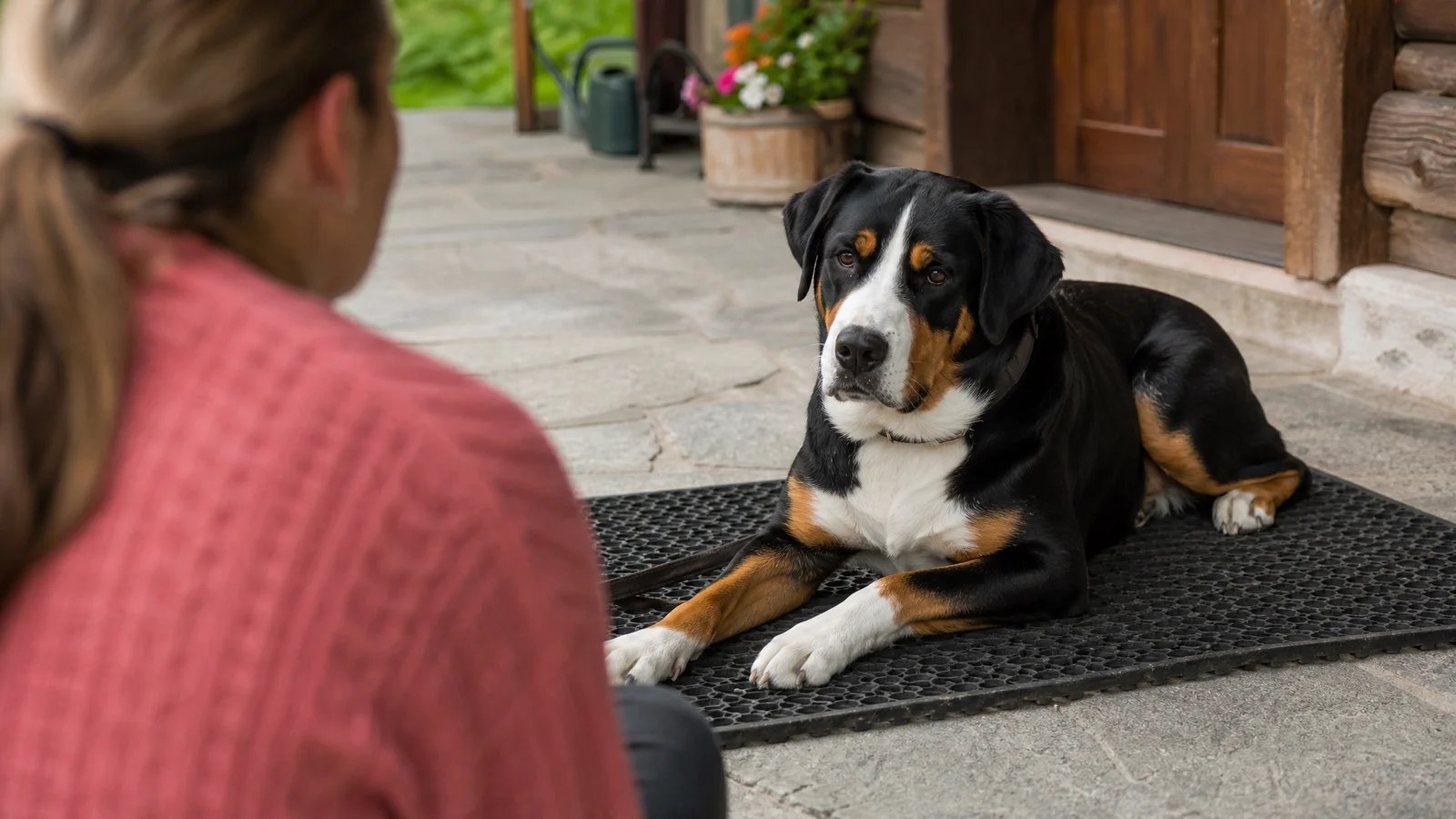
Choose a simple start behavior such as standing on a mat or resting the chin on a folded towel. Reward that position before touching the body. The position should be voluntary and easy to leave so the handler can read a clear decision.
Teach a release word away from grooming. Say the word, toss food off the station and let the dog move. When the dog returns, reward the start position again. Leaving becomes part of the pattern rather than the end of cooperation.
Watch for smaller pauses before a full retreat. Turning the head toward the hand, shifting weight away, lifting the paw early, closing the mouth or stopping food can all mean the current step is difficult. Release while the signal is still quiet, then make the next repetition easier.
The ASPCA's grooming advice notes that some dogs dislike foot handling and recommends building comfort before nail clipping, ideally from puppyhood. Starting early matters, but an adult dog can still learn through small, predictable rehearsals.
Keep regular veterinary visits current. Ask the veterinarian to examine limping, swelling, damaged nails, persistent licking, odor, discharge or sudden sensitivity. Training should not ask a dog to cooperate through pain.
Greater Swiss Mountain Dog Handling and Nail Care Station
Use a nonslip surface large enough for the dog to stand naturally and turn without stepping off an edge. Position the station where the handler can move around the shoulder and hip without crowding the dog against a wall.
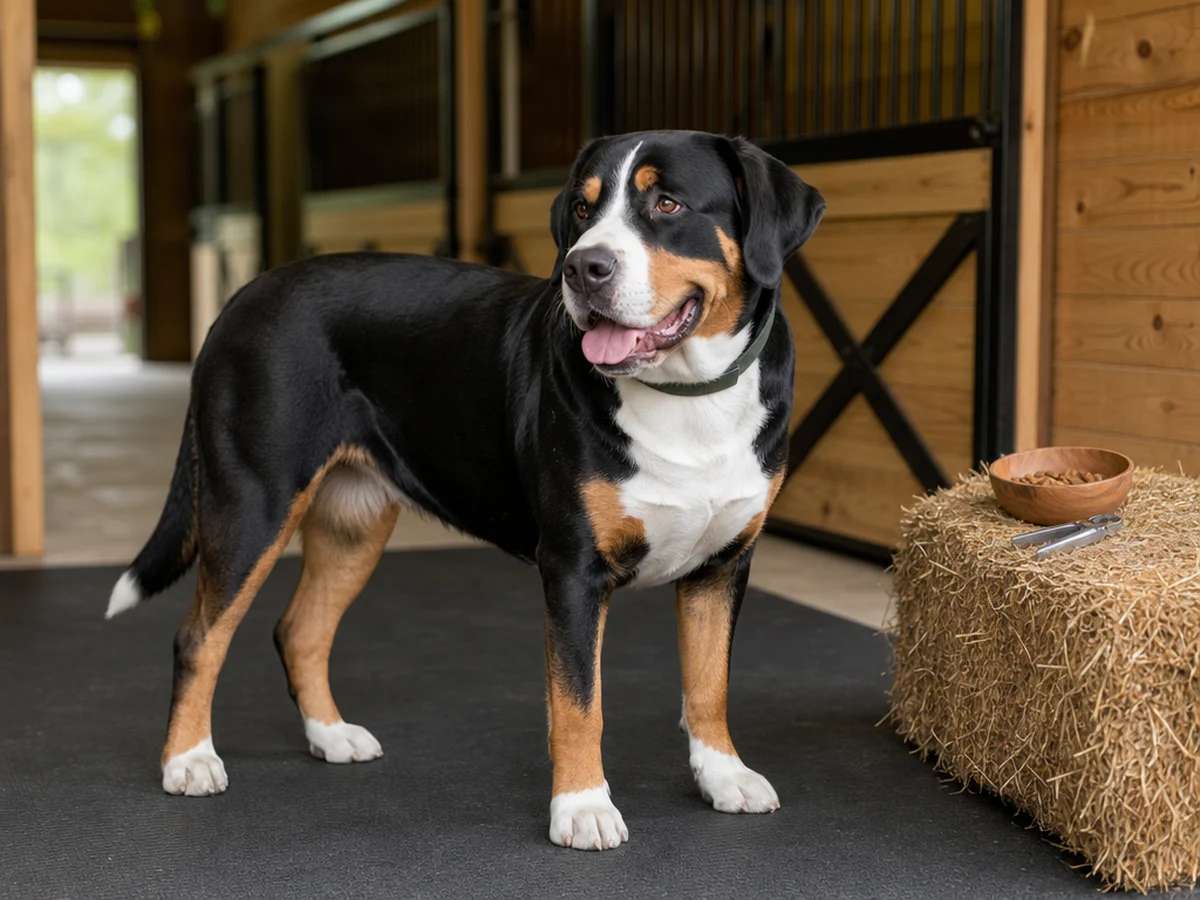
The UKC's breed standard describes a large, powerful dog of sturdy appearance. That scale changes setup. The handler needs stable footing, good light and a reachable place for tools so nobody leans across the dog or lifts a limb too far.
Put food in a container the handler can reach with either hand. Prepare the clipper or grinder before inviting the dog to the station. Searching through a drawer while holding a paw adds duration the dog did not agree to practice.
Keep sessions short enough that the start behavior remains clear. A few good repetitions at one station are more useful than completing the whole circuit after attention has faded. End with the release word and an ordinary activity.
Let each caregiver use the same start position, touch sequence and release. Different hands will still feel different, so a new caregiver begins at an easier level. Consistency tells the dog what happens, while reduced difficulty accounts for the unfamiliar person.
Four-Station Handling and Nail Care Circuit
The circuit has four stations. Rotate among them according to the dog's evidence rather than completing them in a fixed order. One session may use only the body and tool stations. Another may repeat the paw station without bringing a tool close.
The Body Contact Station
Begin at the shoulder, where many dogs already accept touch. Place a hand briefly, reward and release. Over several repetitions, move down the leg without reaching for the paw. Keep pressure light and duration easy.
Progress means the dog maintains the chosen start position, eats normally and returns after release. If muscles tighten or weight shifts away, return to a higher point on the leg. The handler is teaching predictability, not testing tolerance.
The Paw Contact Station
Touch the side of the foot, reward and remove the hand. Later, cup the paw without lifting. A lift begins only when the dog can keep balance and remain engaged. Raise the foot the smallest useful distance and place it down before rewarding.
Support the leg in a natural line. Do not pull the paw forward or sideways for a better view. For a large dog, the handler can often bring light and body position to the paw instead of moving the limb toward the handler.
The Tool Station
Place the inactive tool several feet away while the dog uses the start position. Reward looking at the tool, then looking away. Bring it closer across sessions. The tool does not touch the dog at this station.
For a clipper, rehearse hand movement and a quiet cut on a separate safe material. For a grinder, begin with the device off, then introduce sound at a distance. Sound, vibration, paw holding and nail contact are separate variables.
The Care Action Station
Pretend to position the tool near one nail, reward and release. When that remains easy and a professional has shown the household safe technique, perform one tiny care action. Return to an easier station afterward rather than moving automatically to another nail.
Humane World's home grooming guidance recommends allowing time to accept clippers or a grinder and notes that even pretending to trim one nail can build toward easier care. Rehearsal counts even when no nail is shortened.
Readiness for Handling and Nail Care
Readiness is specific to a station. A dog who offers a paw may still worry about tool sound. A dog who ignores a tool on the floor may still need practice with a held foot. The table keeps those observations separate.
| Evidence | What it means | Next choice |
|---|---|---|
| Returns readily after release | The last repetition stayed manageable | Repeat the same station |
| Eats but shifts weight away | Food interest and comfort do not match | Reduce contact or duration |
| Accepts touch but watches the tool | Tool work needs its own practice | Use the inactive tool station |
| Stops food or leaves quickly | The current step is too difficult | End and redesign the next session |
Do not let an urgent maintenance need change the meaning of training. If nails require care before the dog is ready, arrange help rather than turning a rehearsal into a prolonged struggle. The veterinarian or a skilled groomer can discuss the safest current option.
Inspect the tool before every session. Dull, damaged or poorly sized equipment can make technique less predictable. Ask a veterinarian or groomer to demonstrate handling, tool placement and how to recognize the sensitive tissue inside the nail.
Dark nails can make that tissue difficult to see. Work conservatively and stop if uncertain. A calm dog does not make an unsafe cut acceptable, and a successful rehearsal does not replace practical instruction.
Rehearsal Versus Greater Swiss Mountain Dog Nail Care
Label the session before inviting the dog to the station. A rehearsal may contain touch, sound or a pretend action. A maintenance session contains the minimum necessary care the dog can comfortably handle. Mixing the labels makes the start position unreliable.
On rehearsal days, reward returns and release often. On maintenance days, keep expectations modest. One completed nail can be enough if the dog remains willing to come back another day.
Record the station, paw and exact action. “Front left, paw held briefly, inactive clipper nearby” is more useful than “nails went well.” The log prevents repeated work on the easiest paw while another paw becomes surprising.
Alternate easy and difficult locations. A back paw that needs more practice can be followed in a later session by an easy shoulder touch. Do not use an easy station as a distraction while secretly performing a hard action.
The breed club's working-dog overview reflects the Swissy's substantial working heritage. Modern cooperative care respects that body by arranging leverage, footing and access before asking for stillness.
Keep ordinary exercise separate from care readiness. A tired dog may move less without feeling more comfortable. The evidence should be voluntary position, normal eating, loose movement and willingness to return, not simple exhaustion.
Whole-Body Handling and Nail Care Checks
Use the same start and release pattern for a brief weekly check. Move in a consistent route so changes are easier to notice. The check is observation, not a medical conclusion, and any painful or unusual finding belongs with the veterinarian.
A practical route uses the checks below. Stop at any point when the dog asks for a pause:
- Look between paw pads for debris, redness or damaged skin.
- Check each nail and the surrounding toe without forcing the limb.
- Lift each ear flap briefly and notice odor, discharge or sensitivity.
- Part the coat in several places and feel for new lumps or sore areas.
- Look at the lips and front teeth only as far as the dog has practiced.
Break that list across sessions when needed. A weekly check does not have to happen in one long handling period. The circuit allows ears on one day, paws on another and a short coat check after brushing.
Record only useful observations. Note location, appearance, whether the dog reacted and when the change began. A photograph can help the veterinarian compare a visible concern, provided taking it does not require restraining the dog.
Practice cooperative positions before a veterinary visit or grooming appointment, but expect the new setting to be harder. Familiar skills often need lower criteria around unfamiliar people, surfaces and sounds. Tell the professional which start and release signals the dog knows.
When Greater Swiss Mountain Dog Nail Care Needs a Veterinarian
Contact the veterinarian about broken nails, bleeding that does not stop promptly, swelling, limping, discharge, persistent licking or sudden refusal of familiar handling. Stop home trimming until the source of pain or sensitivity is understood.
Greater Swiss Mountain Dog Support for Overdue Nail Care
Ask for professional support when nails are overdue, the dog has tried to escape, the household cannot see safe landmarks or the setup cannot support the dog's body comfortably. Early help protects the training pattern and prevents necessary care from becoming repeated conflict.
Bring the circuit log to the appointment. It shows which paw, tool sound and position are comfortable, which conditions change the response and what the dog uses as a start signal. That information helps the professional plan care around the dog in front of them.
The lasting goal is not motionless compliance. It is a powerful Swissy who can choose the care station, understand each small action and take a real pause before returning. When the household keeps rehearsals short and maintenance honest, nail care becomes a familiar skill that can grow with the dog.
 Training basicsTraining a Swissy for Apartment Living
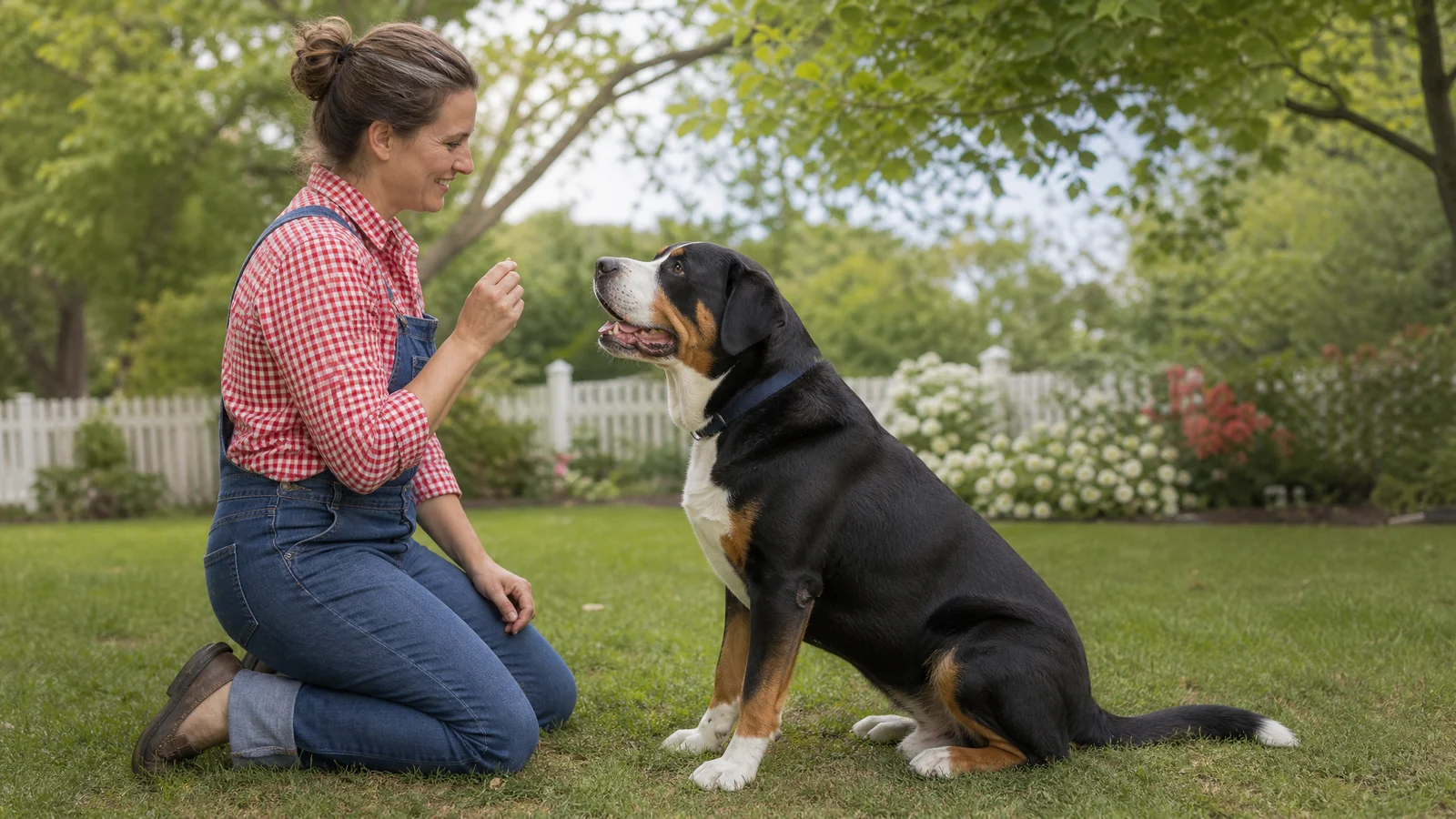 Training basicsAre Greater Swiss Mountain Dogs Stubborn or Easy to Train?
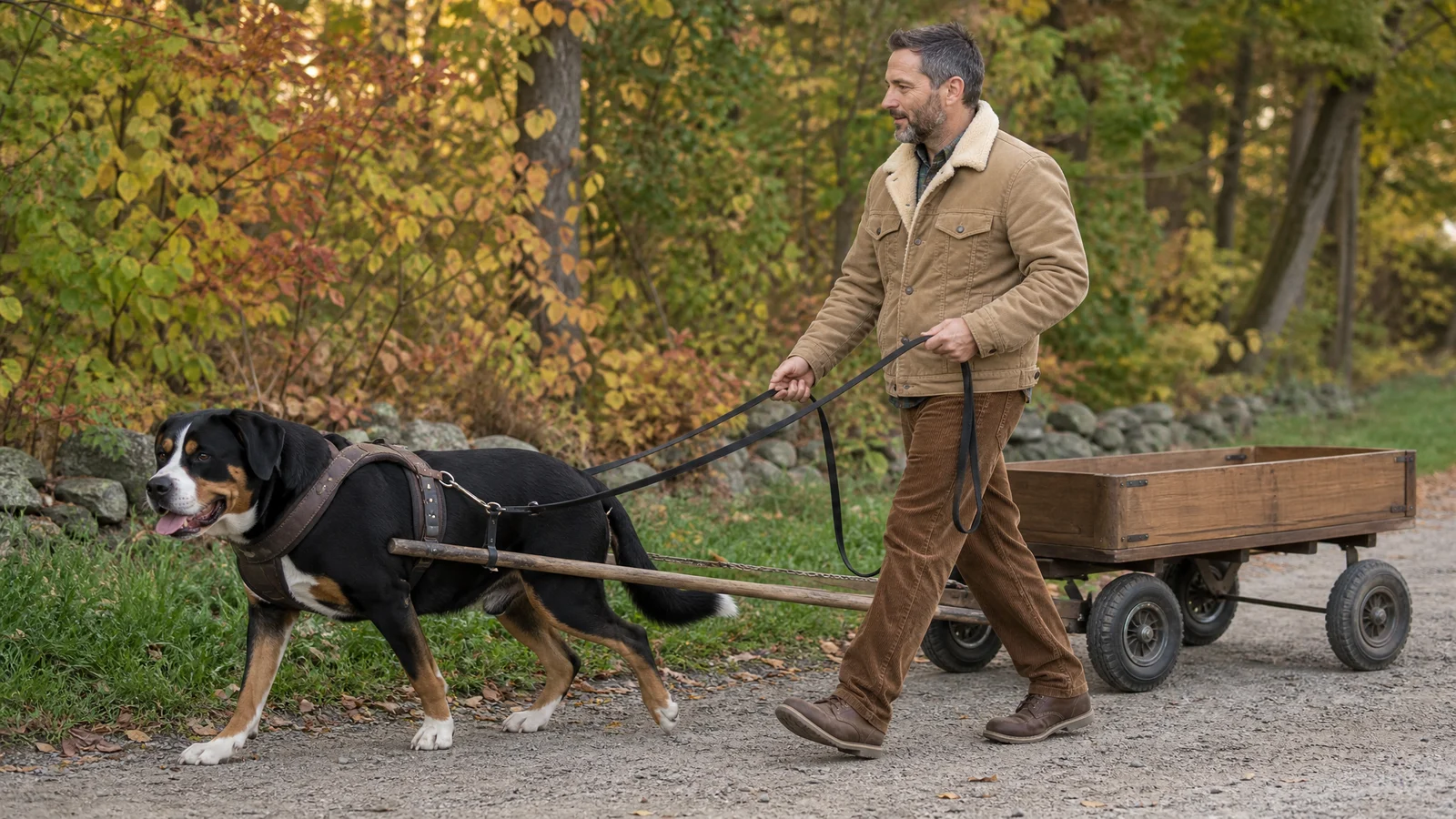 Exercise and jobsRecreational Cart Pulling With Your Swissy