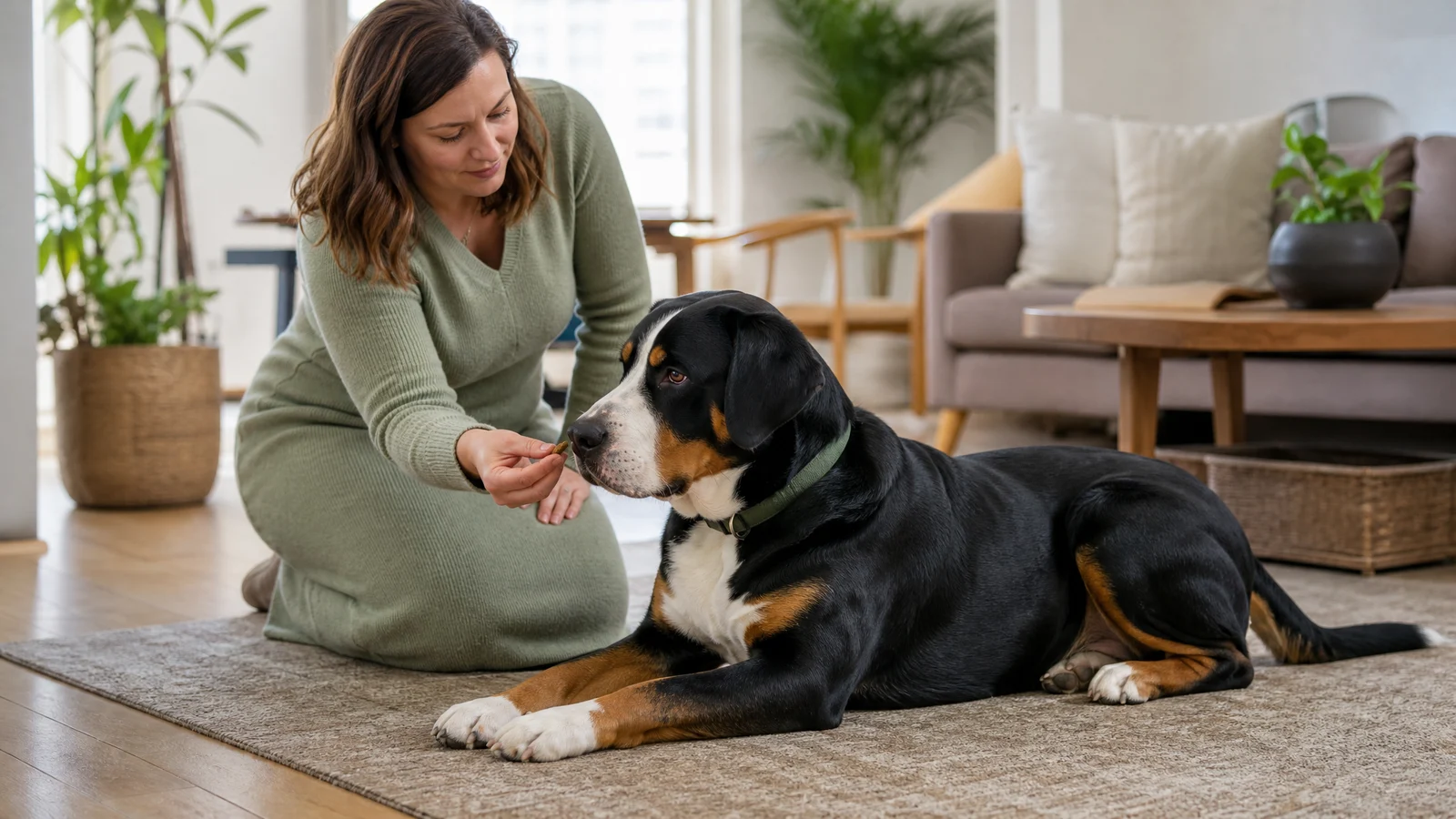
Train a Greater Swiss Mountain Dog with small food rewards and steady patience, kept consistent from the first day. The breed is very food motivated and responds well to treats, but they also have a stubborn streak, so you must be more determined than the dog.
That pairing matters because a puppy you can scoop up becomes an adult of 85 to 140 pounds, and the habits set while they are small are the ones you live with later. Handled badly, the streak produces a strong dog who pulls and tunes you out.
Handled well, the appetite becomes your best teaching tool. Read on for how to choose and portion treats, an invented household whose puppy arrives at ten weeks in an apartment with two bedrooms, the first cues, crate and potty routines, and a short schedule for weeks eleven and twelve.
Training a Greater Swiss Mountain Dog With Food
Hold a small treat at nose height and a Greater Swiss puppy will follow your hand across the room, eyes fixed and ears forward. That single-minded focus is the most useful thing you have, and it is why food sits at the center of this whole guide.
Food does the teaching, but your steadiness decides whether the lesson sticks. The same appetite that makes a Swissy keen to learn also makes them quick to notice when a rule is optional. We have trained this breed for many years, and the pattern holds: a session that is small, repeatable and always rewarded beats a session driven by strong feelings.
Reward-based methods are also more effective than the alternatives, because they teach the behavior you want instead of merely suppressing the one you don't.
Choosing Reward Types
Not every reward suits every moment, so match the value of the treat to the difficulty of the task. These are the options worth keeping on hand.
- Soft treats small enough to swallow in one bite are your everyday currency, because chewing stalls the lesson and slows the next repetition.
- Part of the regular meal works well for easy skills at home, such as a sit in the kitchen.
- Something softer and smellier is saved for hard moments, such as coming when called or passing another dog on the sidewalk.
- A short game, a calm scratch or a trip out the door counts as a reward too, and it helps when the puppy is full or tired.
- Praise costs nothing, so give it every time, but in the early weeks treat it as a bonus on top of food rather than a replacement.
Counting Treats in the Daily Food
A food-driven dog will happily accept every treat you offer, and a large-breed puppy who gains too much weight early pays for it in the joints later. The simple fix is to portion out your puppy's full daily ration every morning, then pull from it whatever you plan to hand out during training.
Whatever you hand out as treats comes out of that portion, so the total stays the same no matter how many sessions you run. This helps motivation too, since a puppy who is slightly hungry before a meal works with more focus than one who has just eaten. Cut treats tiny and you can run many repetitions without upsetting the day's balance.
This is general information, not a feeding plan for your puppy. Ask your veterinarian how much to feed at each stage, how to space meals, and which signs of bloat to watch for. Regular veterinary visits let your vet check growth and weight as your puppy develops.
Our Example Greater Swiss Mountain Dog Puppy
For the rest of this guide we follow one invented household, made up only to show the planning. It has two adults and a Greater Swiss puppy who comes home at ten weeks to an apartment with two bedrooms. No actual dog or family is behind it, and your own setup will differ in the details.
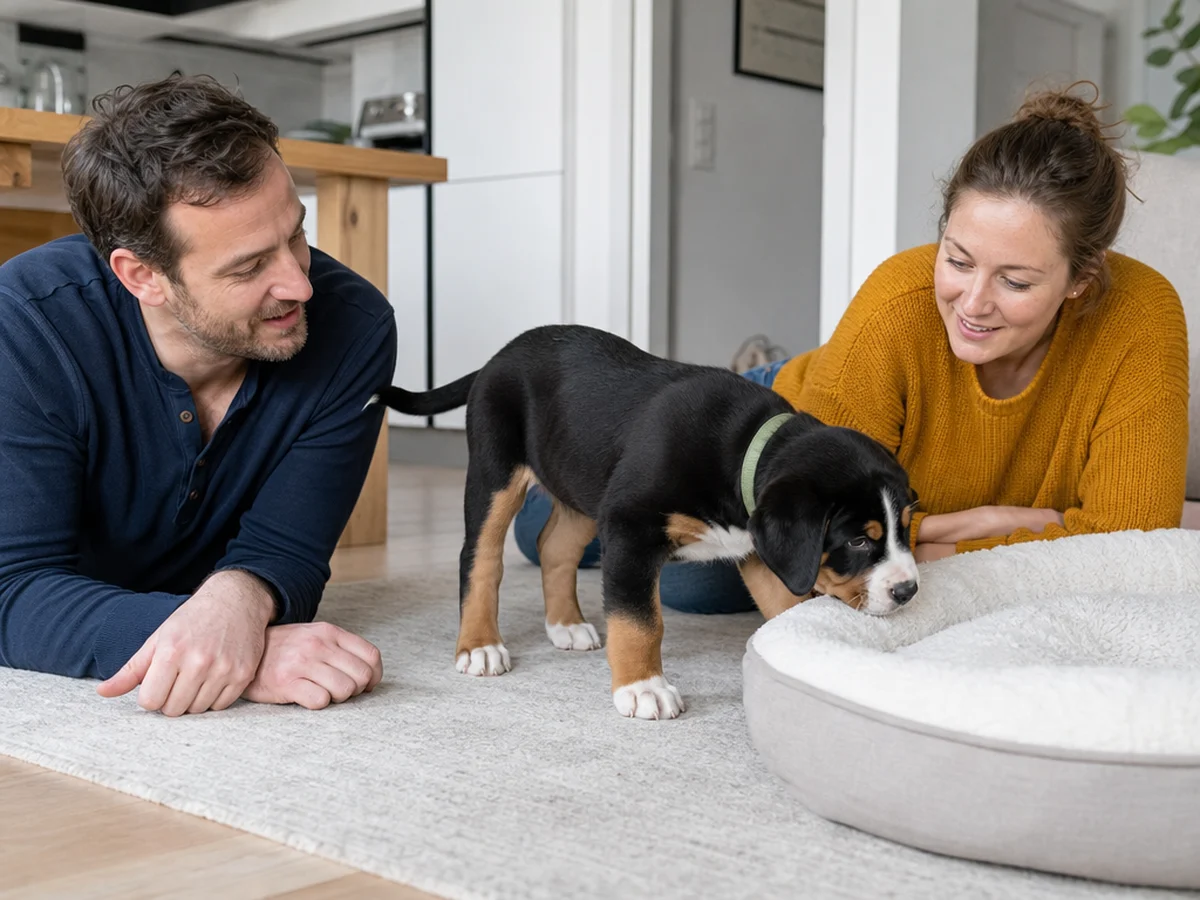
The reason to decide things before the puppy arrives is cost. A habit that is charming at ten weeks becomes a household problem when females reach 85 to 110 pounds and males 115 to 140. The breed can also be a protective watchdog, so training and socialization are best begun while the puppy is still small enough to handle easily.
In our example, the two adults agree on the rules before the first night. Writing them down feels fussy, but it keeps the puppy from learning that the rules depend on who is home.
- Each behavior gets one cue word, and everyone uses it the same way.
- All treats come from the measured daily portion, kept in a container near the door.
- Four paws on the floor earn attention from day one, because a leaping puppy turns into a leaping adult.
- The couch is either allowed or not, decided now, since a dog this size is hard to move later.
- The crate goes in the bedroom, so the puppy sleeps near people from the first night.
Apartment living adds its own planning. Hallways, neighbors and elevators give the puppy sounds and surfaces to meet early, which is useful if you reward calm. The breed standard says shyness or aggressiveness shall be severely penalized, so early, gentle, rewarded exposure to new people matters. Book a first veterinary visit, ask when the puppy can safely meet other dogs, and look for a reward-based puppy class.
Day-One Treat Training in the Apartment
The first evening in our example is quiet. The puppy has explored the living room, had some water, and is now standing in the hallway watching an adult hold a small cup of kibble. This is a good moment to start, because the first lessons need no space, no equipment and only a few minutes.
Begin by teaching the marker. Say a short word such as yes in a bright voice and give a treat straight away, several times in a row. Soon the puppy understands that the word means a treat is coming, and you can use it to mark the exact instant a behavior is right. Run several short sessions a day and stop while the puppy is still looking for more.
Teaching Sit
Hold a treat right at the puppy's nose, then slowly sweep your hand upward and backward above their head. As their nose follows the treat, their bottom lowers toward the floor. The moment it touches down, say yes and deliver the treat at nose level, so the puppy stays in position to receive it.
Speed matters here, because the gap between the behavior and the treat is where most confusion starts. Once the puppy sits easily on the lure, add the word sit just before you move your hand.
Teaching Their Name
Say the name once in a pleasant voice. When the puppy looks at you, mark and treat. Repeat in different rooms of the apartment, then from farther away. Keep the name for good things only, so that hearing it always predicts something rewarding. This builds the attention that every later cue depends on.
Teaching Come
Start in the hallway with a few steps between you. Say come in a happy voice, crouch, and reward when the puppy reaches you, handing the treat at your knee so they learn to arrive close. Lengthen the distance room by room.
Never use the word for something the puppy dislikes, such as a nail trim. Walk over and collect them instead. When you move outdoors, clip a long line to a flat collar so the puppy has freedom without the option of wandering off.
How Does Patience Help Training Past a Stubborn Streak?
By the end of the first week, our example puppy sits happily at the kitchen counter. Then one afternoon they look at the treat, glance at the window, and do nothing at all. That pause is the stubborn streak, and it appears because the breed is capable, confident and used to thinking for themselves.
Being more determined than the dog does not mean being louder or rougher. It means being the one who is still calm, still consistent and still holding the treat when the pause ends. When the puppy stalls, work through these steps in order:
- Wait quietly for a few seconds without repeating the cue, since a second and third request teach the puppy that the first one can be ignored.
- Make the task easier by lowering the distraction, moving closer, or going back to the lure.
- Raise the value of the reward if the puppy is clearly more interested in the window than the treat.
- Mark the first small success, end the session there, and try again later.
This breed has a versatile working spirit and loves having a job to do, so short, purposeful sessions with a clear reward at the end suit them well. Long, repetitive drills do not. A dog rated high for mental stimulation needs gets bored by sameness before they get tired, so vary the exercises and keep each round brief.
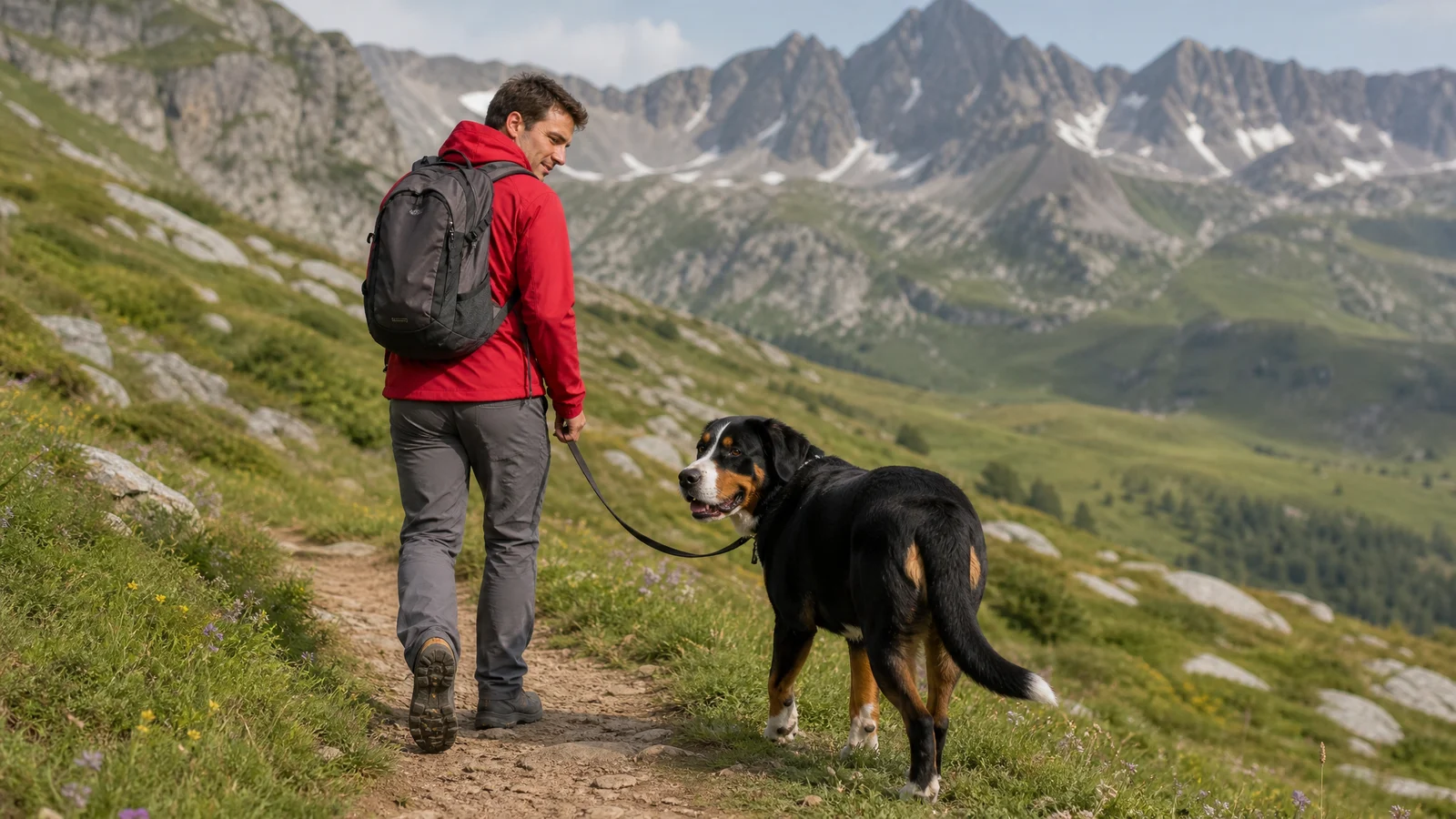
The same streak shows up on walks. When a puppy leans into the leash, many people reach for a harness, but this is a draft breed, and a harness outside draft work tends to make them pull harder. Use a well-fitted flat collar and a sturdy leash, stop moving when the line tightens, and reward the puppy for returning beside you. Teaching them with food to walk nicely by your side works better than any piece of gear.
Crate and Potty Training Routines
In our example, the front door is down one flight of stairs and across a small lawn, so every trip outside is a project. That is the first apartment trade-off: the farther the potty spot, the more the schedule has to be planned instead of improvised.
Setting the Potty Rhythm
Plan trips for the moments a puppy most often needs to go: when they wake, soon after they eat, as play winds down, and last thing at night. Carry treats and reward the instant the puppy finishes outdoors, not after you are back inside, so the reward attaches to the right spot. Our Swissy potty training guide covers the schedule in more detail.
You can carry a young puppy down the stairs today, but you will not be able to carry an adult. While the puppy is small, practice walking down the stairwell on leash with treats at your knee. In summer, schedule outings for early or late in the day, since this breed handles heat poorly.
Making the Crate a Calm Place
Feed some meals in the crate and leave a chew inside, so the space predicts good things. Keep it in the bedroom at night, and open the door during a quiet moment rather than in the middle of fussing. Build time alone gradually, because an apartment makes noise complaints a real cost of poor early habits. Our Swissy crate training guide also covers separation anxiety.
Settling is a skill too. Reward the puppy for lying down on a mat while you cook or watch television, and the apartment becomes easier for everyone, including the neighbors.
Is Your Greater Swiss Mountain Dog Learning?
At about twelve weeks, our example puppy is lying in the living room when their name is called from the kitchen, and they turn and trot over without a second request. That small moment says more than any single trick, because it shows attention is becoming a habit.
A planner checks progress against a few signs instead of a feeling. Test on an ordinary day, in a few different rooms, and be honest about what only works in the kitchen. Good signs include.
The puppy looks at you when their name is said, even with something interesting nearby, and sit happens on the first cue most of the time, in more than one room. Walking into the crate needs little coaxing, and accidents in the apartment are becoming rare. The puppy also keeps four paws down to greet visitors, or at least recovers quickly after a reminder.
When something is not working, the answer is usually a small adjustment rather than a new method. This table matches common signs to the first change to try.
| What you see | What to adjust |
|---|---|
| Cue works in the kitchen but not the hallway | Return to the easier room, then add distance and distraction slowly. |
| Puppy takes treats but will not work for them | Reduce distractions, use a more appealing reward, or run the session before a meal. |
| Jumping on visitors | Use a leash or gate, and reward only four paws on the floor. |
| Weight creeping up | Shrink the treats and take them from the daily food, then ask your veterinarian. |
| Nervous with new people | Keep exposure short and calm, reward relaxed behavior, and ask a reward-based trainer for help. |
The breed ideal is confident and friendly with strangers, so persistent fear deserves attention early. Keep regular veterinary visits going, and see our Swissy puppy training timeline for what comes after this stage.
Training Plan for Weeks Eleven and Twelve
Everything here rests on two facts about the breed: they love to work for food, and they will test whether you mean what you ask. Small treats, short sessions and steady determination answer both, and they leave a calm dog who needs only moderate daily exercise, such as a walk around the block. If your own puppy is older, start from today and run the same two weeks.
- Practice sit, name and come in every room of the apartment, with several short sessions each day from the measured food.
- Add the hallway outside the door as a new, slightly harder place for each cue.
- Walk the stairs on leash with a flat collar, rewarding the puppy for staying beside you.
- Do one calm outing for new sights and sounds, and reward relaxed behavior.
Begin practicing come with a long line, somewhere quiet and safe outdoors, and lengthen the mat settle while you do something else nearby. When visitors arrive, have them reward sitting before they greet the puppy, with the puppy on leash if needed. Keep the potty route and cue the same each trip, in the cooler part of the day if it is summer.
Measure the result at the end of week twelve with one test: from across the apartment, call the puppy once. If they come on the first call most of the time, the plan is working.
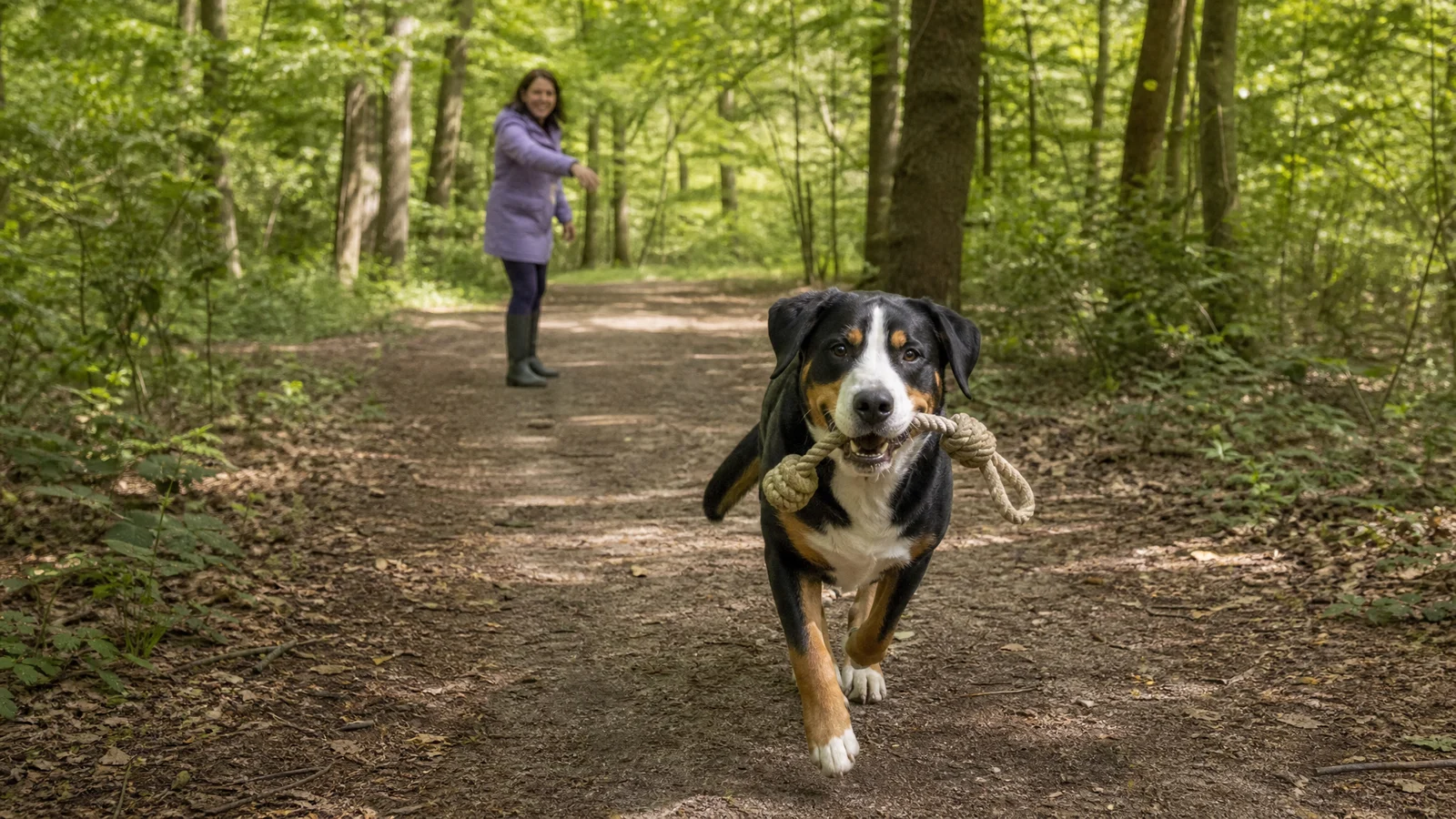
 Exercise and jobsHiking With a Greater Swiss Mountain Dog
 Exercise and jobsHow Much Exercise Does a Greater Swiss Mountain Dog Need?
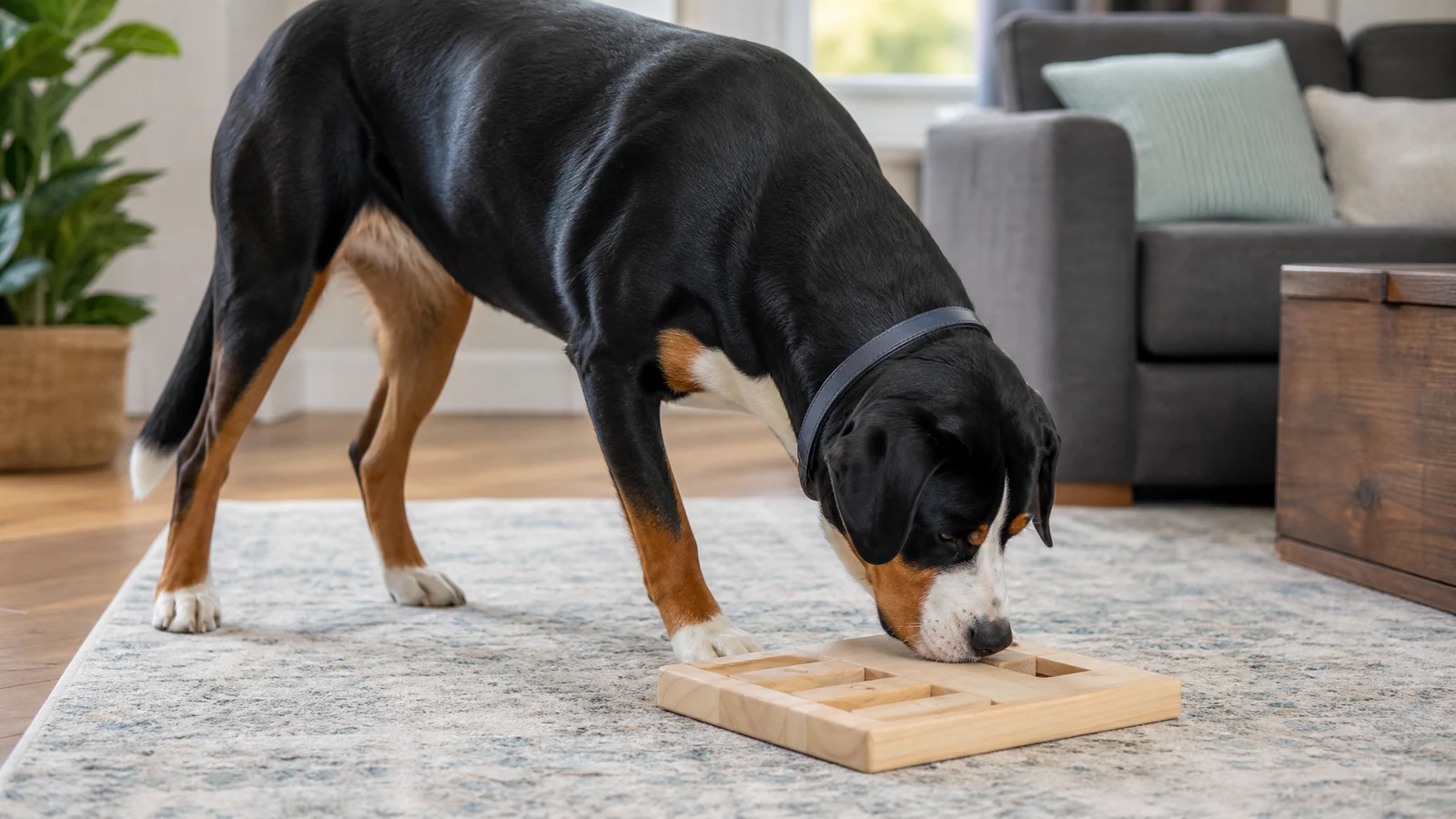 Exercise and jobsBrain Games and Mental Stimulation for a Swissy