A Greater Swiss Mountain Dog puppy can start gentle, short outings almost right away, but the full adult routine only begins once growth is behind them, and in a large, heavy breed growth takes longer. Getting the timing wrong costs you either way. Too much too soon asks a lot of young joints, and too little leaves a playful, working-minded dog looking for their own entertainment, usually in your living room.
We'll walk you through how age changes the plan, how much daily exercise this breed needs, why hiking suits them better than bicycling, how to protect growing joints, and where the mind fits in, then point you to the questions owners ask next. We have trained this breed for many years, and the advice below is built around how Swissies actually behave.
Age and Exercise Timing
Age is the first factor because it decides everything after it. The verdict: puppy limits rise gradually, and the adult routine comes only after growth is finished. If you are unsure which stage your dog is in, judge by body and behavior rather than the calendar alone. A gangly, uncoordinated dog who still trips over their own feet is not ready for adult-length outings, however much energy they show.
Young Puppies
In the earliest months, the goal is exposure, not mileage. Short, easy outings on soft, even ground let a puppy meet new surfaces, people and sounds without taxing a large frame. If your puppy flops down mid-walk, the walk was too long, so turn around and make the next one shorter.
If your puppy comes home and sleeps hard, you are in the right range. Because Swissies can be protective watchdogs, early socialization during these outings matters as much as the exercise itself, and it is easier while the dog is still a manageable size.
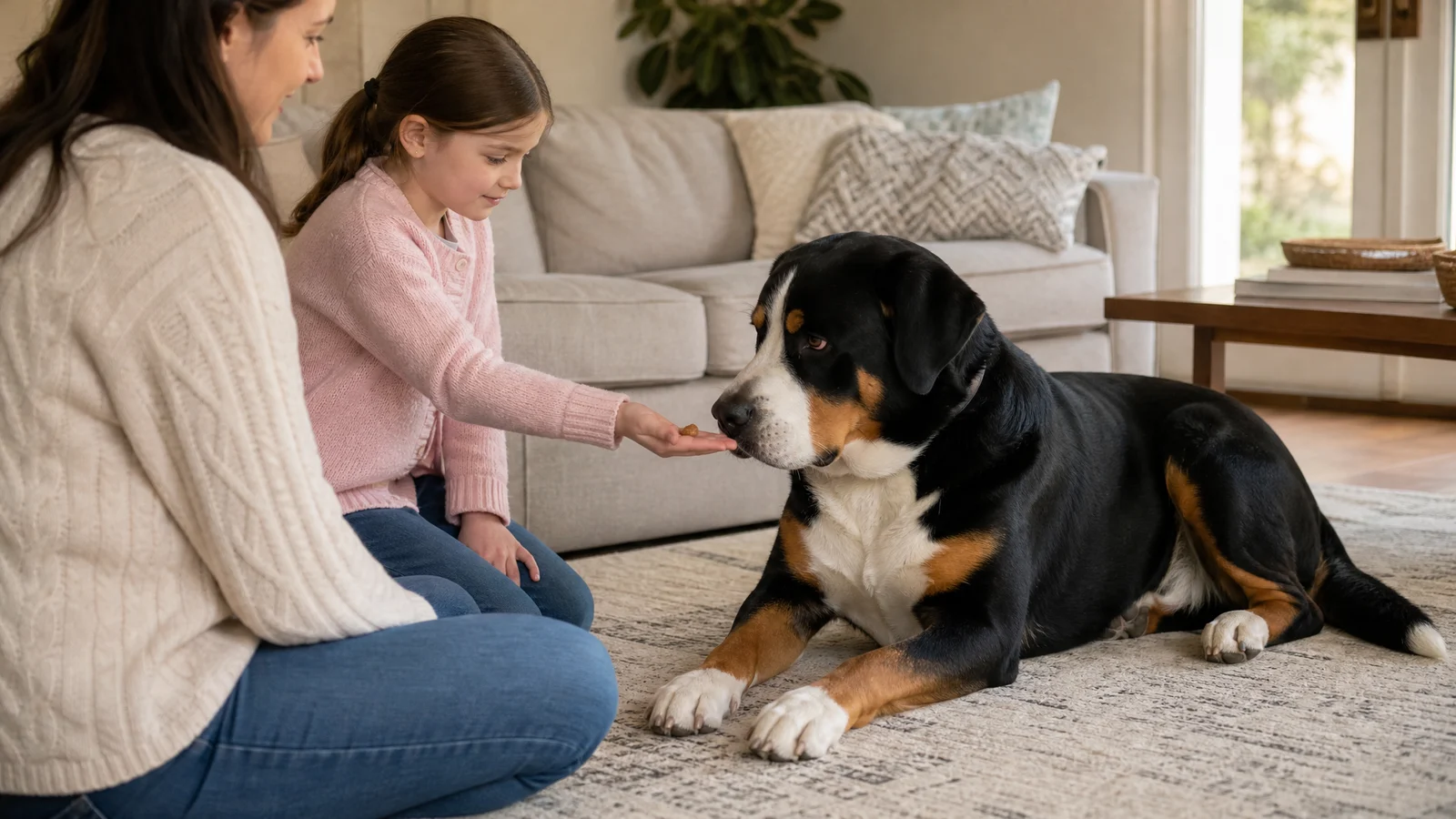
Fill the rest of the day with calm play and short training games. Puppy energy is real, but it is better spent on the mind than on the joints.
Adolescents
Adolescence is where owners get fooled. The dog looks nearly grown and acts like they could run all day, but the body is still catching up with the size. If your adolescent seems tireless, add mental work and sniffing before you add distance. Lengthen walks gradually and watch recovery. Stiffness, limping or reluctance to rise the next morning means you went too far, so scale back and mention it at your next vet visit.
Regular veterinary checkups are the best way to know when your individual dog is ready for more.
Adults
Once your dog has finished growing, the full routine can begin, and it is more modest than the breed's size suggests. A healthy adult does well on steady daily walks, some free time in a secure yard, and a few hikes.
If your adult is calm and settles after outings, hold the routine where it is. If they pace, chew or pester you, test mental work before adding more miles. Later in life, expect to shorten outings and lean more heavily on games, with your veterinarian guiding the details.
Daily Exercise for a Greater Swiss Mountain Dog
The second factor is the daily amount, and here the numbers can mislead. Energy and playfulness both rate 4 of 5 for this breed, yet they need only moderate exercise, and a walk around the block or a romp in the woods generally covers the day. The verdict: moderate is enough. The high rating describes a dog who enjoys activity and can be silly and bouncy, not one who must be run hard to stay sane.
A Typical Weekday
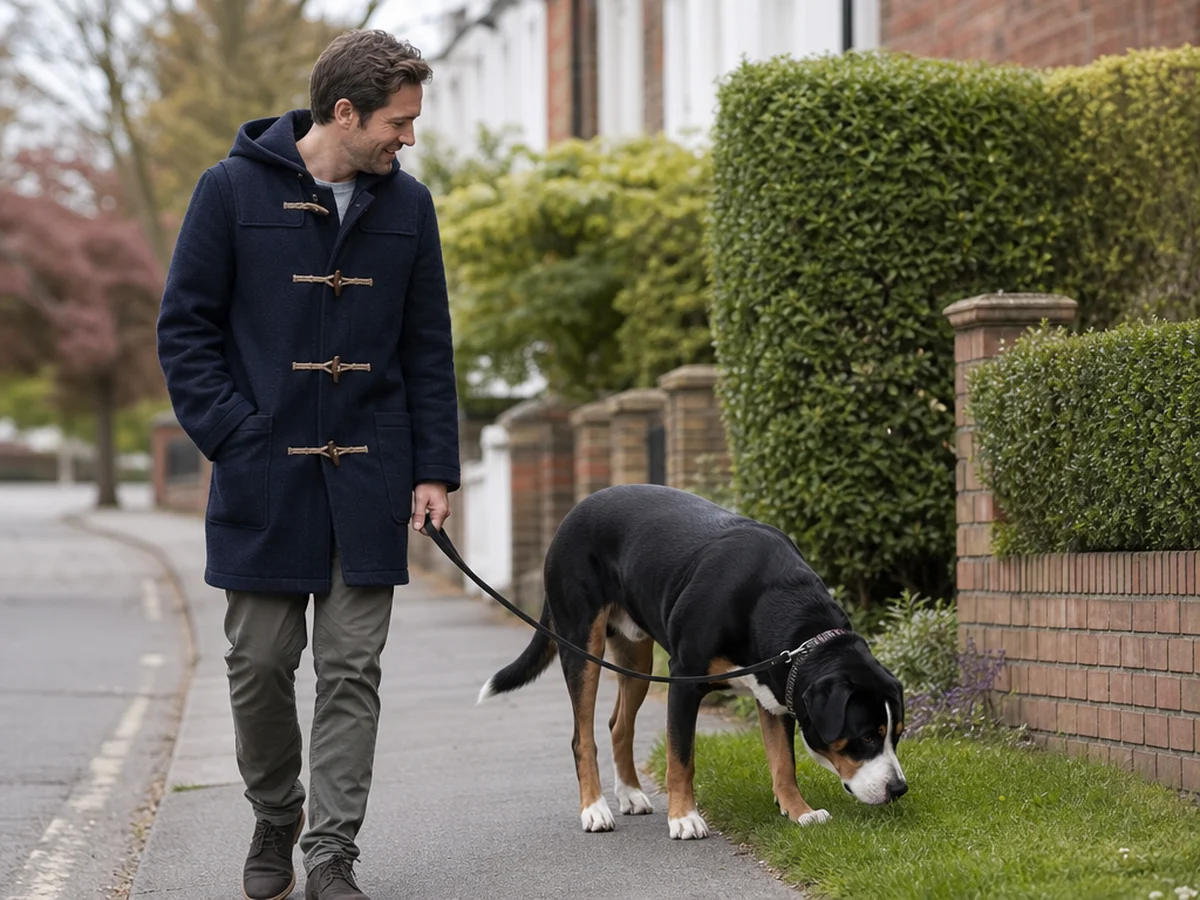
On an ordinary weekday, plan a morning walk at a steady pace and an evening walk with a little more sniffing time. If your dog is still wound up after both, the problem is probably an empty mind, not an empty tank, so add a food puzzle or a short training session.
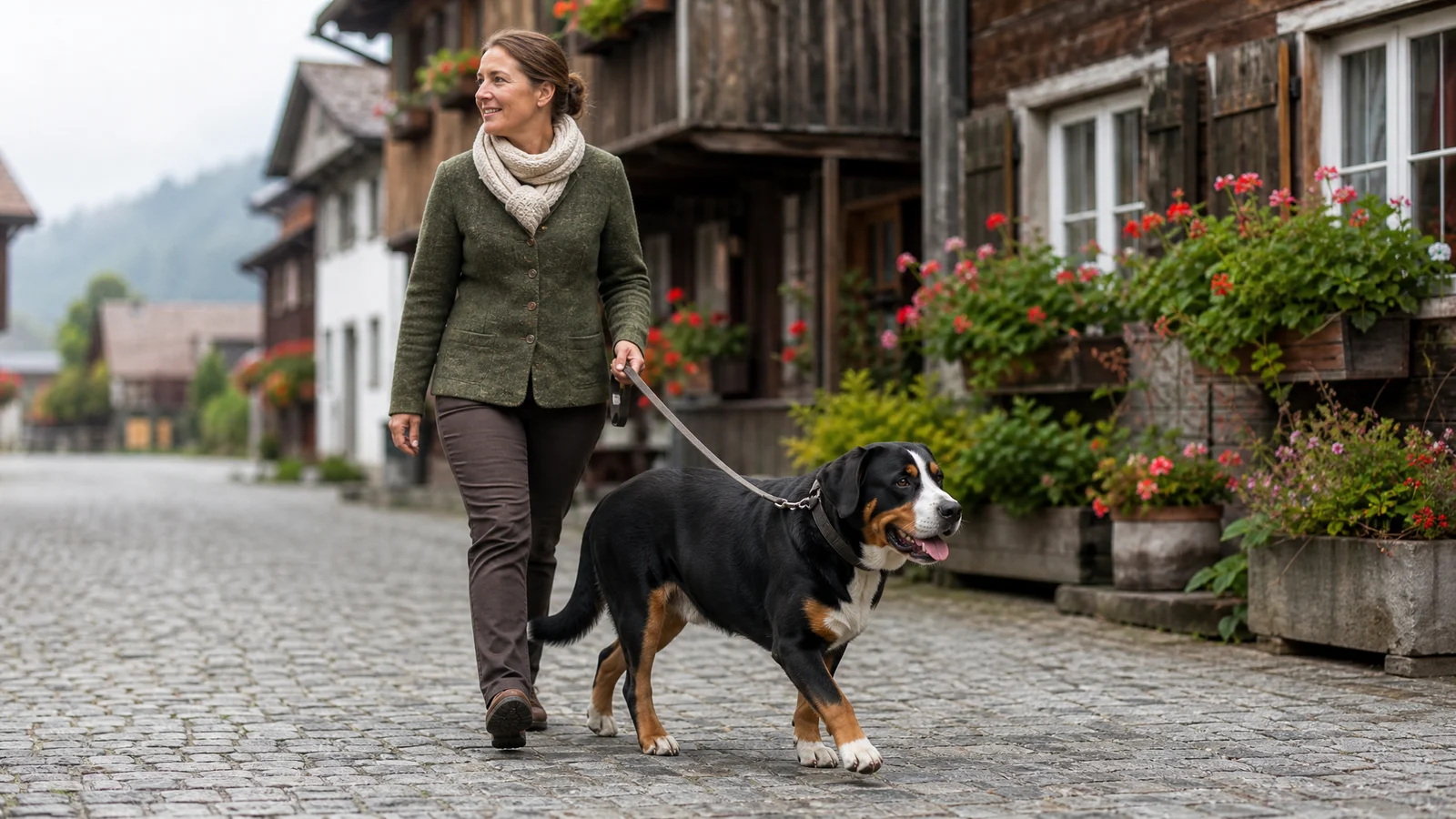
Leash manners deserve attention here too. Dogs pull when excited, eager to investigate every smell, or simply from habit, and a big Swissy who learns young that pulling works will keep doing it as an adult.
The fix is simple. When the leash goes tight, stop or turn the other way, then reward with praise and a treat when your dog follows. This breed is very food motivated, so use small, tasty treats. Plan your loose-leash work without a harness-type device, since a harness tends to make a draft breed pull harder.
A Weekend Day
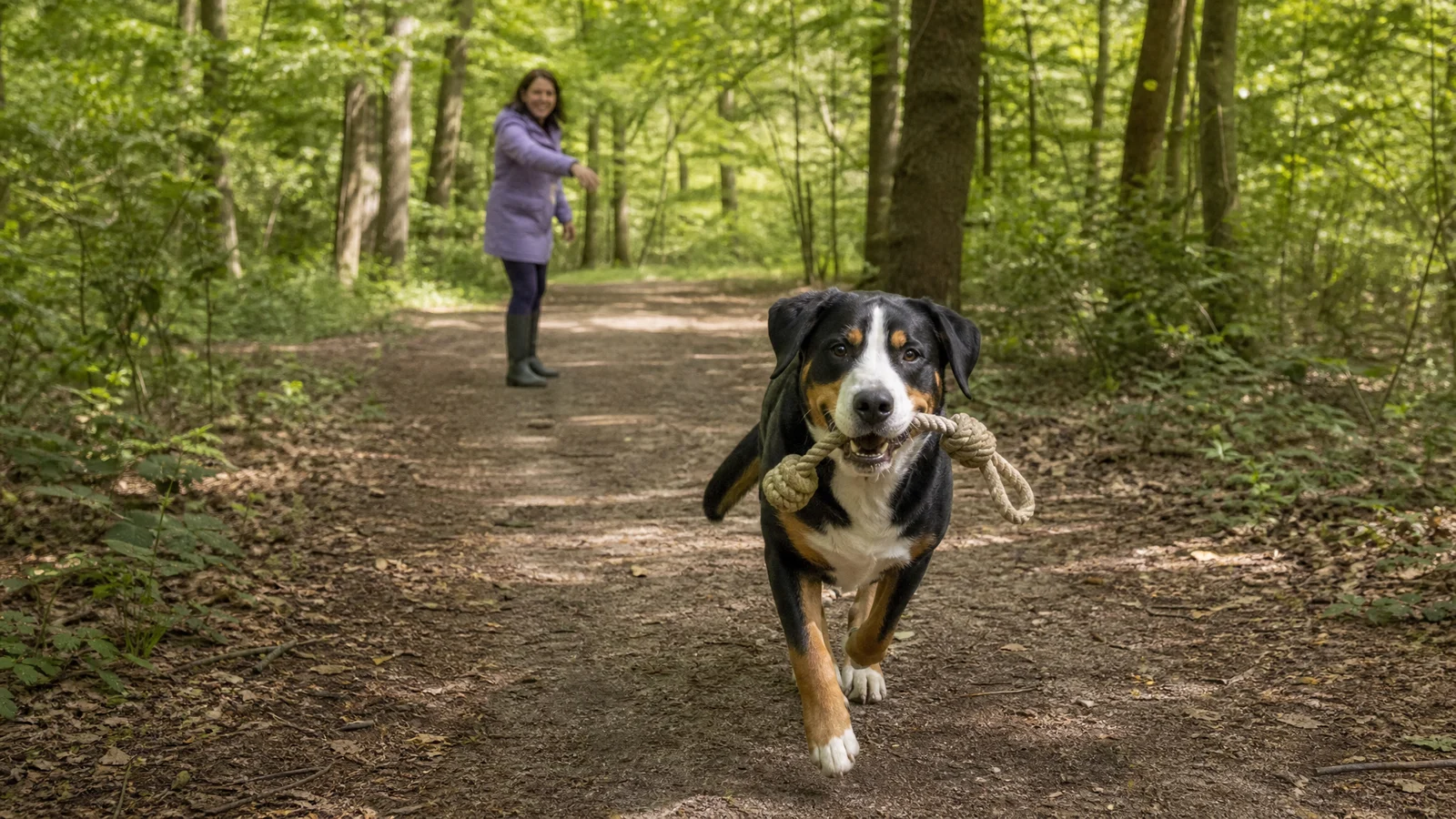
Weekends are the time for the romp in the woods. A longer, unhurried outing on a trail suits the breed, with plenty of stops to sniff and look around. If you finish and your dog is happily tired, you matched the effort to the dog. If they are still bouncing, resist the urge to keep going. Finish with a short training game at home instead, and let the body rest.
A Hot Day
Heat changes the plan completely. Because of their large size, black coat color and thick undercoat, Swissies do not tolerate high temperatures well, and prolonged exercise in hot sun can lead to heat prostration or heatstroke. If the day is warm, move outings to early morning or late evening. If it is hot even then, swap the walk for indoor brain games and short potty breaks. A skipped long walk costs your dog nothing, while a hot one can cost a great deal.
Hiking Beats Bicycling for Exercise
The third factor is the type of activity. The verdict: hiking suits this breed far better than bicycling or marathon running. Swissies are a draft breed, built for steady, strong work at a working pace, and they love hiking and backpacking with the family. A trail lets them walk at their own rhythm, sniff, climb and stop, which is exactly what their bodies and minds want.
Bicycling and distance running flip that picture. They force a sustained, fast pace on a heavy dog, often on hard surfaces, and they leave little room for rests or heat management. If you are a runner or cyclist and want a partner, this is probably not the breed for that job. If you still want your dog beside you, offer them the hike instead and save the fast miles for yourself.
When you hike, match the plan to the weather and the dog.
- Start early or finish late in warm months, and pick shaded trails where possible.
- Let your dog set a comfortable pace and take breaks whenever they want one.
- Skip the heavy meal right before or after a hard effort, and ask your veterinarian what timing suits your dog.
- Stop at once if your dog slows, lags or seems distressed, and cool them down in shade.
Owners should also know the symptoms of bloat and what to do if it happens. A swollen or tight belly, retching without producing anything, or sudden distress after eating or exercise needs an immediate call to your veterinarian or an emergency clinic. This is safety context, not a reason to avoid exercise. Knowing the signs simply lets you act fast.
This is general information, not a substitute for professional advice. Check with your veterinarian about feeding schedules, bloat risk and what activity is safe for your own dog.
Protecting Joints During Puppy Exercise
The fourth factor is the skeleton, and the verdict is to protect growing bones and avoid pounding. A Swissy puppy gains size quickly, and a large frame on a young body is more vulnerable than the same dog will be at maturity. Repeated hard landings are the likeliest strain on young joints, so the question to ask of any activity is how many times your dog will land hard doing it.
If the activity is repeated jumping, sharp turns after a ball, or long runs on sidewalk, cut it back or swap it. If it is a walk on grass or a packed trail, it is usually fine. Stairs are worth managing too. Carry or gate off long flights for a small puppy, and let your dog use them calmly rather than racing up and down. Sliding on slick floors strains joints as well, so rugs help.
Keep Your Swissy Lean
Weight matters as much as surface. A lean dog carries less load on every step, so keep treats counted into the daily food and watch the waistline as your dog grows. Food rewards are the heart of training this breed, which makes this easy to forget. Use small pieces, and leave any change to meal sizes to your veterinarian.
Draft work and packs deserve the same caution. The parent club has committees for drafting, herding, hiking, weight pulling, agility and obedience, and they are the best place to learn how to start safely. Do not load a young dog with a pack or a cart on your own. Ask the club how to begin and ask your veterinarian when your dog's body is ready.
Mental Stimulation Beyond Exercise
The fifth factor is the mind. Mental stimulation rates 4 of 5 for this breed, and the top of that scale describes a dog who wants a task to do. The verdict: this rating needs real outlets. A Swissy who has walked enough but had nothing to think about can still turn restless, and this breed loves having a job to do, such as carting, herding or weight pulling. If your dog is physically fine yet bored, add tasks before you add distance.
Food Puzzles and Scent Games
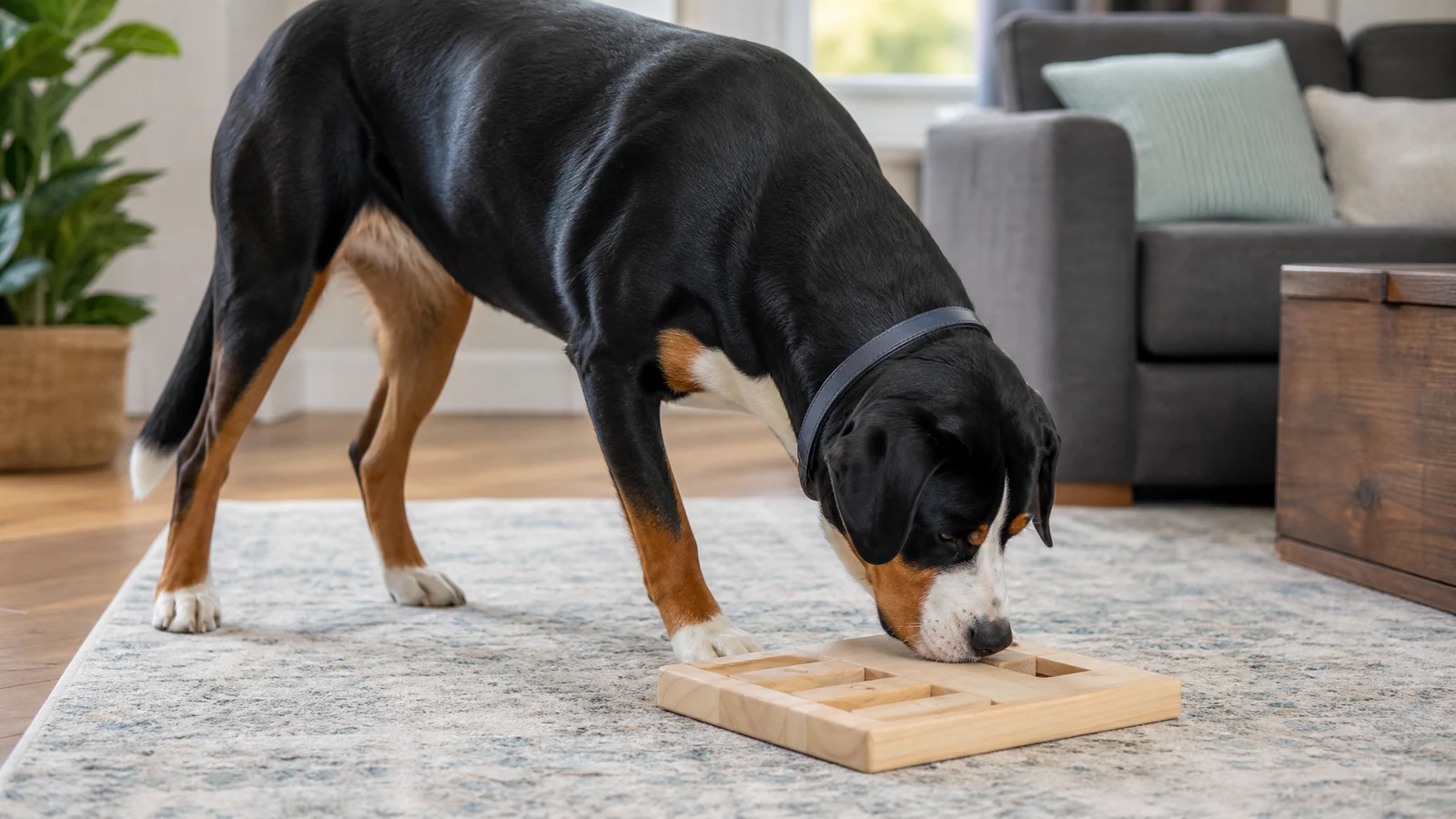
The easiest outlet is the food bowl. Food puzzles make a dog work for dinner at a slower pace, which gives the brain a task, and every meal becomes a chance for enrichment.
Because bloat is a known concern, ask your veterinarian whether puzzle feeding fits your dog's mealtime routine. For a scent game, show your dog a treat, hide it in an easy spot while they wait, then release them to find it. If they find it fast, hide it somewhere harder. If they give up, make it easier next time.
Simple Jobs
Swissies are willing workers, so give them small, repeatable tasks that feel like work.
- Teach your dog to fetch a slipper or a toy and bring it to you on cue.
- Practice hand targeting, where your dog touches your palm with their nose, for a treat.
- Ask for a calm sit and wait at doors, then release with a marker word and a reward.
- Walk a short loose-leash course around the yard, rewarding every few steps of good position.
Keep sessions brief and end while your dog still wants more. This breed can have a stubborn streak, so you need to be more determined than the dog, but determination here means consistent rewards, not pressure. If your dog stalls, make the task simpler and pay better.
Greater Swiss Mountain Dog Exercise Questions
Once the routine is in place, the next questions are usually about training, jobs and temperament, because exercise, learning and behavior feed each other. A dog with the right amount of activity learns faster, and a dog who learns well is easier to walk. If you want to put the breed's draft and working instincts to use, sports and jobs for Swissies covers the options in more detail.
- If you are wondering how to build reliable manners alongside the walks, read how to train with food rewards and patience.
- If you are unsure whether your dog's stubbornness is normal, see whether Swissies are stubborn or easy to train.
- If you want to try carting, hiking clubs or other work, start with the sports and jobs article above and then contact the parent club.
The main thing to carry forward is balance. Give your Swissy moderate daily exercise in cool parts of the day, favor hikes over fast miles, protect young joints, and keep the mind busy with real tasks. Do that, and a dog built for steady farm work stays calm at home instead of hunting for their own jobs.
 Exercise and jobsBrain Games and Mental Stimulation for a Swissy
 BehaviorTeaching a Greater Swiss Mountain Dog to Be Good With Kids
 Training basicsDoes Your Greater Swiss Mountain Dog Drag You Down the Street?