Standard puppy advice says to socialize early, sign up for a class and treat the first months as the window that matters most. That holds for a Greater Swiss Mountain Dog too, with one addition. Swissies can be protective watchdogs, so training and socializing should begin while the dog is still a manageable size.
Living with a Swissy shows how lopsided the timeline is. The puppy is soft, food-obsessed and easy to scoop up, then grows into a dog of 85 to 140 pounds, and every habit you let slide becomes a physical problem. In this article, we'll go through how Swissy puppies differ from look-alike breeds, what food-reward training looks like in the first weeks, how to socialize and shape barking early, and what adolescence and the second year ask of you.
Usual Puppy Training Advice Versus Life With a Swissy
Generic timelines treat puppies as interchangeable. Housetrain, teach sit, finish a class and expect a calmer dog by the first birthday. That plan suits a dog you can lift with one arm and one that matures quickly, and a Swissy is neither. The breed combines the confidence and robustness needed for drover work with a friendly, even-tempered personality, and that mix reshapes the schedule.
Three traits bend the timeline. The breed is very food motivated, so early teaching moves fast when you pay in treats. Size raises the stakes, with males at 115 to 140 pounds and females at 85 to 110 pounds. A stubborn streak means you must be more determined than the dog, calmly and for a long time.
The table below lays out the stages we use in this article. Treat them as signposts, not deadlines, because every puppy moves at their own pace and a Swissy's second year is still part of the training.
| Stage | Main goal |
|---|---|
| Weeks eight to sixteen | Food-reward basics, house training, socialization, gentle handling |
| Sixteen weeks to six months | Loose leash, polite greetings, settling, alerting barks that end |
| Six months to about eighteen months | Hold the rules steady while the dog tests them |
| Two years | Refine, proof in new places, keep up the routine |
For the full method behind these stages, read our guide to Swissy food rewards and patience. If you wonder whether the stubborn streak is real, our piece on stubborn or easy to train covers it.
Greater Swiss Mountain Dog Puppies Versus Bernese Puppies
Advice written for puppies in general, or for another large breed, does not always fit. We have trained Swissies for many years, and our advice is to test every tip against what is true of this breed before you use it. Where a tip clashes with a Swissy fact, the Swissy fact wins.
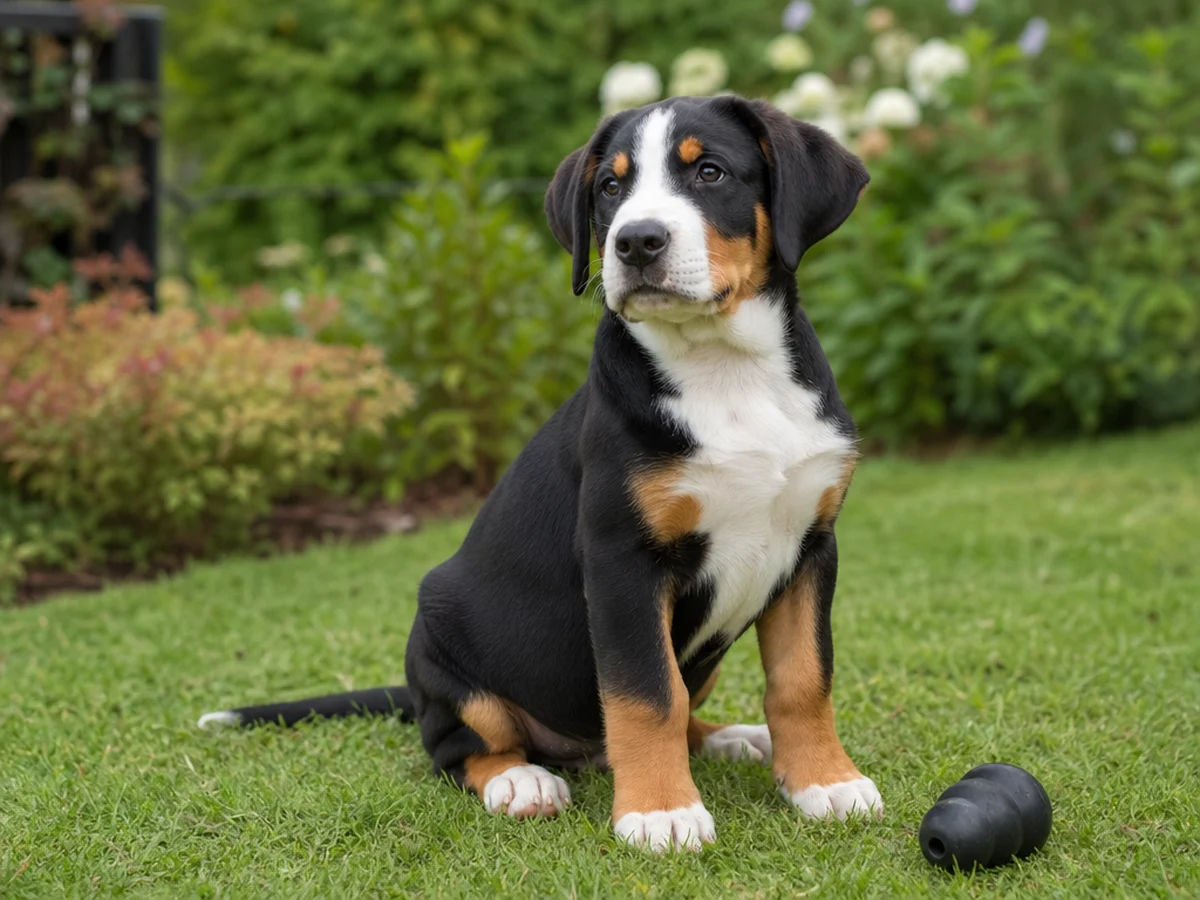
These are the facts to check against. Each one changes how you train.
- The Swissy is a draft breed, and a harness (other than for draft work) tends to make them pull harder, so build loose-leash manners on food rewards instead of equipment.
- Black color and a thick undercoat mean poor heat tolerance, so schedule training and exercise for early or late in the day in summer.
- Watchdog and protective nature rates 4 of 5, so alerting behavior needs shaping from the start.
- Mental stimulation needs rate 4 of 5, so a bored puppy invents their own jobs, usually at your expense.
- The body is slightly longer than tall, about a 10 to 9 proportion, and the dog is heavy for their height, so jumping, rough play and slick floors deserve care while they grow.
Do not assume a look-alike's pace or quirks apply to your puppy. Watch the dog in front of you, keep notes on what they find rewarding and what unsettles them, and let these breed traits set the plan.
Food Rewards for Puppy Training in Weeks Eight to Sixteen
Two approaches compete at this age. One waits for mistakes and tries to outlast a strong-willed puppy. The other pays for every right choice so the puppy keeps making them. A very food-motivated breed makes the second approach the obvious pick, and it is the only one we use.
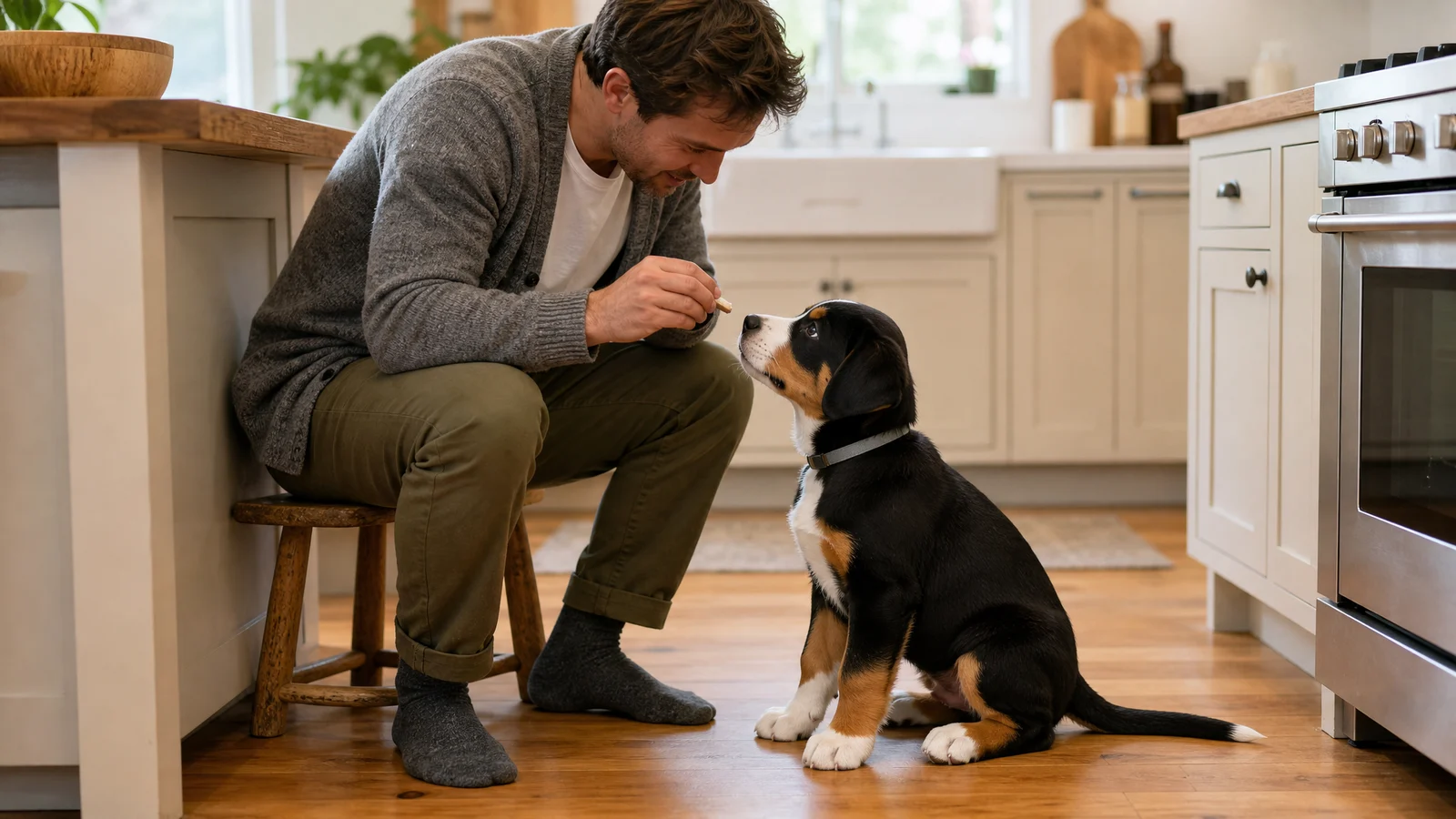
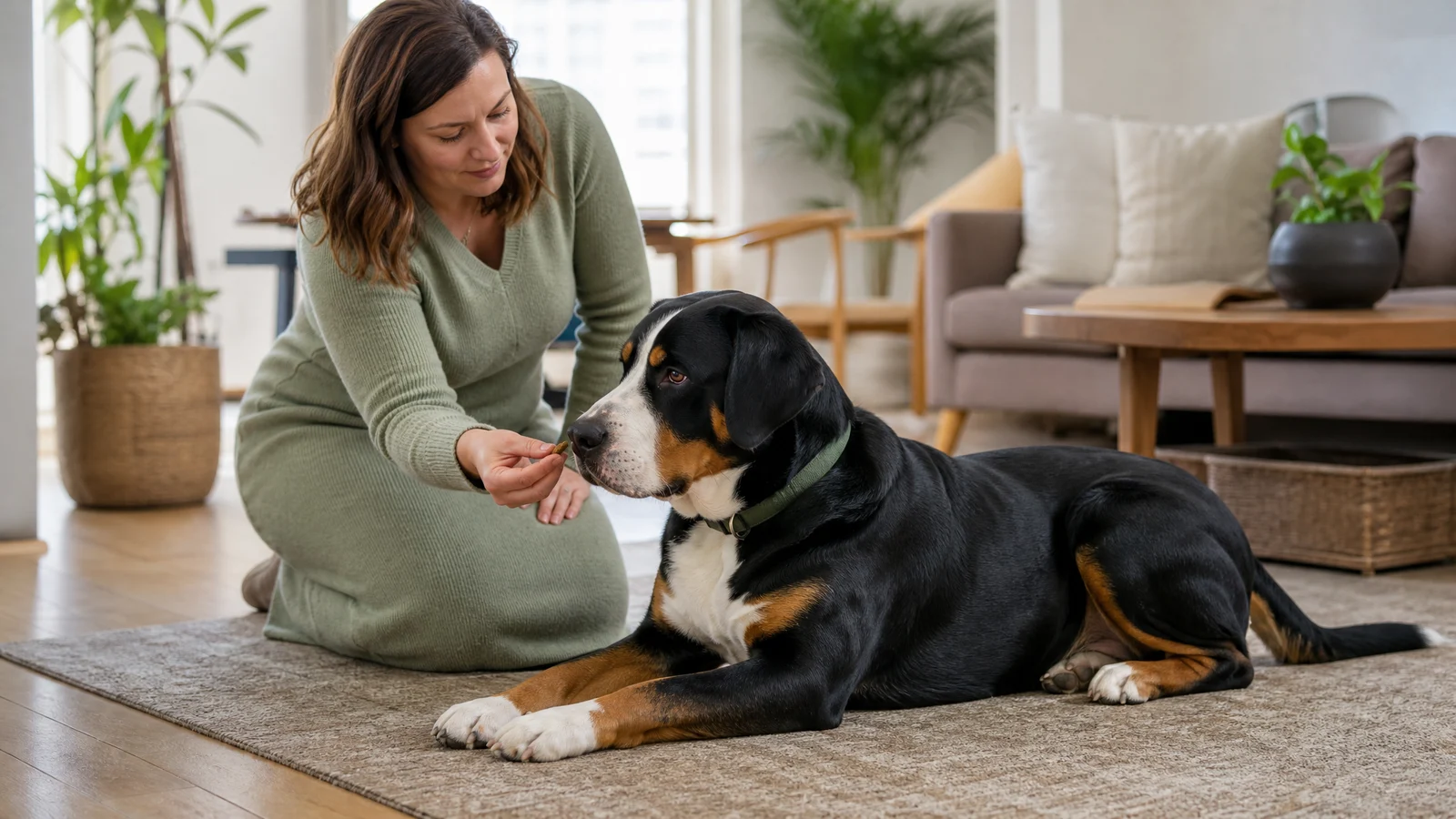
Keep treats in your pocket and tucked into a few rooms of the house. Choose a short marker word such as "yes" and use it at the exact moment your puppy does something right, then hand over the reward. Practice name response, sit, down, come and a mat settle in very brief sessions through the day. Subtract those treats from the daily meals so your Swissy stays lean.
Loose-Leash Walking From Day One
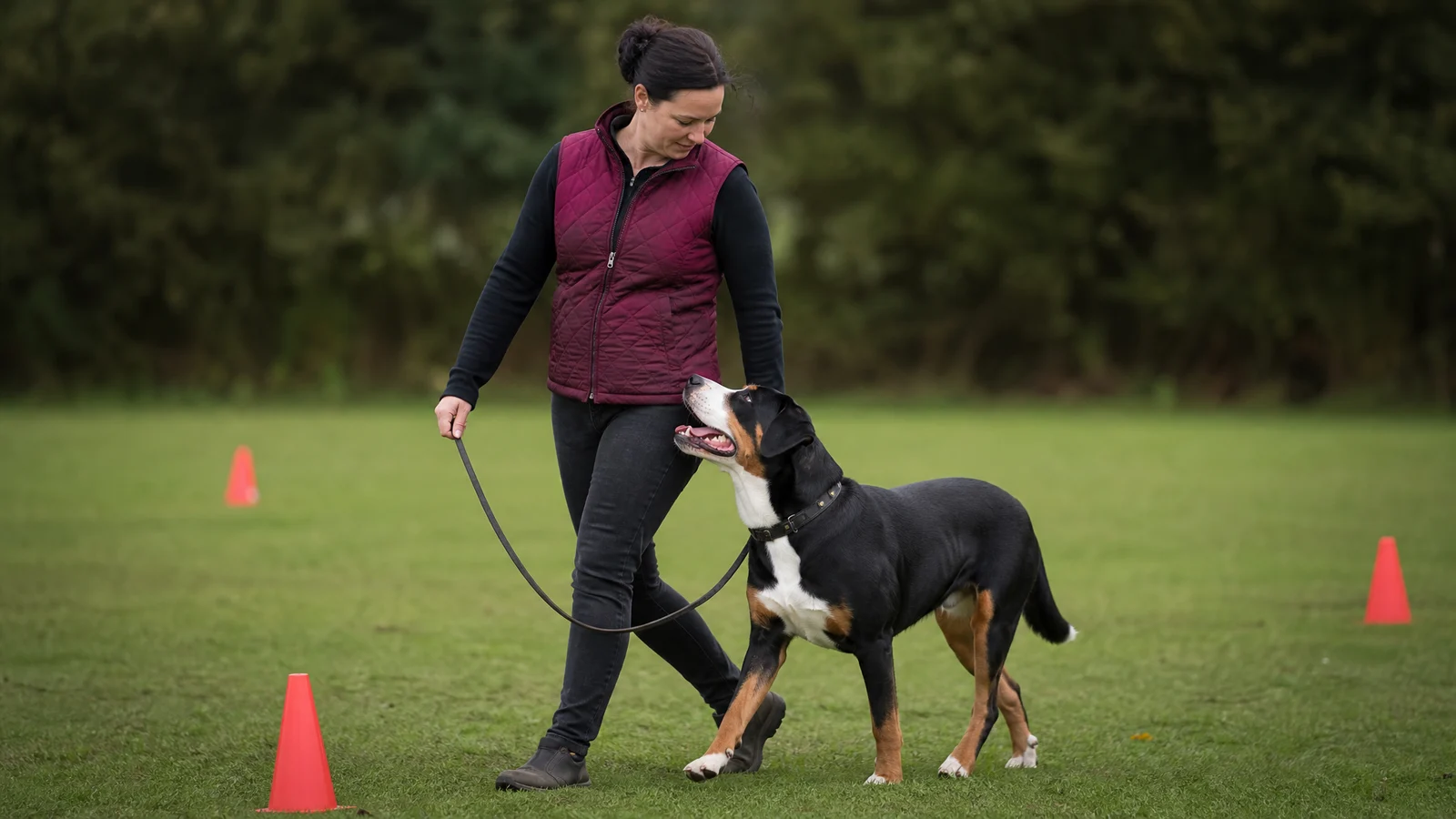
Start leash manners while you can still stand your ground easily. This routine works without any harness-type device.
- Reward the puppy for any moment beside you with a slack leash.
- Stop moving when the leash tightens, and walk on the moment it slackens.
- Pay generously at your leg, then gradually ask for more steps between treats.
- Keep early walks short and in quiet places, since tired puppies pull harder.
House Training and Mouthing
Take the puppy out after meals, naps, play and before bed. Go to the same spot, wait quietly and reward right after they finish. Supervise indoors, or use a crate or pen when you cannot watch. If a puppy suddenly starts eating poo and seems off, call the vet, because a medical check-up is wise before any training.
For mouthing, stop the game calmly when teeth touch skin, then offer a chew toy and restart. Trade instead of grabbing, so giving things up always pays. Mouthy is normal at eight weeks but a real problem on an adolescent with a big frame, so be consistent now.
Socializing Before a Greater Swiss Mountain Dog Is Big
The small puppy you carry across the living room is temporary. The dog who replaces them can weigh 85 to 140 pounds, and any fear or rudeness that settles in will be hard to handle at that size. Every dog benefits from socializing early and attending puppy classes, and the Swissy's watchdog streak makes the timing more pressing.
The window is real. Puppies absorb the world fastest between roughly 3 and 14 weeks of age. Most can join a class at 7 to 8 weeks, provided they had at least one vaccine round 7 days before the first session plus a first deworming, and you keep vaccines current while the class runs.
Use this checklist, and let your veterinarian confirm which outings are safe at each step.
- Before the first class, confirm vaccines and the first deworming are done and timed correctly.
- In the early weeks, introduce calm adults one at a time with treats, and pair new surfaces, household sounds and car rides with something pleasant.
- Practice handling paws, ears, mouth and collar daily, with a treat for each touch.
- Teach four paws on the floor for greetings before the puppy is big enough to knock someone over.
- Choose calm, vaccinated dogs for play, since the breed rates 3 of 5 with other dogs, which means supervision.
- Keep adding new people and places after class ends. Socialization is a habit, not a single event.
Aim for a friendly, confident dog. The breed standard describes the Swissy as good with strangers and names shyness and aggressiveness as the faults to penalize. If your puppy hangs back, add distance, make the next try easier and never force a greeting. Children tend to suit this breed well, and our guide to getting a Swissy good with kids covers supervised introductions.
Puppy Training for Barking Versus Adult Watchdog Duty
A puppy's barking is mostly noise, and an adult's barking is information. The breed can be a protective watchdog and rates 4 of 5 on vigilance, while barking level sits at 3 of 5, an occasional barker. Your job is not to remove the alert. It is to shape a dog who notices, tells you once or twice, and then stops.
Start while the barks are still small, and build the same pattern every time.
When the doorbell rings or a stranger passes the window, let the puppy give a couple of barks, then say a cheerful "thank you" and call them to a mat. Reward a sit or a settle on the mat with a treat. If real triggers are rare, play recorded sounds at low volume and raise the volume slowly.
Repeat it daily and the pattern becomes alert, then settle, then reward. Pair this with warm exposure to people. The breed rates 5 of 5 on openness to strangers, so a dog who barks at every visitor is usually bored or unsure, not a natural gatekeeper.
Reward calm greetings at the door, ask for a sit and have visitors toss a treat. What you are teaching is friendliness and a clear stop signal. Revisit this routine as your dog grows, because a pattern set in puppyhood is far easier to keep than one you must rebuild around a full-size dog.
Puppy Training Through the Gangly Adolescent Months
Somewhere around six months, the cuddly puppy turns into a lanky, testing teenager who is bigger than you remember and suddenly deaf to words they knew perfectly. This stage can stretch well into the second year, and it is where many people feel their progress slipping. Treat any ages as rough signposts, since every dog moves at their own pace. It is a stage, not a failure, and the fix is consistency.
Hold the rules steady. Keep paying for sits, waits at doors and settles on the mat, and return to higher-value treats when distractions rise. Use a long line for recall practice in safe, open spaces instead of trusting a recall too early. Train in the cooler parts of the day, because this breed overheats easily.
Exercise Without Overdoing It
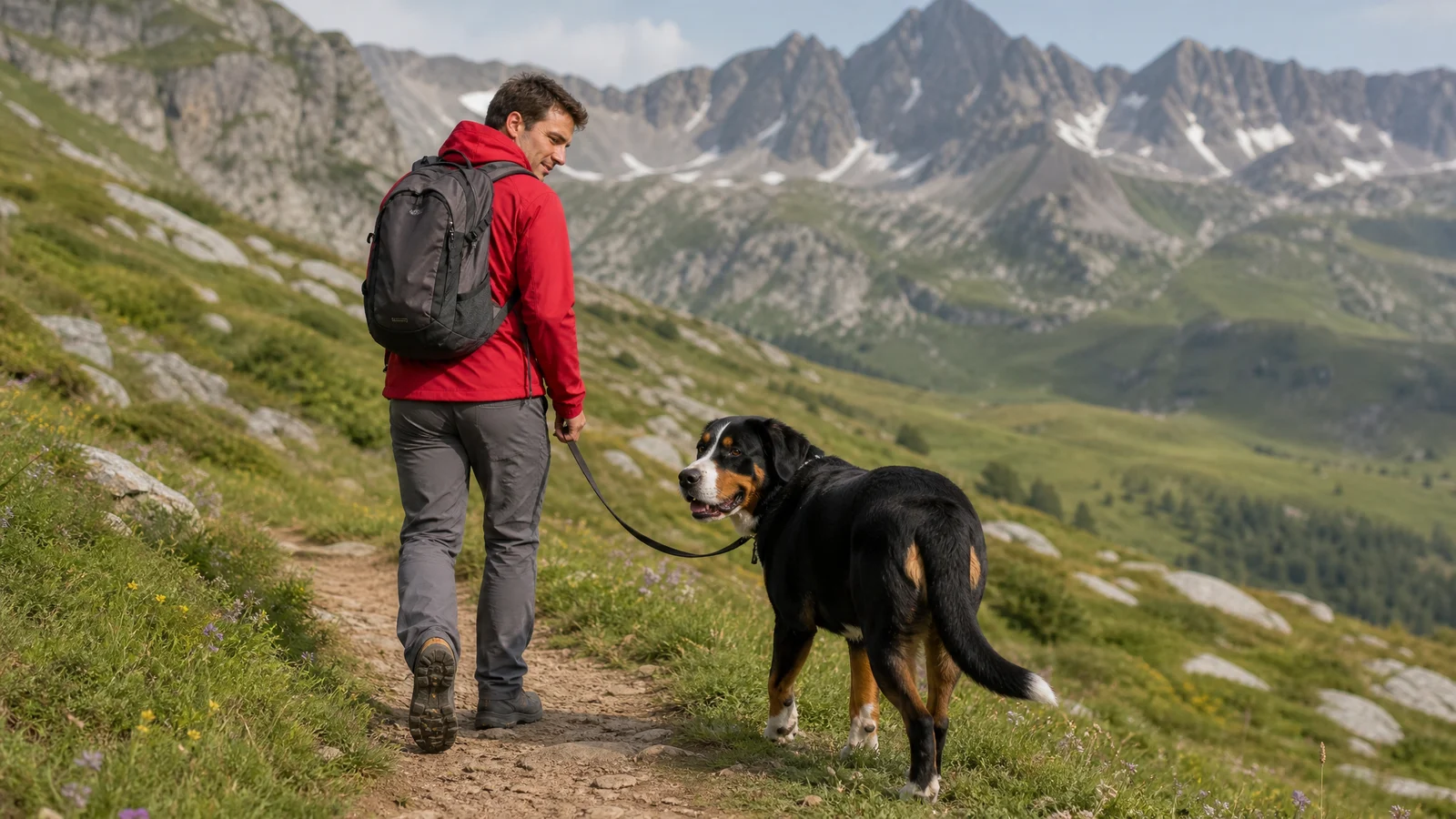
The breed needs moderate exercise, and a walk around the block or a romp in the woods generally covers daily needs. They suit hiking better than cycling or marathon running. While joints are still developing, favor steady walks and relaxed play over repetitive jumping, long runs and rough games on hard floors.
A mentally busy dog is easier to live with, so add brain work. K9 Nose Work is a scent game you can begin by tucking a treat or toy into one of several boxes, which suits a food-driven dog. New tricks and rotating chews help too.
This is general information, not veterinary advice. Bloat is a known concern in this breed, so ask your veterinarian about its symptoms and what to do, and check with them about exercise limits and feeding plans for your puppy. Keep up regular vet visits throughout the growing months.
Greater Swiss Mountain Dog at Two Versus Eight Weeks
At eight weeks you have a clumsy, hungry, mouthy baby. At two years you can have a settled, affectionate adult who greets guests politely, walks on a loose leash, alerts once and then relaxes, and still works eagerly for a treat. Neither version arrives by accident. The second grows out of the first through countless small rewarded choices.
Expect the calm to take time. A large frame and a stubborn streak mean the second year still involves practice, proofing cues in new places and around distractions. Longer stays, a reliable recall on a long line and polite greetings with strangers and other dogs all improve with repetition. The payoff is a devoted, dependable family dog, and the breed rates 5 of 5 for affection with family.
Upkeep never fully stops, but it is mostly light. Keep these habits going for life:
- Refresh loose-leash walking and settle practice with treats so they stay strong.
- Keep the dog lean, since extra weight is hard on a large frame.
- Plan summer exercise for early or late in the day.
- Stay alert to the signs of bloat and know what to do if they appear.
- Keep grooming and handling practice stress-free, and keep regular vet visits.
Life expectancy runs 8 to 11 years, so the early work pays off across most of the dog's life. Invest in the first two years and you spend the rest of them with a big, gentle companion who actually listens.
 Exercise and jobsSports and Jobs for a Greater Swiss Mountain Dog
 Training basicsHow to Train a Greater Swiss Mountain Dog With Food Rewards
 Exercise and jobsHiking With a Greater Swiss Mountain Dog