9 Swissy training topics
Every common Swissy challenge, with first steps and guides to read.
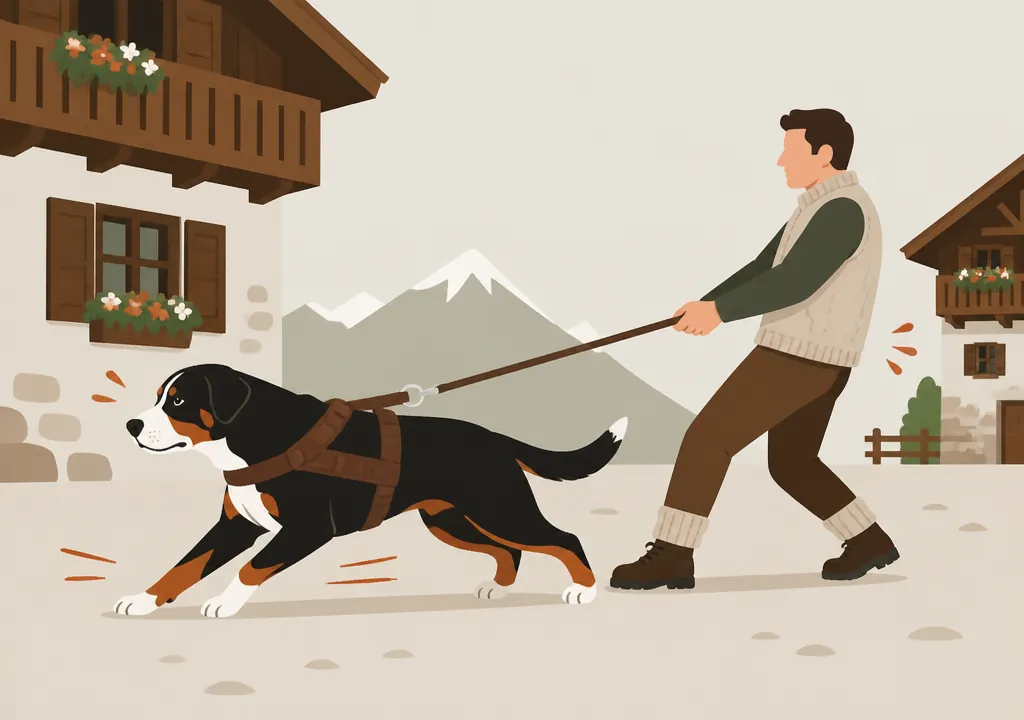
Pulling on the leash
A draft dog loves to pull. Teach the loose leash.
Draft dogs love to pull, so a Swissy needs a loose leash before anyone thinks about a cart. Carting takes a dog who knows ordinary cues and a handler who organizes space and stopping.
The full guide covers readiness, equipment visits and a supervised first connection.
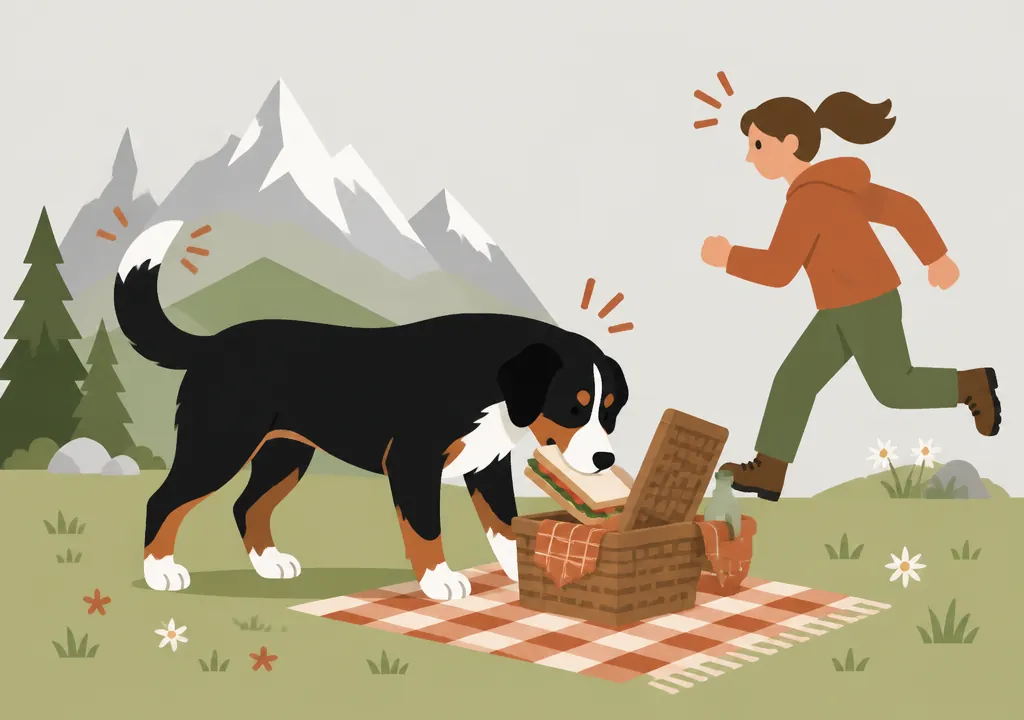
Scavenging food
Leave it, for a dog that eats everything.
Very food motivated and eating everything, a Greater Swiss Mountain Dog makes leave it urgent and easy to pay for. Patience turns that appetite into your best training tool.
The full guide trains a Swissy with food rewards without feeding the stubborn streak.
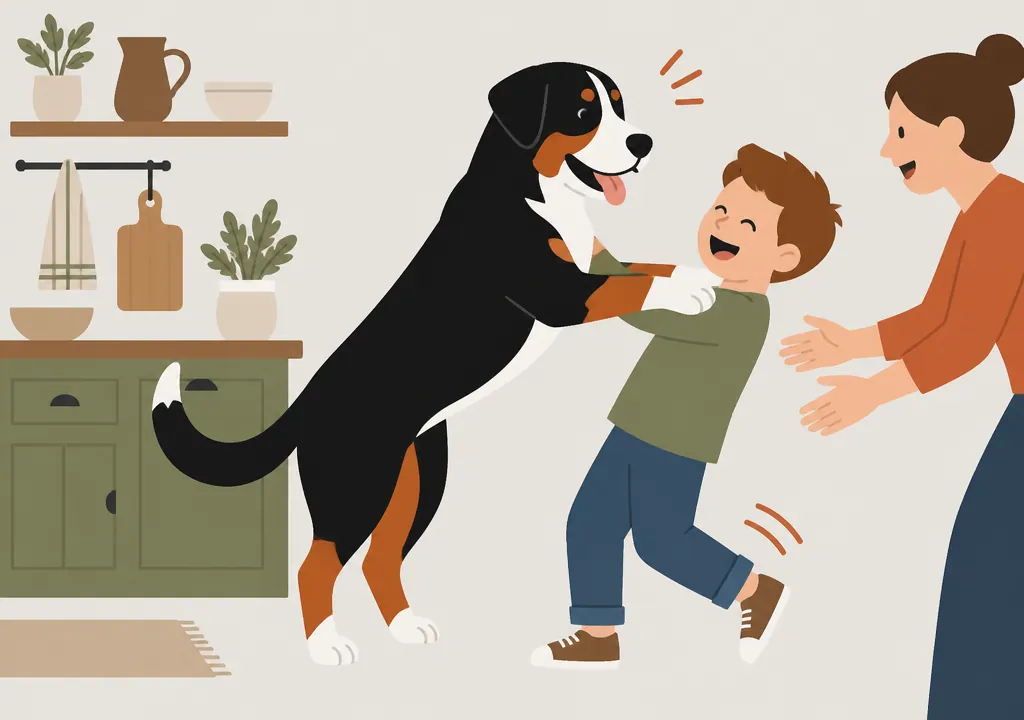
Jumping on people
Polite greetings from a big puppy.
A polite hello is not something a Greater Swiss Mountain Dog performs alone. The host controls access, the guest decides whether contact is welcome and the dog chooses whether to approach without jumping. If any part is missing, a sit at the door can collapse as soon as hands and voices move closer.
This guide builds a guest-access contract instead of forcing every arrival into the same routine. The room will protect people before training begins, food and attention will arrive at floor level, and the host will practice clear signals that open or close the chance to greet.
Read the full guide: Greater Swiss Mountain Dog Jumping on Guests: Rewarding Calm Hellos
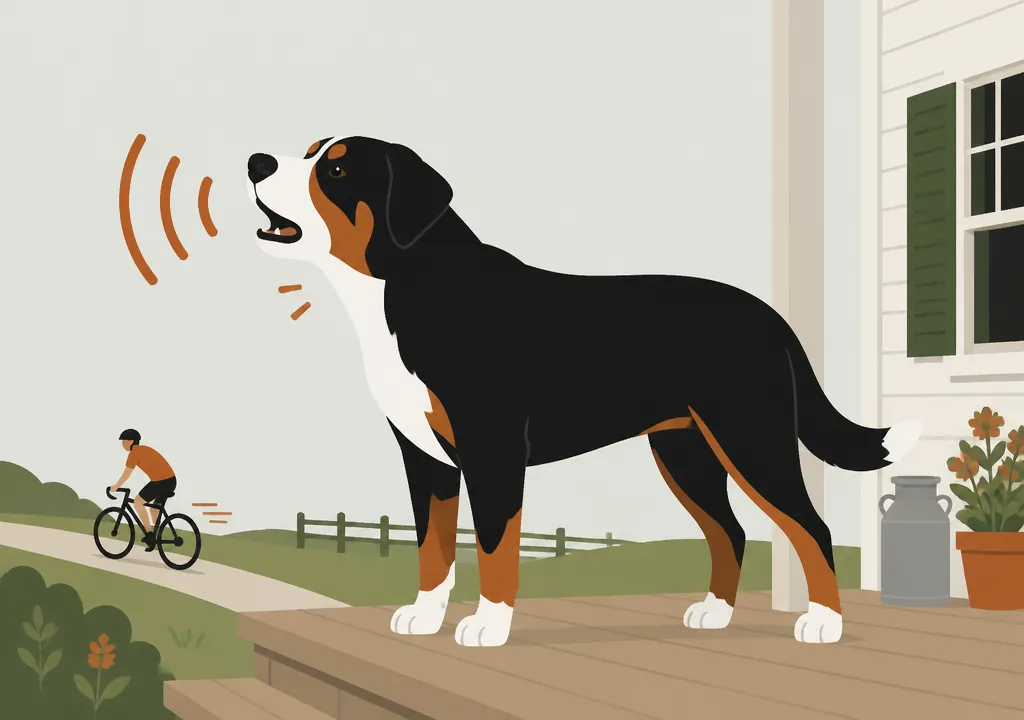
Alert barking
One deep woof, then quiet.
A deep bark at the window may be useful information before it becomes a household problem. A Greater Swiss Mountain Dog can notice movement, announce it and then either recover or continue scanning for the next reason to sound the alarm. The important training question is what happens between the first bark and the fifth.
We will treat barking as a message with a source, a handoff and an ending. This guide sorts common alert patterns, builds a place where the Swissy can observe without controlling the doorway, teaches quiet after notice and uses a short log to reveal when the environment needs to change. It also separates ordinary alerts from changes that deserve professional help.
Read the full guide: Why Does My Swissy Bark and How Do I Teach Quiet?
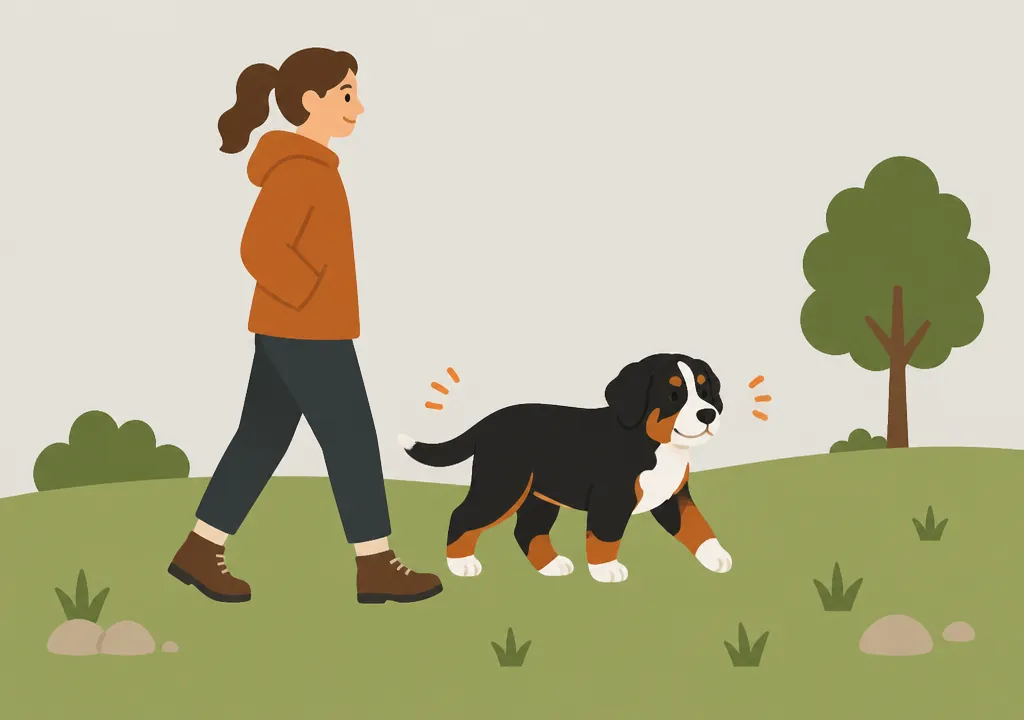
Exercise while growing
Protect fast-growing joints.
A puppy can have a short walk and still finish a physically demanding day. Stairs, repeated trips to the door, play on a slippery floor, visitors and several brief training sessions all add movement that a Greater Swiss Mountain Dog did not choose as one formal workout. The total load is easy to miss when each event looks small.
Below, we use four phases instead of a universal time formula. We build one whole-day ledger, choose among three repeatable activity cards, let unplanned load and staged recovery change tomorrow's card, and bring persistent movement changes to the veterinary team. The decision stays tied to this puppy's condition, footing, weather and recovery rather than an age-based mileage target.
Read the full guide: Pacing Exercise for Greater Swiss Mountain Dog Puppies Who Grow Fast
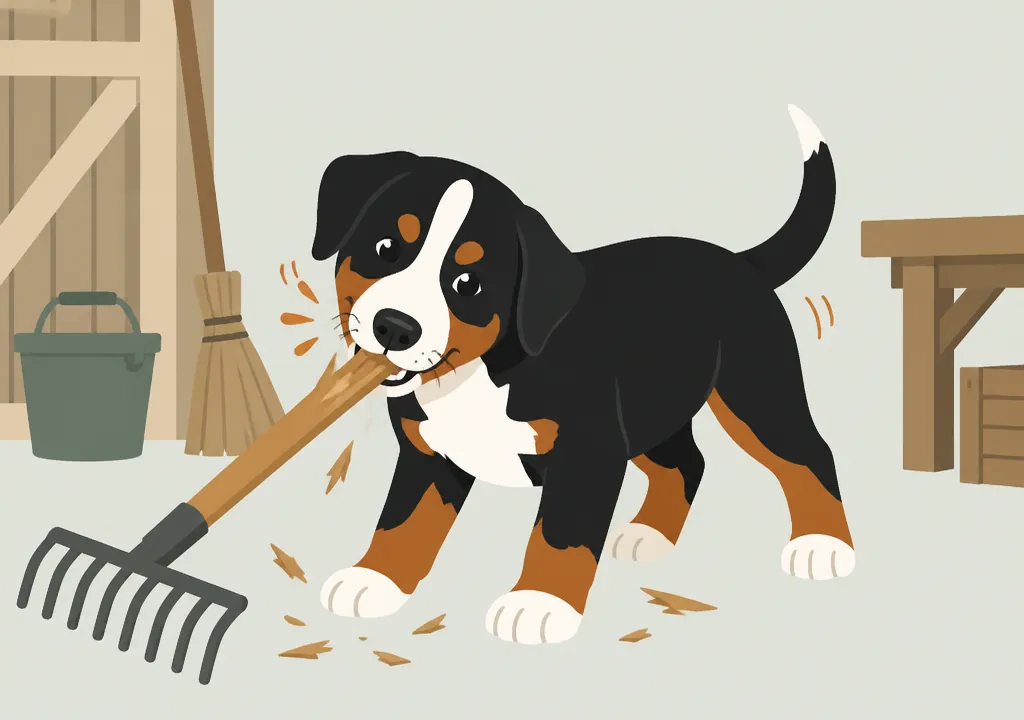
Chewing
Strong chews for a slow-maturing puppy.
Household materials can become projects for a Greater Swiss Mountain Dog puppy long before adult judgment develops. A young Swissy can reach a table edge, carry a substantial object and damage a surface in a quiet minute. Chewing is normal exploration, but the size of the puppy changes the practical stakes. A chair rung, rug corner or shoe can become a rewarding project in a quiet minute.
Below, we move through five distinct jobs. We build a varied material library, map room risk, practice exchanges and supervision without a chase, identify evidence that points beyond ordinary chewing, and revise the library as the puppy grows. Ingestion, pain or absence-linked distress leaves the training lane and goes to the appropriate veterinary or behavior professional.
Read the full guide: Strong Chews and Chew Rules for a Greater Swiss Mountain Dog Puppy
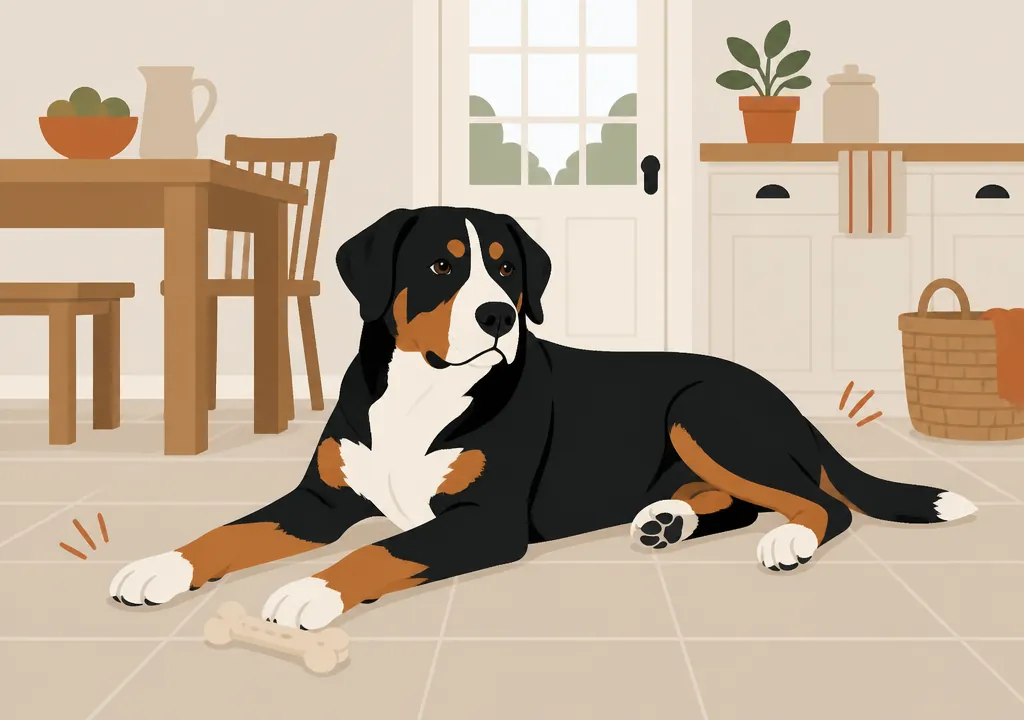
Time alone
Calm when the family is out.
Walking willingly into a crate does not prove that a Greater Swiss Mountain Dog feels comfortable when a person leaves. Another Swissy may nap alone in an open room but object when the crate door moves. Those are different skills. Treating them as one ladder makes it hard to know which change caused discomfort.
Below, we work across six decisions. We separate the two questions, build the rest station, test door movement, test human distance, combine only easy evidence and route true distress to professional help. Video review stays inside the combination decision, so silence never substitutes for loose muscles, ordinary eating, normal orientation and the ability to resume rest.
Read the full guide: Crate Training a Greater Swiss Mountain Dog Without Anxiety
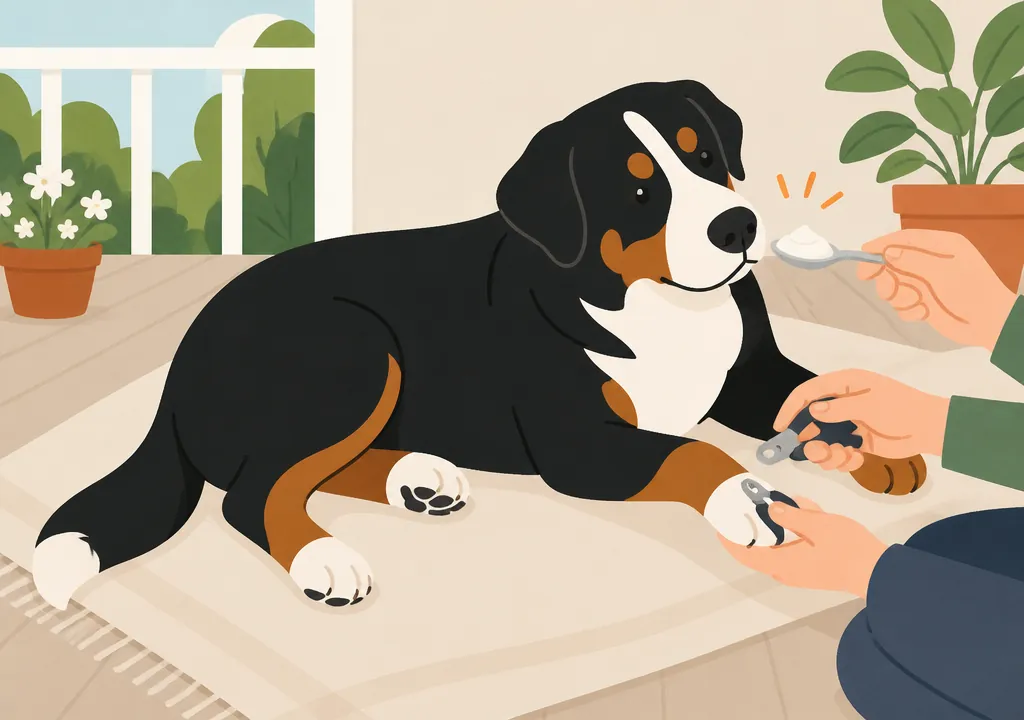
Handling and nail care
Easy checks for a big dog.
Paw handling can feel simple when a Greater Swiss Mountain Dog is still a small puppy. The same strategy becomes impractical when the dog grows into a large, powerful adult. Cooperative care should therefore begin before strength creates a contest. The goal is a repeatable conversation in which the dog knows how to start, pause and return.
Below, we use four visibly different stages. We establish choice and the physical station, rotate through four care stations, decide readiness while separating rehearsal from maintenance, and take pain or overdue care to a professional. The circuit remains flexible, but each stage has its own evidence and practical job, so a success with touch never hides concern about tools.
Read the full guide: Nail Trims and Paw Checks for Greater Swiss Mountain Dogs
The long puppyhood
Patience through a slow-maturing breed.
Swissies can be protective watchdogs, so training and socializing begin at a manageable size. The puppy grows into 85 to 140 pounds, and every habit you let slide becomes physical.
The full guide covers the first weeks, socialization, barking and the second year.